
HYDRAULIC HOSE SAE 100R6
OIL & FUEL · SAE 100R6 · 34 bar working / 136 bar burst · SAE 100R6
Reply within 1 hour · Bulk cut-to-length & crimped assemblies · OEM branding
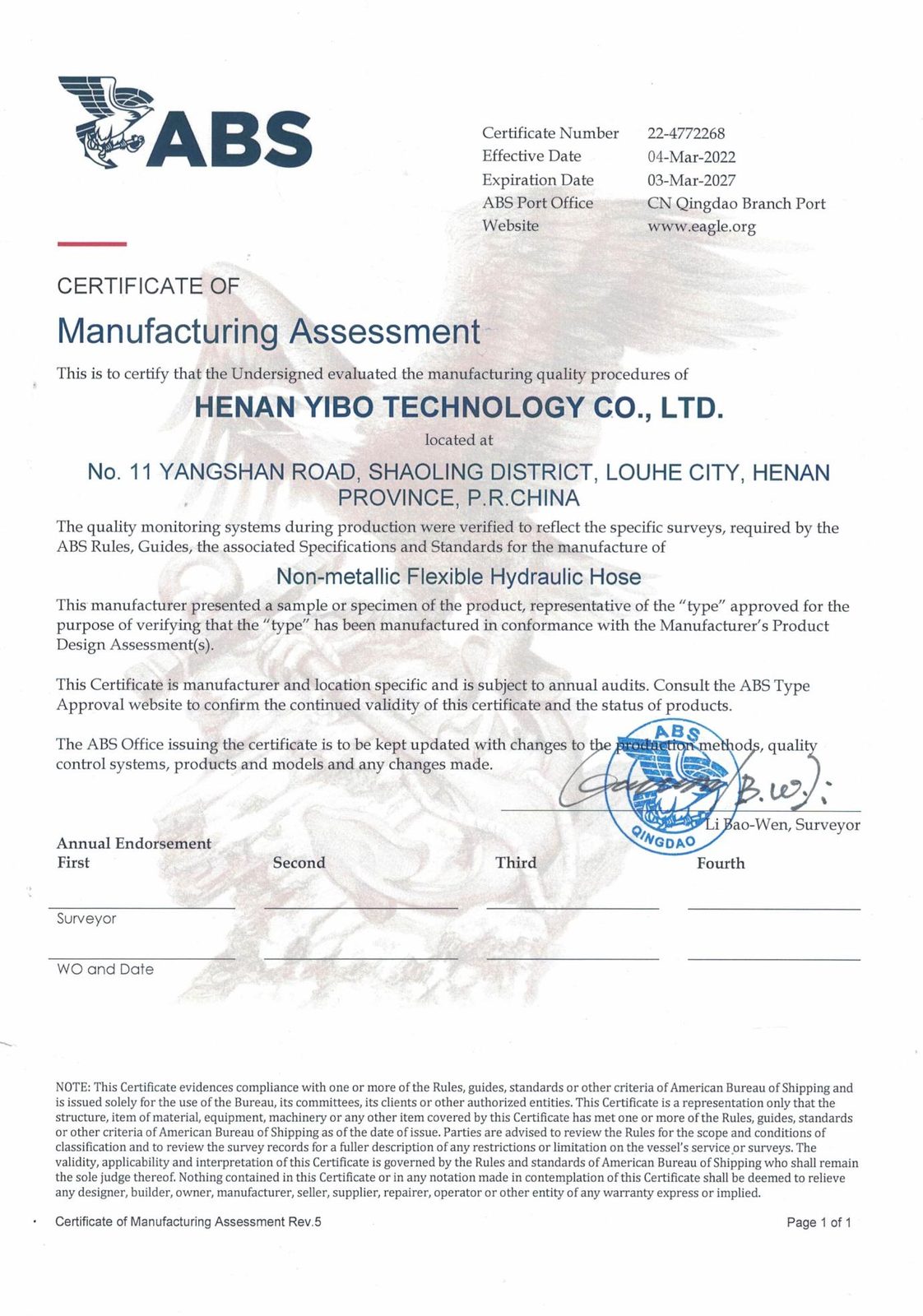
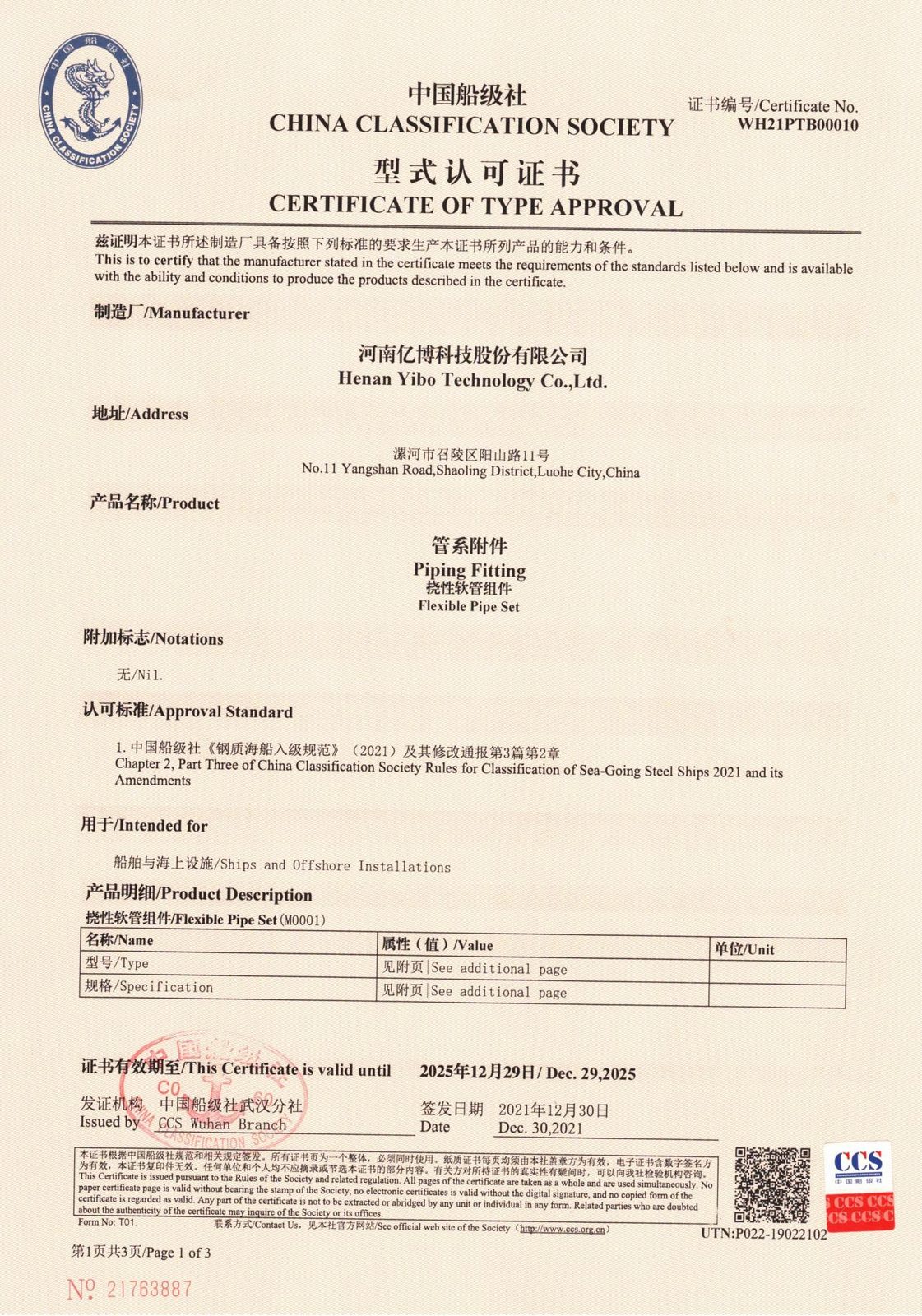
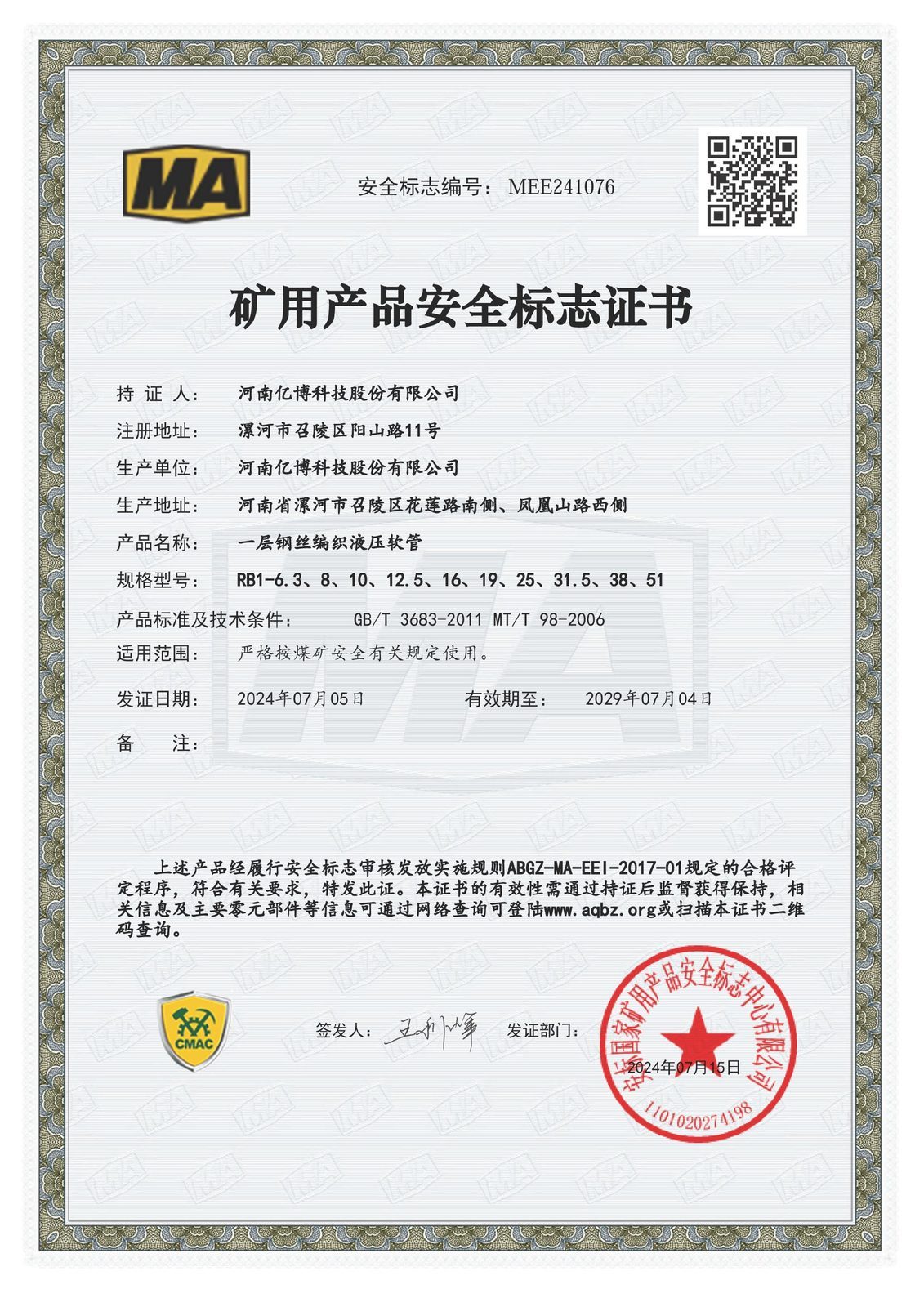
↓Certifications & factory photos
- Hose Construction
- Structure:Inner tube of oil-resistant synthetic rubber, one layer of braided textile reinforcement, and an abrasion-resistant cover
- Working Temperature:−40°C to +100°C on return and light service duty
- Hose Features
- Bend Radius:50–150 mm, generous compared with wire-braided hose — the figure in the table, not a catalogue average.
- Pressure Rating:21–34 bar working with 84–136 bar minimum burst — exactly 4.0× on every code.
- Size Coverage:7 codes in the table, 4.6–18.2 mm bore.
- Mass Per Metre:0.10–0.37 kg/m
- Application:Return and drain lines, fuel and lubricating oil, glycol circuits at low pressure.
24 Hours Service Hotline
+86 137 2136 0724


For distributors, OEMs & MRO buyers · 30+ countries · MOQ 100 m · free samples


In stock — ready to ship sooner than custom runs. Ask which sizes →
PRODUCT INTRODUCTION
SAE 100R6 — 28 bar Across Five Bores, Textile Braid, 0.10 kg/m
This is the textile-braided return hose in the SAE 100R6 class: one layer of braided cord over an oil-resistant synthetic tube, published from 4.6 mm to 18.2 mm inside diameter, for return, drain and light-service lines where a wire braid would be spent money.
The tube is oil-resistant synthetic rubber, the single reinforcement layer is braided textile cord rather than wire, and the cover is abrasion-resistant rubber. That build is why the seven codes sit between 0.10 and 0.37 kg per metre, and why the hose stays limp enough to be run by hand around a frame.
Pressure is not one number across the range, and the table shows it honestly: 3.4 MPa (34 bar) on the 3/16 inch code, 2.8 MPa on the five codes from 1/4 to 1/2 inch, 2.4 MPa at 5/8 and 2.1 MPa at 3/4, against minimum burst of 13.6, 11.2, 9.6 and 8.4 MPa — exactly 4:1 on every row. Bend radius runs 50 mm at the small end to 150 mm at 3/4 inch.
Data Display

| PRODUCT NAME | NOMINAL BORE (mm) | SPECIFICATION (inch) | INSIDE DIAMETER (ID)mm (min) | INSIDE DIAMETER (ID)mm (max) | OUTSIDE DIAMETER (OD)mm (min) | OUTSIDE DIAMETER (OD)mm (max) | MAXIMUM WORKING PRESSURE W.P (Mpa) | psi | MINIMUM BURST PRESSURE B.P (Mpa) | psi | MINIMUM BEND RADIUS Min.B.R (mm) | REFERENCE WEIGHT W.T (Kg/m) |
|---|---|---|---|---|---|---|---|---|---|---|---|---|
| R6-03-05 | 5 | 3/16“ | 4.6 | 5.5 | 11 | 12.2 | 3.4 | 493 | 13.6 | 1,973 | 50 | 0.1 |
| R6-04-06 | 6 | 1/4“ | 6.1 | 7.2 | 12.4 | 13.6 | 2.8 | 406 | 11.2 | 1,624 | 65 | 0.13 |
| R6-05-08 | 8 | 5/16” | 7.9 | 8.7 | 14.2 | 15.4 | 2.8 | 406 | 11.2 | 1,624 | 75 | 0.16 |
| R6-06-10 | 10 | 3/8“ | 10.3 | 11.1 | 15.7 | 16.9 | 2.8 | 406 | 11.2 | 1,624 | 75 | 0.18 |
| R6-08-12.5 | 13 | 1/2“ | 12.7 | 13.7 | 19.5 | 21.1 | 2.8 | 406 | 11.2 | 1,624 | 100 | 0.25 |
| R6-10-16 | 16 | 5/8” | 15.9 | 17 | 22.7 | 24.6 | 2.4 | 348 | 9.6 | 1,392 | 125 | 0.29 |
| R6-12-19 | 19 | 3/4“ | 18.2 | 19.8 | 26.2 | 27.8 | 2.1 | 305 | 8.4 | 1,218 | 150 | 0.37 |
Values are reproduced from the official YIBO product page. psi columns = MPa × 145.038, rounded. 7 codes in this table; the order data sheet governs the batch.
Application & Selection
SAE 100R6 for conveying hydraulic oil, fuel oil, lubricating oil and glycol — the low-pressure line for return, suction and transfer duty where a light, flexible, oil-resistant hose beats over-spec wire. Seven sizes, 5 to 19 mm bore.
34 bar working with a 136 bar minimum burst, a 4:1 margin, across all seven sizes. Weight runs 0.1 to 0.37 kg/m. Crimped and pressure-tested in-house; about 20 days from confirmation, OEM marking and export packing available.
Where R6 Belongs — and Where It Does Not
R6 is a low-pressure return and light-service hose: one layer of braided textile reinforcement over a synthetic rubber tube, rated 34 bar working and 136 bar burst. It is the right hose for a lot of jobs and the wrong hose for a few.
Return and drain lines
The natural home of R6. Fluid returning to the tank is at low pressure, and what matters is a flexible, light hose that routes easily and costs little per metre.
Fuel, lubricating oil and glycol circuits
The tube compound is built for petroleum-based media, and the textile braid keeps the hose light enough to route around an engine bay without a bracket every half metre.
Where it does not belong
Anywhere the circuit holds pressure with the pump running. On the pressure side of a valve, R6 is the wrong choice no matter what the old hose looked like — use 1SN or 2SN.
R6 Against the Alternatives
Against R1. Same construction, lower pressure (about 25 bar). If you are already specifying a textile-braided hose, R6 gives more margin for very little extra cost.
Against 1SN. Wire braided, roughly 180 bar at small bores — eight times the pressure, and also heavier, stiffer and more expensive. Use 1SN when the circuit needs it, not by default.
Against R3. Two textile braids, sitting between the two. If a single braid is marginal but wire is overkill, R3 is the middle answer.
Specification Notes
Six published codes from 5 to 16 mm bore. Working pressure falls from 34 bar at 5 mm to 24 bar at 16 mm — small bores carry more pressure in this construction, so read the row instead of assuming one rating for the range.
Bend radius is generous compared with wire-braided hose, which is the main reason R6 gets picked for tight engine-bay routing. Minimum order 100 m.
WHY R6
Five Reasons R6 Is the Right Return Hose
R6 is not a cheap version of 2SN. It is a different hose for a different job — and it does that job better.
Light and Flexible
One textile braid over a rubber tube. Routes around an engine bay without a bracket every half metre.
34 bar Working
136 bar burst on the small bores. Enough for return and drain duty with margin to spare.
Petroleum-Ready Tube
Built for hydraulic oil, diesel, lubricating oil and glycol.
Six Codes, 5–16 mm
The common return-line bores, without going to a wire-braided hose you do not need.
Low Cost Per Metre
Return lines are long and there are many of them. R6 keeps the bill down where pressure is not the constraint.
WHERE IT RUNS
Three Duties R6 Handles
All on the low-pressure side. All where flexibility beats strength.
Return and Drain Lines
Fluid going back to the tank. The natural home of R6.
Fuel and Lubricating Oil
Tube compound is built for petroleum media.
Glycol Circuits
Coolant and glycol transfer at low pressure.
WHERE IT STOPS
Three Places Not To Use R6
This is the part that saves you a failure report.
Anywhere Pressure Is Held
If the line is on the pressure side of a valve, use 1SN or 2SN — regardless of what the old hose looked like.
High Impulse Circuits
Textile braid has no wire. Impulse duty needs steel.
Hot Fluid Above Rating
Check the temperature range before assuming R6 works because the pressure is low.
WHY THIS HOSE
Six Reasons the R6 Braid Still Earns Its Place
R6 is the cheapest way to move oil at 28 bar. These six points are what decides whether it belongs on a given line.
Five Bores, One Class
From the 1/4 inch code at 6.1 mm to the 1/2 inch code at 13.7 mm, every size is 2.8 MPa working with 11.2 MPa burst, so one pressure class covers five line sizes in the store.
34 bar at the Small End
The 3/16 inch code carries 3.4 MPa against 13.6 MPa burst, which is the highest rating in the range and comes at 0.10 kg per metre.
4:1 on Every Row
Burst is exactly four times working pressure on all seven codes, from 13.6 over 3.4 at 3/16 inch down to 8.4 over 2.1 at 3/4 inch. Nothing in the table is quoted at a lower margin.
150 mm Arc at 3/4
Bend radius climbs in seven published steps — 50, 65, 75, 75, 100, 125 and 150 mm — so a 19 mm return line still turns inside a machine frame without a elbow.
Textile Keeps It Light
The single braided cord layer is what holds mass between 0.10 and 0.37 kg/m across the range, and it is also why the 5/8 inch code can be routed by hand rather than by a lifting point.
Tolerance Is Published
Inside diameter is given as a real range on every code, 4.6 to 5.5 mm at 3/16 inch and 18.2 to 19.8 mm at 3/4, so a ferrule is sized against the bore that arrives, not a nominal figure.
CONSTRUCTION
Three Layers, No Wire
Inner Tube
Oil-resistant synthetic rubber, 4.6 mm to 18.2 mm inside diameter, with the minimum and maximum of each bore printed per code in the table.
Reinforcement
One layer of braided textile cord and no wire, which is what holds 2.8 MPa on the five middle codes and sets the flat 4:1 burst margin.
Cover
Abrasion-resistant rubber, outside diameter 11 mm at the 3/16 inch code through 27.8 mm at the 3/4 inch code.
APPLICATIONS
Where 28 bar Is Enough
Return and Drain Lines
The 1/2 inch code at 12.7 mm bore and 2.8 MPa, the usual return size on a small power pack.
Fuel and Lubricating Oil
The oil-resistant tube carries diesel and lube oil at 2.8 MPa on the 3/8 inch code, 10.3 mm bore, 75 mm arc.
Glycol and Coolant Loops
Machine-tool coolant circuits at 2.1 to 3.4 MPa, where 0.10 kg/m on the small bore keeps the run light.
Air and Water Blow-Off
Light service air at 2.4 MPa on the 5/8 inch code, with 9.6 MPa minimum burst behind it.
Lubrication Feed
Grease and oil feed on the 5/16 inch code: 7.9 to 8.7 mm bore, 2.8 MPa, 75 mm bend radius.
Cab and Panel Runs
The 3/16 inch code at 4.6 mm bore and a 50 mm arc for routing behind a panel or inside a housing.
HIGH-END INDUSTRY DIRECTIONS
What Buyers Ask on a 28 bar Line
The enquiries are about how far one pressure class reaches, and whether textile is still enough.
① One Class per Machine low pressure hose
Trend: Buyers want the fewest pressure classes in the store.
Dohose: Five codes from 6.1 to 13.7 mm share the 2.8 MPa class.
② Return-Line Re-rating return hose
Trend: Circuits once run at 20 bar are being rated at 28.
Dohose: 2.8 MPa with 11.2 MPa burst on the middle five codes.
③ Weight on the Route lightweight hose
Trend: Mass per metre is checked before the clamps are fixed.
Dohose: 0.10 kg/m at 3/16 inch, 0.37 kg/m at 3/4 inch.
④ Small-Bore Assembly small bore hose
Trend: Pilot and gauge lines want a 50 mm arc.
Dohose: 50 mm bend radius on the 4.6 mm bore code.
⑤ Cut Lengths cut to length hose
Trend: Workshops order metres, not coils.
Dohose: Every code from 4.6 to 18.2 mm is cut to length and crimped to order.
⑥ Traceable Batch traceable hose
Trend: Class and batch go on the maintenance record.
Dohose: Each metre is marked with the code and test date.
WHY DOHOSE
Seven Reasons Buyers Stay with Us
Tolerances on the Sheet
Bore, wall and bend radius for the Hydraulic Hose SAE 100R6 are printed per code — 7 codes, 4.6–18.2 mm, no guessing between shipments.
Mixed Orders Welcome
Order several codes of the Hydraulic Hose SAE 100R6 at once; 7 sizes in 4.6–18.2 mm are built on the same equipment.
No Dead Stock
Order metres, not coils: Hydraulic Hose SAE 100R6 is cut to length, and mass runs 0.10–0.37 kg/m.
Crimped and Tested
Where a finished line is needed, Hydraulic Hose SAE 100R6 is crimped and pressure-tested in-house before packing.
Freight-Ready
Coils of Hydraulic Hose SAE 100R6 are bagged and palletised, with a 40HQ plan supplied before booking.
Your Name on It
The Hydraulic Hose SAE 100R6 can be printed and packed under your brand for resale.
Quote in One Hour
Send bore, media and end type for Hydraulic Hose SAE 100R6 — a firm price comes back within 1 hour.
FAQ
SAE 100R6 — Ten Questions
R6 vs R3 — which one for a return line?
R3 is a textile-braided hose of the same family and R6 is the version with a published 4:1 burst margin on every code. On this range that means 3.4 MPa at 4.6 mm bore and 2.1 MPa at 18.2 mm bore, both with burst exactly four times working pressure.
Can an R6 hose replace a wire-braided 1SN on a low-pressure line?
Yes where the line never exceeds 2.8 MPa, which covers the five codes from 6.1 to 13.7 mm bore. It will not replace a wire braid on a pressure line, and it must not be used on suction: without wire the tube collapses, which is the job of an R4 style hose.
What pressure does the 1/2 inch R6 carry?
2.8 MPa (28 bar) working with 11.2 MPa (112 bar) minimum burst, on an inside diameter of 12.7 to 13.7 mm and an outside diameter of 19.5 to 21.1 mm. Mass is 0.25 kg per metre and the minimum bend radius is 100 mm.
How much does the 3/4 inch code weigh, and what arc does it need?
0.37 kg per metre with a 150 mm minimum bend radius, on a bore of 18.2 to 19.8 mm and an outside diameter of 26.2 to 27.8 mm. It is the heaviest and stiffest code in the range at 2.1 MPa.
Will an R6 handle fuel and lubricating oil?
The tube is oil-resistant synthetic rubber, so diesel, lubricating oil and glycol are what it was built for. On the 3/8 inch code that is 10.3 mm bore at 2.8 MPa with a 75 mm arc, and the cover resists the oil film that collects under a machine.
Can it be used on a machine-tool coolant circuit?
That is a typical duty: glycol and coolant at 2.1 to 3.4 MPa, where the textile braid gives a 50 mm arc at 4.6 mm bore instead of the 100 mm a wire braid would need. Keep the run below 100 °C and away from a weld spatter zone.
Why does the 3/4 inch code only rate 21 bar?
Because a textile braid loses hoop strength as the bore grows: 3.4 MPa at 4.6 mm, 2.8 MPa from 6.1 to 13.7 mm, 2.4 MPa at 15.9 mm and 2.1 MPa at 18.2 mm. The rating is published per code for that reason, and burst follows at 8.4 MPa on the largest.
What makes an R6 fail at the ferrule?
Almost always the insert, not the hose. A textile braid has little crush resistance, so an over-tightened clamp or a barb sized for a nominal 19 mm bore on an 18.2 mm tube cuts the cord layer. Crimp against the published 18.2 to 19.8 mm range, and the 4:1 margin holds.
What is the minimum order and how is it packed?
Order by the metre from the 4.6 mm code at 0.10 kg/m upward, with no minimum per size on a mixed order across the seven codes. Coils are wrapped and marked, and cut lengths up to 18.2 mm bore ship with the ends fitted and the assembly pressure-tested.
How is R6 priced, and what is the lead time?
Per metre, by bore: the 4.6 mm code sits at the bottom of the range and the 18.2 mm code at 0.37 kg/m is the top. Send bore, length, end type and destination for a firm figure, with production around 20 days from confirmation.
Related Products
Automotive Power Steering HOSE
THE HOSE CONSISTS OF A HEAT-RESISTANT OIL SYNTHETIC RUBBER, ONE OR TWO LAYERS OF STEEL WIRE BR…
Compact Pilot HOSE
INNER TUBE: OIL-RESISTANT SYNTHETIC RUBBER. REINFORCEMENT: ONE LAYER OF STEEL WIRE BRAIDING. O…
Compact Single WIRE Braid Hydraulic HOSE
The hose consists of an inner tube, a single wire braid reinforcement, and an outer cover.
Compact Two-wire Braided Hydraulic HOSE
The hose consists of an inner tube, a double wire braid reinforcement, and an outer cover.
Get a quote
Please fill out the form below and we will contact you within 1 hour.
We are online 24/7!
We will contact you within 1 hour of receiving your enquiry.
Hotline