
AUTOMOTIVE POWER STEERING HOSE
POWER STEERING · 330 bar working / 1320 bar burst · 4 codes
Reply within 1 hour · Bulk cut-to-length & crimped assemblies · OEM branding
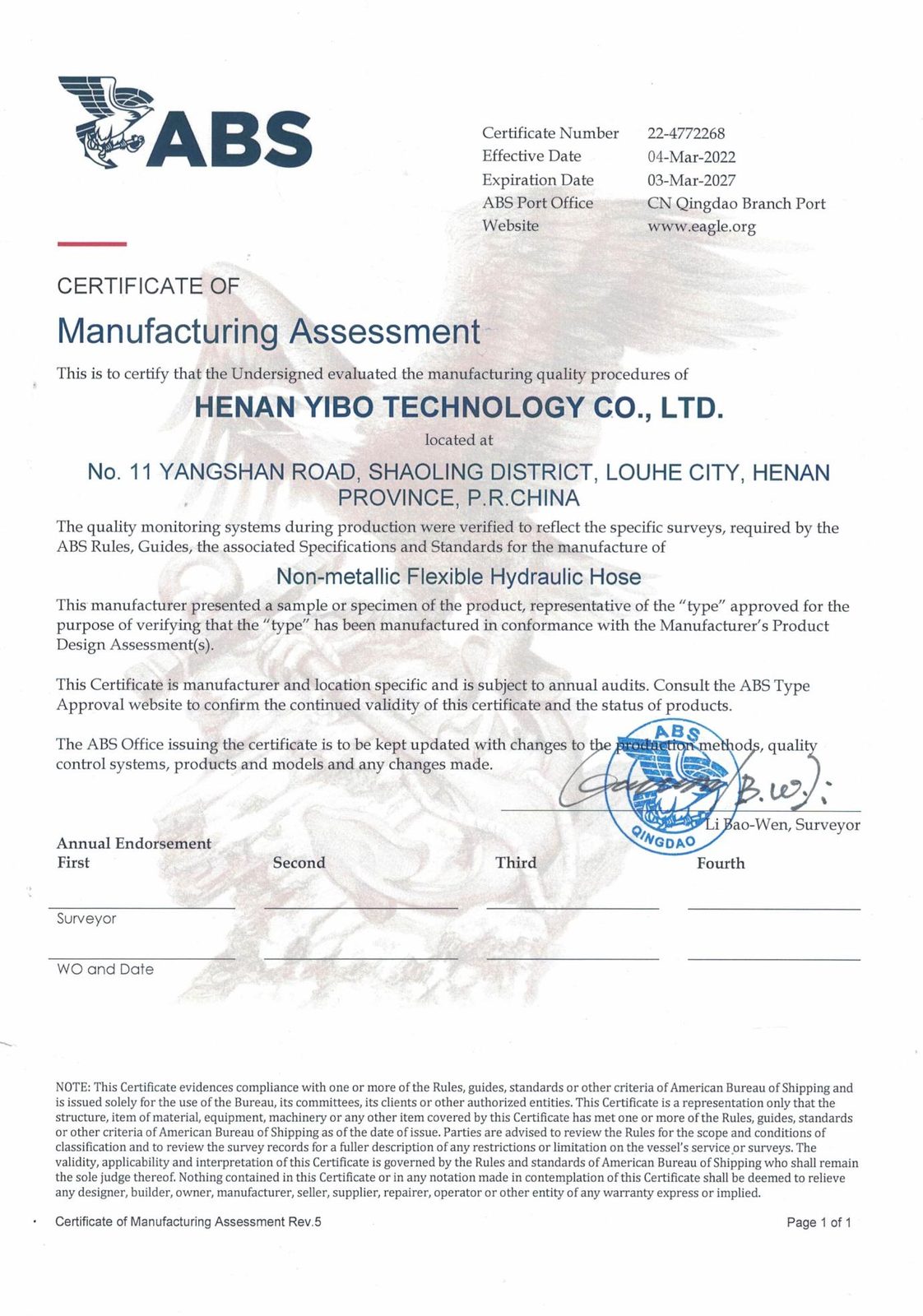
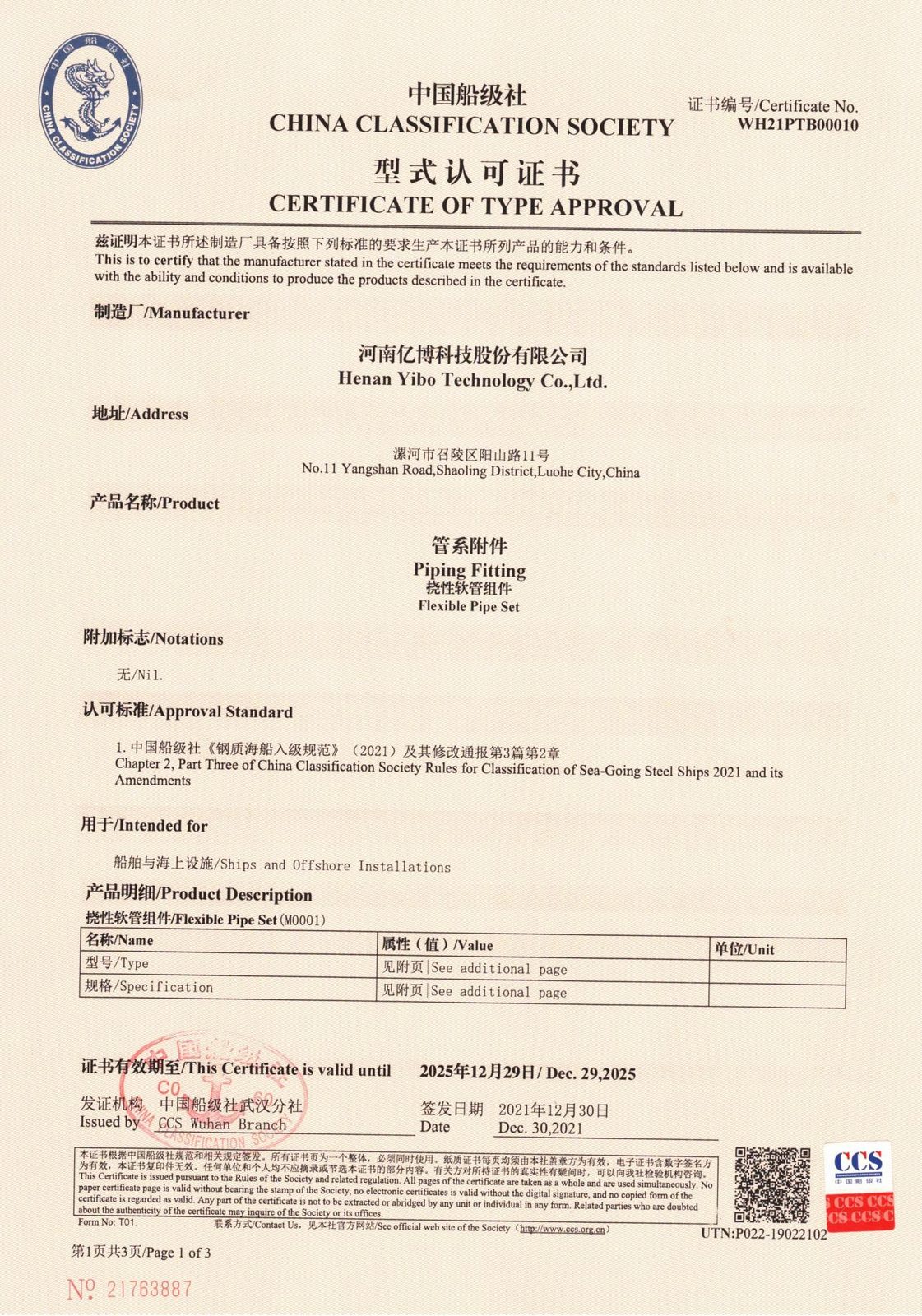
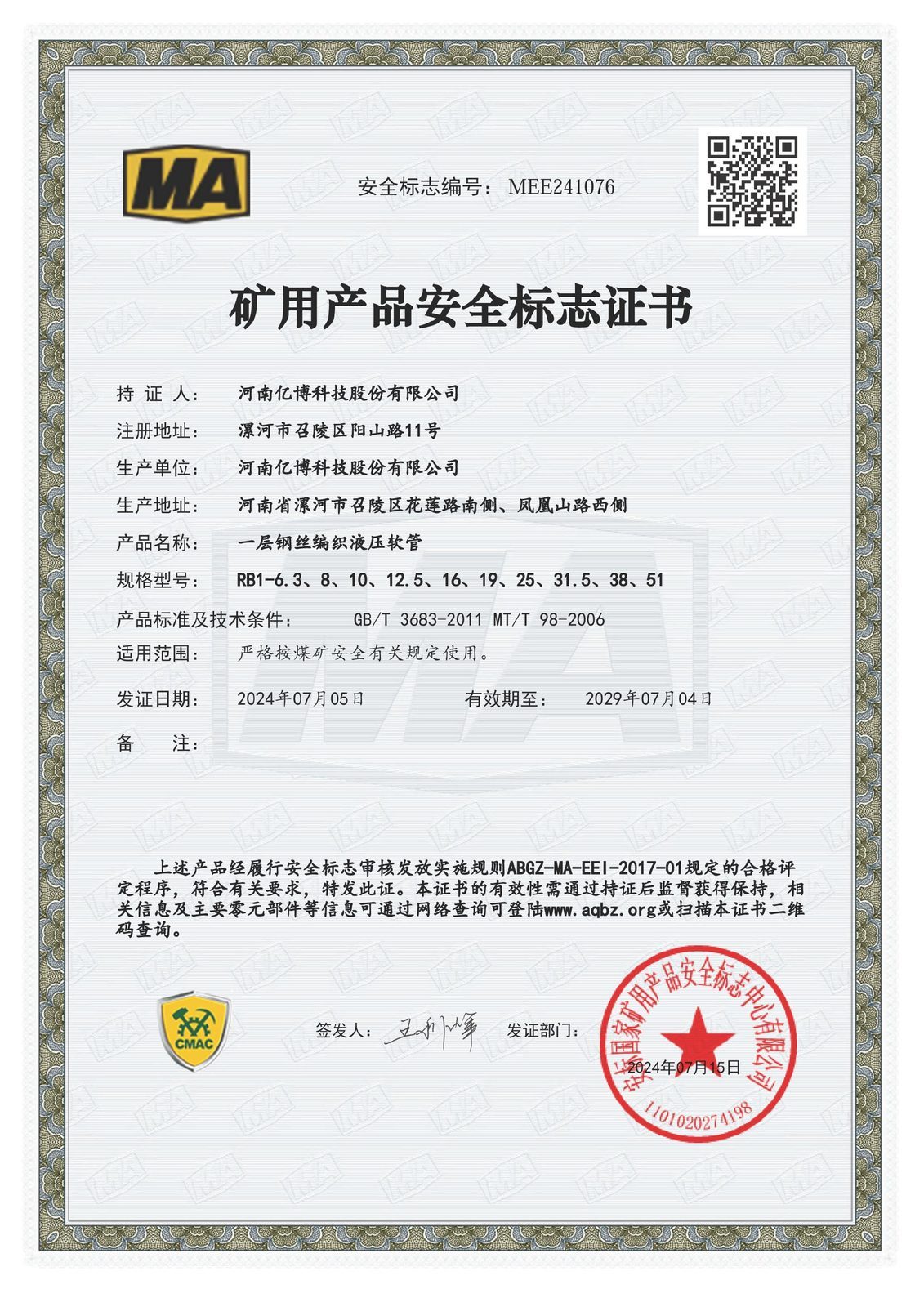
↓Certifications & factory photos
- Hose Construction
- Structure:Heat-resistant, oil-resistant synthetic rubber inner tube, one or two layers of steel wire braid reinforcement, and an outer cover
- Working Temperature:-40℃ to +135℃
- Hose Features
- Bend Radius:Minimum bend radius 130 mm on the 10 mm bore and 180 mm on the 13 mm bore — the figure in the table, not a catalogue average.
- Pressure Rating:160–330 bar working with 640–1,320 bar minimum burst: a 4.0× safety margin, quoted per code in the table below.
- Size Coverage:4 codes in the table, 9.3–13.5 mm bore (≈3/8"–1/2"), from HT130-1W-10 upward.
- Mass Per Metre:0.34–0.64 kg/m.
- Application:Automotive steering systems — connecting the reservoir, steering gear and steering pump on hydraulic power-steering circuits.
24 Hours Service Hotline
+86 137 2136 0724


For distributors, OEMs & MRO buyers · 30+ countries · MOQ 100 m · free samples


In stock — ready to ship sooner than custom runs. Ask which sizes →
PRODUCT INTRODUCTION
Automotive Power Steering Hose — 135 ℃, Single or Double Braid
A power steering hose lives in the worst place on a vehicle: next to the exhaust, inside a 130 mm bend, carrying fluid that is already hot. The YIBO HT130 is built for that: a heat- and oil-resistant tube rated to -40 to +135 ℃, one or two layers of steel wire braid, and a heat-resistant cover.
The range is 4 codes covering 3/8 inch and 1/2 inch, each in two builds. Single-braid runs 18.0 MPa (180 bar) at 3/8 and 16.0 MPa at 1/2; double-braid runs 33.0 MPa (330 bar) at 3/8 and 27.5 MPa at 1/2, all with a 4.0x burst margin.
Both builds share the same bend radius at each bore — 130 mm at 3/8 and 180 mm at 1/2 — so the choice between them is pressure and weight, not routing. Double-braid adds 0.19 kg/m at 3/8 inch.
Data Display

| PRODUCT NAME | NOMINAL INNER DIAMETER (mm) | SPECIFICATION (inch) | INNER DIAMETER (ID)mm (min) | INNER DIAMETER (ID)mm (max) | REINFORCEMENT LAYER OUTER DIAMETER (W.D)mm (min) | REINFORCEMENT LAYER OUTER DIAMETER (W.D)mm (max) | OUTER DIAMETER (OD)mm (max) | WORKING PRESSURE W.P (Mpa) | psi | MINIMUM BURST PRESSURE B.P (Mpa) | psi | MINIMUM BENDING RADIUS Min.B.R (mm) | REFERENCE WEIGHT W.T (Kg/m) |
|---|---|---|---|---|---|---|---|---|---|---|---|---|---|
| HT130-1W-10 | 10 | 3/8" | 9.3 | 10.1 | 15.3 | 16.2 | 18.8 | 18 | 2,611 | 72 | 10,443 | 130 | 0.34 |
| HT130-2W-10 | 10 | 3/8" | 9.3 | 10.1 | 16.8 | 17.8 | 20.3 | 33 | 4,786 | 132 | 19,145 | 130 | 0.53 |
| HT130-1W-13 | 13 | 1/2" | 12.4 | 13.5 | 19.0 | 20.0 | 23.0 | 16 | 2,321 | 64 | 9,282 | 180 | 0.42 |
| HT130-2W-13 | 13 | 1/2" | 12.3 | 13.5 | 20.5 | 21.8 | 24.5 | 27.5 | 3,989 | 110 | 15,954 | 180 | 0.64 |
Values are reproduced from the official YIBO product page. psi columns = MPa × 145.038, rounded. 330 bar working and 1,320 bar minimum burst is the ceiling of this range; the order data sheet governs the batch. The 1-wire (1W) and 2-wire (2W) codes of the same bore differ in reinforcement-layer O.D. and pressure class — choose by pressure requirement, not by bore alone.
Application & Selection
HT130 is used in automotive steering systems to connect the reservoir, steering gear and steering pump — the pressure and return side of a hydraulic power-steering circuit. The 4 codes cover 9.3–13.5 mm bore, roughly 3/8" and 1/2", which is where most passenger-car and light-truck steering lines sit.
Working pressure is quoted per code: 160 bar on HT130-1W-13 up to 330 bar on HT130-2W-10, each with a 4.0× minimum burst margin. Do not size from a generic "power steering pressure" figure quoted in industry articles — those numbers describe a system, not a hose, and vary by vehicle and test condition. Read the row against your own circuit.
Mass runs 0.34–0.64 kg/m and minimum bend radius is 130 mm on the 10 mm bore and 180 mm on the 13 mm bore, so check the routing before you fix the length. Assemblies of HT130 are crimped and pressure-tested in-house with metric / BSP / JIC / ORFS ends. MOQ is 100 m and covers any of the 4 codes; samples come off the same run.
WHY THIS HOSE
Six Reasons This Hose Is Built for an Engine Bay
Two numbers separate it from a standard hydraulic hose: 135 ℃, and the two-build structure at each bore.
135 ℃ Continuous
-40 to +135 ℃, where a standard hydraulic hose in our range stops at +100 ℃. An engine bay runs the steering line past the exhaust manifold, and that 35 degrees is the margin that keeps a tube from hardening.
Two Builds, Same Fittings
3/8 inch comes as single-braid at 18.0 MPa and double-braid at 33.0 MPa, on the same 130 mm bend radius. The vehicle decides which, and both crimp to the same end types.
330 bar at 3/8 inch
The double-braid code is rated 33.0 MPa (330 bar) with 132 MPa (1,320 bar) minimum burst, which covers pressure-side steering on vehicles that run a high pump relief.
130 mm Bend, Both Builds
Identical at each bore, so a vehicle platform can be tooled once and carry either hose without changing the routing.
0.34 kg/m at the Lightest
Single-braid 3/8 is 0.34 kg/m against 0.53 kg/m for the double. On a long return run to a rear-mounted reservoir that difference is felt in the clip load.
Crimped and Tested
Assemblies are crimped with the ferrule for this body and proof-tested before dispatch, then marked with batch and test date.
CONSTRUCTION
Heat-Resistant Tube, Wire, Cover
Inner Tube
Heat- and oil-resistant synthetic rubber rated to +135 ℃, bored 9.3 to 10.1 mm at 3/8 inch and 12.3 to 13.5 mm at 1/2 inch.
Reinforcement
One or two layers of steel wire braid: one layer gives 18.0 MPa at 3/8 inch, two layers give 33.0 MPa on the same bore.
Cover
Heat- and oil-resistant cover, outside diameter 18.8 mm at the single-braid 3/8 code and 24.5 mm at the double-braid 1/2 code.
APPLICATIONS
Where HT130 Is Used
Pressure Line, Pump to Gear
The high side of a hydraulic steering system, where the double-braid code at 33.0 MPa covers the relief.
Return Line, Gear to Reservoir
The low side, where single-braid at 18.0 MPa is already generous and 0.34 kg/m keeps the run light.
Reservoir to Pump Feed
Suction-side feed on a remote reservoir, where a short 3/8 inch run has to bend inside the wheel arch.
Cooler Circuits
Steering coolers on heavy vehicles, where the fluid runs hottest and the +135 ℃ limit matters most.
Retrofit & Restoration
Replacing original crimped assemblies on older vehicles with the same bore and bend radius.
Off-Highway Steering
Agricultural and construction steering systems that share the automotive layout but run higher relief.
HIGH-END INDUSTRY DIRECTIONS
What Steering Hose Buyers Ask For
The two questions are always heat and which side of the circuit.
① Hotter Engine Bays high temperature hose
Trend: Tighter packaging puts the steering line closer to the exhaust than it used to be.
Dohose: The published window is -40 to +135 ℃, 35 degrees above our standard hydraulic hose.
② Two Pressures on One Platform high pressure hose
Trend: One vehicle platform ships with different pump relief settings by market.
Dohose: 3/8 inch is available at 18.0 and 33.0 MPa on the same 130 mm bend.
③ Weight on Long Returns lightweight hose
Trend: Rear-mounted reservoirs lengthen the return run.
Dohose: Single-braid 3/8 is 0.34 kg/m against 0.53 kg/m for double.
④ Crimp Quality hose assembly
Trend: Steering failures are traced to the joint far more often than to the tube.
Dohose: Assemblies are proof-tested individually before dispatch.
⑤ Fluid Compatibility power steering hose
Trend: Mineral and synthetic steering fluids are mixed across service networks.
Dohose: The tube is oil-resistant synthetic rubber; state the fluid where it is not a standard ATF.
⑥ Traceability traceable hose
Trend: Warranty claims need the batch on a safety-related line.
Dohose: Batch and test date are marked on the assembly and recorded against the order.
WHY DOHOSE
Seven Reasons Buyers Stay with Us
Tolerances on the Sheet
Bore, wall and bend radius for the Automotive Power Steering Hose are printed per code — 4 codes, 10–13 mm, no guessing between shipments.
Mixed Orders Welcome
Order several codes of the Automotive Power Steering Hose at once; 4 sizes in 10–13 mm are built on the same equipment.
No Dead Stock
Order metres, not coils: Automotive Power Steering Hose is cut to length, and mass runs 0.34–0.64 kg/m.
Crimped and Tested
Where a finished line is needed, Automotive Power Steering Hose is crimped and pressure-tested in-house before packing.
Freight-Ready
Coils of Automotive Power Steering Hose are bagged and palletised, with a 40HQ plan supplied before booking.
Your Name on It
The Automotive Power Steering Hose can be printed and packed under your brand for resale.
Quote in One Hour
Send bore, media and end type for Automotive Power Steering Hose — a firm price comes back within 1 hour.
FAQ
Power Steering Hose — Ten Questions
Single-braid vs double-braid at 3/8 inch?
Pressure decides. Single-braid is rated 18.0 MPa (180 bar) with 72 MPa burst and weighs 0.34 kg/m; double-braid is 33.0 MPa (330 bar) with 132 MPa burst and weighs 0.53 kg/m. Both bend to 130 mm and take the same ends, so the only question is which side of the circuit the hose is on.
HT130 vs a standard hydraulic hose at 3/8 inch?
Same pressure class, higher temperature. The double-braid code carries 33.0 MPa, which is what a 2SN carries on that bore, but HT130 is rated to +135 ℃ where the standard hose stops at +100 ℃. In an engine bay that is the whole difference.
What is the working pressure at 3/8 inch?
Two answers. The single-braid code is 18.0 MPa (180 bar, 2,611 psi) with 72 MPa (720 bar) burst; the double-braid code is 33.0 MPa (330 bar, 4,786 psi) with 132 MPa (1,320 bar) burst. Both have a 130 mm minimum bend radius.
What is the rating at 1/2 inch?
The single-braid 13 mm code is 16.0 MPa (160 bar, 2,321 psi) with 64 MPa burst and 0.42 kg/m; the double-braid code is 27.5 MPa (275 bar, 3,989 psi) with 110 MPa burst and 0.64 kg/m. Both bend to 180 mm.
Which side of the circuit takes which build?
Pressure side from pump to gear takes the double-braid code at 33.0 or 27.5 MPa; return and feed lines take the single-braid at 18.0 or 16.0 MPa. Fitting the single-braid to the pressure side is how a steering hose fails at the relief.
What fluid does it take?
The tube is heat- and oil-resistant synthetic rubber, which covers standard automatic transmission fluid and mineral power steering fluid at up to +135 ℃. Where a vehicle uses a specific synthetic fluid, state it with the enquiry so the compound is confirmed rather than assumed.
Why does a power steering hose fail at the crimp?
Heat and movement arrive together at the joint. The ferrule sits closest to the manifold, the hose flexes every time the wheel turns, and the tube softens at 135 ℃. An under-crimp weeps and an over-crimp crushes the braid, so assemblies are proof-tested rather than sampled.
Why does the return line fail before the pressure line?
Because it is usually the single-braid code running at a fraction of its rating, so nobody watches it. The failure is chafe and heat, not pressure: a 0.34 kg/m line clipped loosely against a hot surface wears through the cover and then the braid.
Which Chinese manufacturer supplies power steering hose assemblies?
YIBO, in Luohe, Henan, builds HT130 in 4 codes covering 3/8 and 1/2 inch in single and double braid, all rated to +135 ℃. Assemblies are crimped and proof-tested in-house, then packed for distribution.
What does power steering hose cost per metre?
Price follows the build: 0.34 kg/m at single-braid 3/8, 0.53 kg/m at double-braid 3/8, 0.64 kg/m at double-braid 1/2. Send bore, build, length and end types for a firm figure the same working day.
Related Products
Compact Pilot HOSE
INNER TUBE: OIL-RESISTANT SYNTHETIC RUBBER. REINFORCEMENT: ONE LAYER OF STEEL WIRE BRAIDING. O…
Compact Single WIRE Braid Hydraulic HOSE
The hose consists of an inner tube, a single wire braid reinforcement, and an outer cover.
Compact Two-wire Braided Hydraulic HOSE
The hose consists of an inner tube, a double wire braid reinforcement, and an outer cover.
Fiber Braided HOSE
The hose consists of an inner tube, a double fiber braid reinforcement, and an outer cover.
Get a quote
Please fill out the form below and we will contact you within 1 hour.
We are online 24/7!
We will contact you within 1 hour of receiving your enquiry.
Hotline