
1SN vs 2SN Hydraulic Hose — What to Choose
EN 853 · 250 bar working / 1000 bar burst · 4.6–10.1 mm
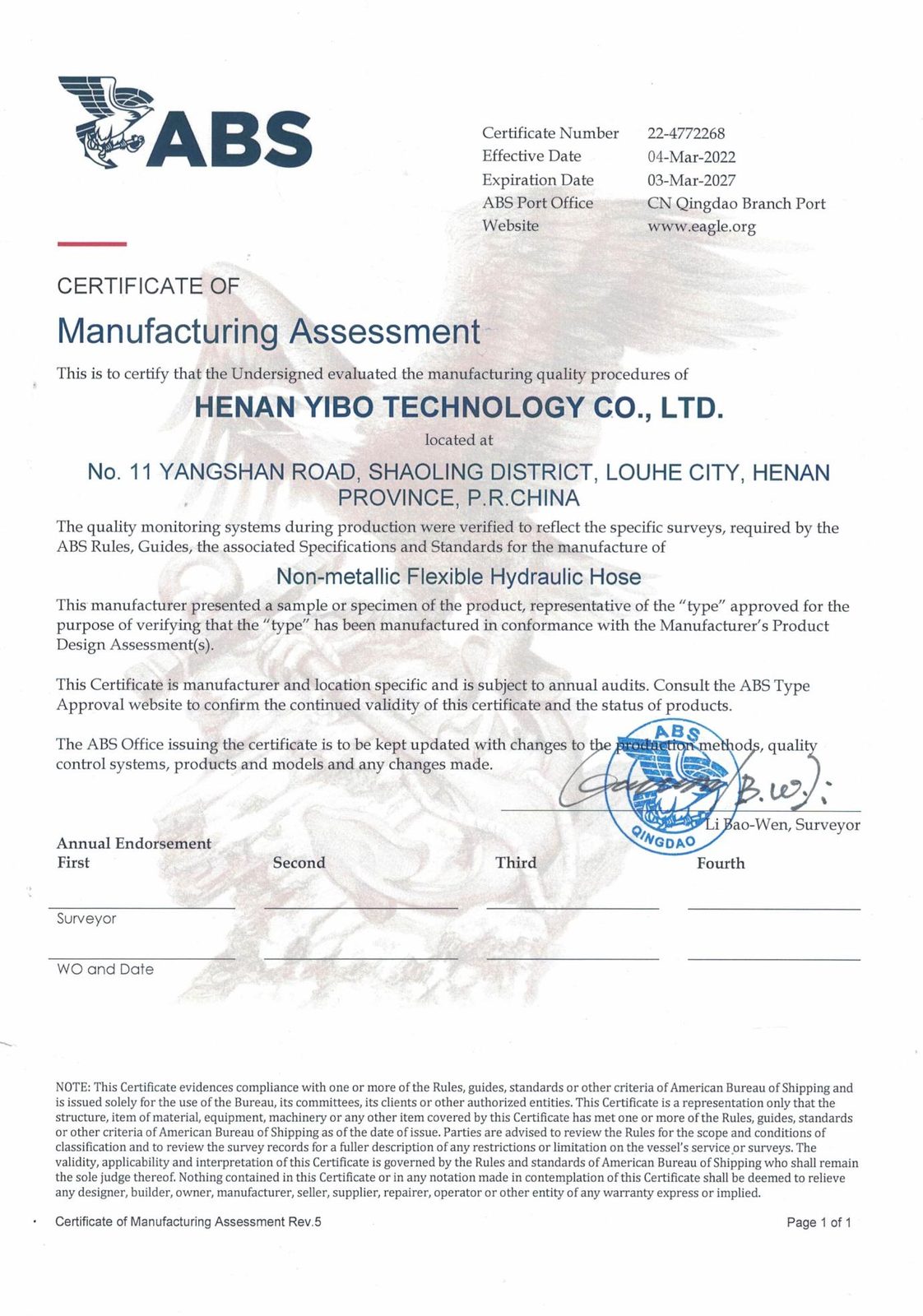
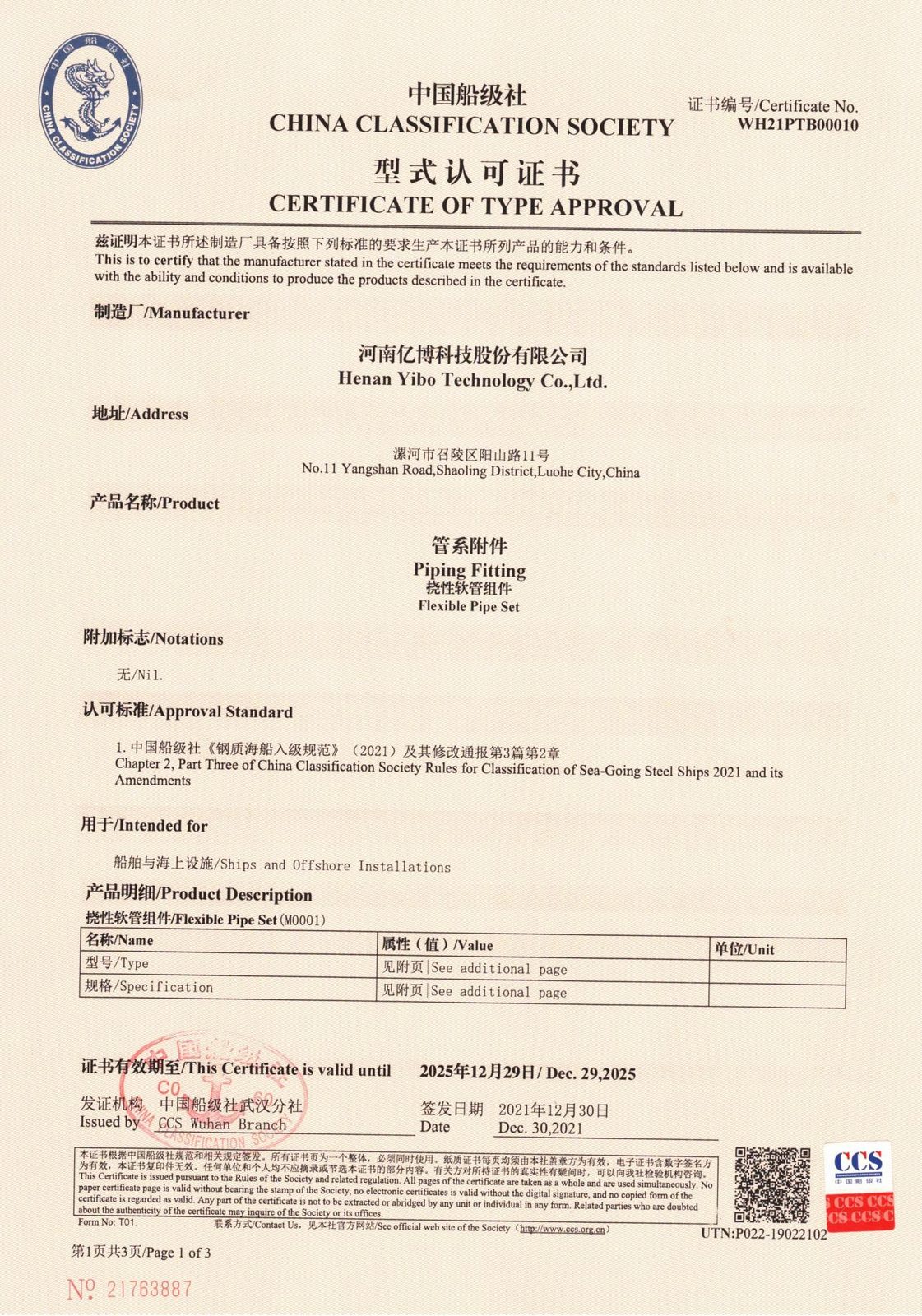
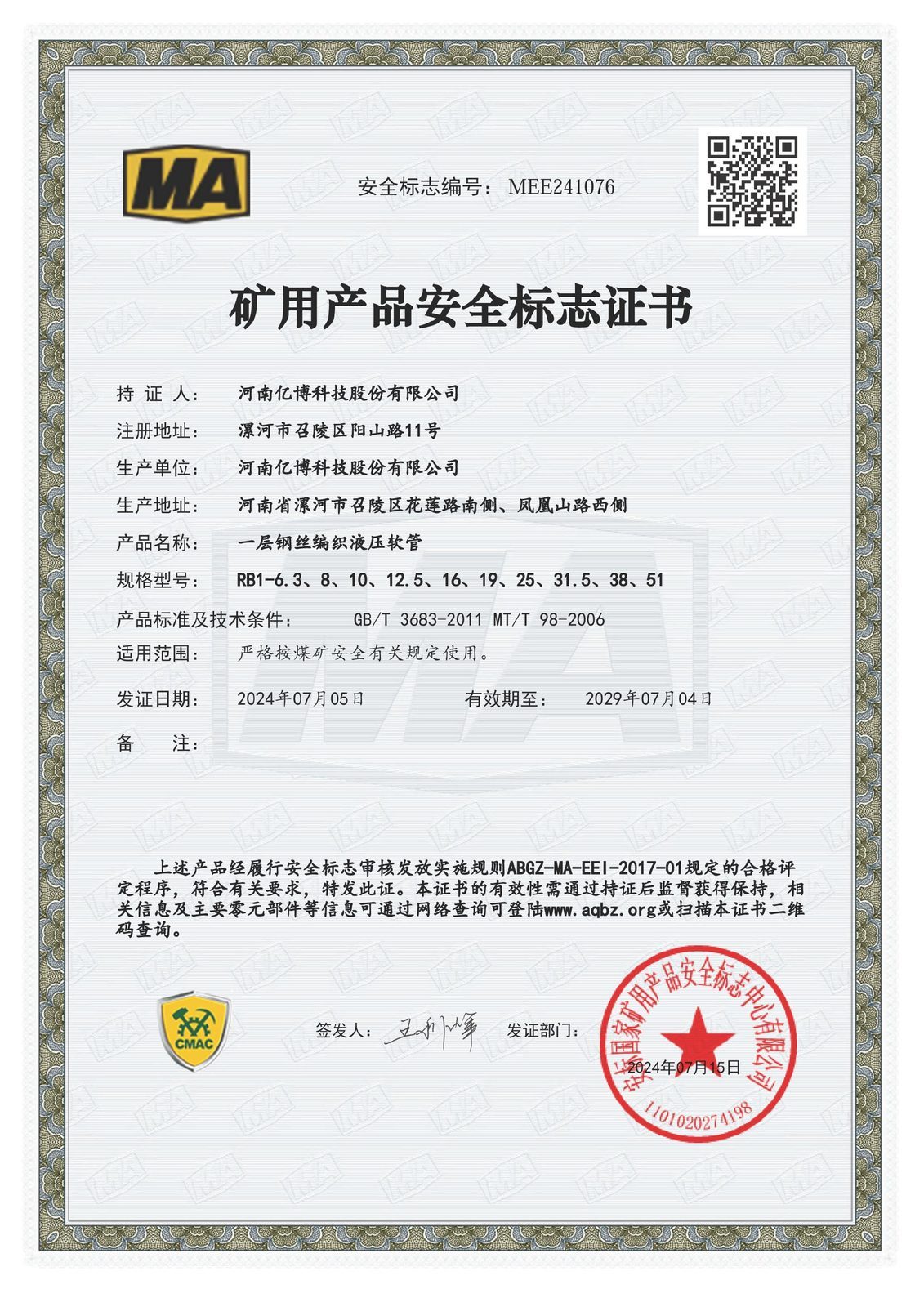
↓Certifications & factory photos
- Published Range
- Nominal bore:4.6–10.1 mm
- Max working pressure:250 bar
- Min burst pressure:1000 bar
- Mass per metre:0.19–0.34 kg/m.
- Size range:4 codes in the table, from 1SN-03-05 upward
- Hose Features
- Bend Radius:The published codes route down to 90–130 mm minimum radius.
- Compared on Real Data:The comparison below uses the dimensional figures our own lines produce, not marketing shorthand.
- Narrowed to One Answer:The point of a guide is to end with a single recommendation for your duty.
- Standards Explained:Where two standard designations look similar, we say which property actually separates them.
- Application:1SN and 2SN are the two standard single- and two-wire braid hoses to EN 853.
24 Hours Service Hotline
+86 137 2136 0724


For distributors, OEMs & MRO buyers · 30+ countries · MOQ 100 m · free samples


In stock — ready to ship sooner than custom runs. Ask which sizes →
PRODUCT INTRODUCTION
1SN vs 2SN — One Braid, 165 bar, and 0.14 kg/m
Both hoses are EN 853 single- and two-wire braid, built on the same bore range from 4.6 mm to 10.1 mm inside diameter. The question a buyer is really asking is what the second layer of wire buys, and where it stops paying.
In SAE terms the nearest equivalents are SAE 100R1 for 1SN and SAE 100R2 for 2SN, so a drawing that calls for 100R1AT or 100R2AT is pointing at this pair of classes.
At the 3/16 inch bore, 1SN is rated 25.0 MPa (250 bar) with 100.0 MPa minimum burst. 2SN at the same bore is rated 41.5 MPa (415 bar) with 166.0 MPa burst, so the second braid is worth 165 bar. Weight goes from 0.19 to 0.33 kg/m and outside diameter from 12.5 mm to 16 mm.
What does not change is the bend radius. Three of the four bores carry an identical minimum arc on both classes: 90 mm at 3/16 inch, 100 mm at 1/4 inch and 130 mm at 3/8 inch. Only the 5/16 bore moves, 110 mm against 115 mm. If you were expecting the heavier hose to need a wider loop, it does not.
Data Display
1SN and 2SN are the two standard single- and two-wire braid hoses to EN 853.
1SN vs 2SN, same bore, matching arc
Each cell is working pressure · minimum bend radius · mass per metre. The two classes share the same bore series, so every row pairs directly.
| Size | 1SN | 2SN | Difference |
|---|---|---|---|
| 3/16 | 250 bar · 90 mm · 0.19 kg/m | 415 bar · 90 mm · 0.33 kg/m | +165 bar · +0.14 kg/m |
| 1/4 | 225 bar · 100 mm · 0.22 kg/m | 400 bar · 100 mm · 0.42 kg/m | +175 bar · +0.20 kg/m |
| 5/16 | 215 bar · 110 mm · 0.27 kg/m | 350 bar · 115 mm · 0.47 kg/m | +135 bar · +0.20 kg/m |
| 3/8 | 180 bar · 130 mm · 0.34 kg/m | 330 bar · 130 mm · 0.6 kg/m | +150 bar · +0.26 kg/m |
| Burst ratio | 4.0x · 100 MPa | 4.0x · 166 MPa | same ratio, 66 MPa more burst |
2SN also covers 1/2 inch (12.3 to 13.5 mm) through 2-1/2 inch (63.1 to 65.1 mm), which the 1SN table does not list.
| PRODUCT NAME | NOMINAL INNER DIAMETER (mm) | SPECIFICATION (inch) | INNER DIAMETER (ID)mm (min) | INNER DIAMETER (ID)mm (max) | REINFORCEMENT LAYER OUTER DIAMETER (W.D)mm (min) | REINFORCEMENT LAYER OUTER DIAMETER (W.D)mm (max) | OUTER DIAMETER (OD)mm (max) | MAXIMUM WORKING PRESSURE W.P (Mpa) | psi | MINIMUM BURST PRESSURE B.P (Mpa) | psi | MINIMUM BENDING RADIUS Min.B.R (mm) | REFERENCE WEIGHT W.T (Kg/m) |
|---|---|---|---|---|---|---|---|---|---|---|---|---|---|
| 1SN-03-05 | 5 | 3/16“ | 4.6 | 5.4 | 9.0 | 10.0 | 12.5 | 25.0 | 3,626 | 100.0 | 14,504 | 90.0 | 0.19 |
| 1SN-04-06 | 6.3 | 1/4” | 6.2 | 7.0 | 10.6 | 11.7 | 14.1 | 22.5 | 3,263 | 90.0 | 13,053 | 100.0 | 0.22 |
| 1SN-05-08 | 8 | 5/16“ | 7.7 | 8.5 | 12.1 | 13.3 | 15.7 | 21.5 | 3,118 | 86.0 | 12,328 | 115.0 | 0.27 |
| 1SN-06-10 | 10 | 3/8” | 9.5 | 10.1 | 14.5 | 15.7 | 18.1 | 18.0 | 2,611 | 72.0 | 10,443 | 128.0 | 0.34 |
Values are reproduced from the official YIBO product page. psi columns = MPa × 145.038, rounded. Ratings run to 250 bar working / 1,000 bar minimum burst over the 4.6–10.1 mm bore band; the order data sheet governs the batch.
Application & Selection
1SN and 2SN are the two standard single- and two-wire braid hoses to EN 853. 1SN vs 2SN Hydraulic Hose — What to Choose covers 4.6–10.1 mm across 4 published codes.
1SN vs 2SN Hydraulic Hose — What to Choose is rated 250 bar working and 1,000 bar minimum burst at the top of the 4.6–10.1 mm bore range, a 4:1 margin. This series weighs 0.19–0.34 kg/m. Crimped and pressure-tested in-house, including the 1SN-03-05 build, with metric / BSP / JIC / ORFS ends. 1SN vs 2SN Hydraulic Hose — What to Choose runs roughly 20 days from confirmation over its 4 codes, with OEM marking and packing.
WHY THIS HOSE
Five Numbers That Decide 1SN or 2SN
The two classes differ in exactly one design choice: how much wire is wound over the tube. Everything else follows from it.
165 bar at 3/16 Inch
1SN is 25.0 MPa working, 2SN is 41.5 MPa at the same 4.6 to 5.4 mm inside diameter. That single step is the whole pressure argument.
Same Arc, Both Classes
90 mm, 100 mm and 130 mm are shared bore for bore. The second braid adds outside diameter, so a swap does not need a longer loop.
0.19 Against 0.33 kg/m
The wire is the weight. On a hand-held tool or a moving head, 0.14 kg/m per metre is felt by the operator all shift.
3.5 mm More Outside Diameter
12.5 mm becomes 16 mm at the smallest code, 18.1 mm becomes 21.7 mm at 3/8 inch. That is a new ferrule, not a re-termination.
Both Keep 4:1
100.0 MPa burst on 25.0 MPa working, 166.0 MPa burst on 41.5 MPa. Neither class trades away its margin for the pressure.
Table Stops at 10 mm
Four codes only, 5 mm to 10 mm nominal. The two-braid range continues past 3/8 inch, but this table makes no claim beyond its last row.
CONSTRUCTION
Where the Second Braid Sits
Inner Tube
Oil-resistant synthetic rubber, bored 4.6 mm to 10.1 mm across the four codes. The tube is the same in both classes; it is the layer above that changes.
Reinforcement
One or two high-tensile steel wire braids. The braid layer measures 9.0 to 15.7 mm on 1SN and 10.6 to 17.3 mm on 2SN, which is the 1.6 mm of extra wire that shows up as pressure.
Cover
Abrasion-resistant rubber over the braid, taking the outside diameter to 12.5 mm on the smallest 1SN code and 18.1 mm on the 3/8 code.
APPLICATIONS
Where Each Class Earns Its Place
Pilot and Control Lines
200 bar circuits that never see a spike: 1SN holds 250 bar at 3/16 inch with a 90 mm arc.
Manifold Runs
Short jumps between valve blocks, where 0.19 kg/m and a 12.5 mm outside diameter thread through a crowded cabinet.
Machine Return Lines
1SN at 180 bar on the 3/8 code suits a return leg, provided the filter cannot block and lift the pressure.
Mobile Ag Equipment
Load-sense lines that run 300 bar or more: 2SN at 33.0 MPa on the same 130 mm arc keeps the existing routing.
Boom and Arm Cylinders
Cylinder lines that dead-head at the end of stroke need the 2SN class, because the spike lands above 1SN ratings.
Retrofit Upgrades
A machine uprated from 250 to 400 bar keeps its hose path and changes class only, since the bend radius does not move.
HIGH-END INDUSTRY DIRECTIONS
Why Buyers Are Splitting the Two Classes
Enquiries increasingly name the circuit rather than the hose: pilot, return, cylinder. That is a pressure-class decision before it is a product one.
① Uprated Mobile Circuits high pressure hose
Trend: Compact excavators and telehandlers are being re-rated past 250 bar.
Dohose: 2SN holds 41.5 MPa at 3/16 and 33.0 MPa at 3/8, with 166.0 MPa and 132.0 MPa burst behind it.
② Weight on Hand Tools lightweight hose
Trend: Operators notice 0.14 kg/m at the end of a shift.
Dohose: 1SN runs 0.19 to 0.34 kg/m across the four codes, so a pilot line stays light.
③ Same Routing, Higher Class retrofit hose
Trend: Retrofit is preferred to redesign when a machine is uprated.
Dohose: 90 mm, 100 mm and 130 mm bend radii are shared, so the class can change without moving a clamp.
④ Ferrule Availability crimped hose
Trend: Buyers ask whether the existing ferrule still fits before they ask the price.
Dohose: Outside diameter goes 12.5 to 16 mm at 3/16, so we quote the insert and ferrule with the hose.
⑤ Dual Unit Data metric hose
Trend: Specifiers want bar and psi on the same row.
Dohose: Every row carries both, 18.0 MPa beside 2,611 psi, down to the 3/8 code.
⑥ Traceable Batch traceable hose
Trend: Pressure class is now recorded against the machine, not the store.
Dohose: Batch and test date are marked on the body of each cut length.
WHY DOHOSE
Seven Reasons Buyers Stay with Us
Numbers, Not Averages
Every figure for the 1SN Vs 2SN Hydraulic Hose — What to Choose comes from the per-code table: 4.6–10.1 mm, 250 bar working, 1000 bar burst.
One Line, Full Range
All 4 codes of the 1SN Vs 2SN Hydraulic Hose — What to Choose come off the same line, so a mixed order in 4.6–10.1 mm ships together.
Length on Demand
Cut-to-length supply for 1SN Vs 2SN Hydraulic Hose — What to Choose; each code carries its own mass, 0.19–0.34 kg/m, so lifting gear can be sized first.
Ends Done Here
Assemblies of 1SN Vs 2SN Hydraulic Hose — What to Choose are crimped on site and held at test pressure before they are boxed.
Export Packing
Coiled in poly bags, then woven bags on pallets — loading plans are drawn for 4-code orders.
OEM Ready
Brand printing and custom packing are standard options on the 1SN Vs 2SN Hydraulic Hose — What to Choose.
Fast, Firm Pricing
A firm price for 1SN Vs 2SN Hydraulic Hose — What to Choose usually returns within 1 hour of your enquiry.
FAQ
1SN vs 2SN — Ten Selection Questions
1SN vs 2SN — what actually changes beyond one more braid?
Pressure and outside diameter, not routing. At the 3/16 inch bore 1SN is rated 25.0 MPa (250 bar) with 100.0 MPa burst, and 2SN is rated 41.5 MPa (415 bar) with 166.0 MPa burst. The minimum bend radius is 90 mm on both, and weight rises from 0.19 to 0.33 kg/m, so the second braid buys 165 bar at the cost of 0.14 kg/m per metre.
Can 1SN be replaced by 2SN on the same fittings?
No, the ferrule has to change with the outside diameter. The 3/16 code goes from 12.5 mm outside diameter to 16 mm, and the 3/8 code from 18.1 mm to 21.7 mm. The insert and ferrule are matched to that diameter, so an upgrade is a new assembly rather than a re-termination of the old one.
What pressure does the 3/8 inch 1SN code hold?
The 3/8 code is rated 18.0 MPa, or 180 bar, with 72.0 MPa (10,443 psi) minimum burst on an inside diameter of 9.5 to 10.1 mm. It is the lowest rating in the 1SN range because the wall does not thicken as the bore grows, and the minimum bend radius at that size is 130 mm.
What is the burst pressure at 1/4 inch on each class?
90.0 MPa (13,053 psi) for 1SN on a 6.2 to 7.0 mm inside diameter, against 160.0 MPa for 2SN at the same bore. Both are a 4:1 ratio over their own working pressure, 22.5 MPa and 40.0 MPa, so the burst figure tracks the class rating rather than a separate test regime.
Why is the minimum bend radius the same on both classes?
Because the bore sets the arc, and the second braid adds diameter rather than stiffness at these sizes. Both classes are 90 mm at 3/16 inch, 100 mm at 1/4 inch and 130 mm at 3/8 inch. The only gap is the 5/16 bore, 110 mm on 1SN against 115 mm on 2SN.
Why does 2SN weigh so much more for 165 bar?
The mass is in the wire, and it is added size by size. At 3/16 inch 1SN is 0.19 kg/m against 0.33 kg/m for 2SN; at 3/8 inch it is 0.34 against 0.60 kg/m. Between 0.14 and 0.26 kg/m of steel is added per size, which is what a moving line pays for the higher class.
Which class for a 3/16 pilot line that runs at 200 bar?
1SN, with margin to spare. The 3/16 code is 250 bar working against a 200 bar duty, with 100.0 MPa burst behind it and a 90 mm arc for a tight manifold. 2SN would add 0.14 kg/m of braid for pressure that pilot circuit never reaches.
Which class for a 3/8 return line that spikes to 300 bar?
2SN. 1SN at 3/8 inch is 180 bar working, so a 300 bar spike is already above its rating, while 2SN holds 330 bar on the same 130 mm bend radius and the same 10.1 mm inside diameter. A return leg with a blocked filter will see that spike, so the rating has to cover it.
What is the minimum order, and how is the hose packed?
100 m per size, cut to length, across 4.6 mm to 10.1 mm inside diameter. Coils are wrapped and marked with size, pressure class and batch, and several sizes can share a container at 0.19 to 0.34 kg/m, light enough that freight does not decide the order.
What do the two classes cost per metre, and can I sample them?
Price follows the wire content: 1SN runs 0.19 kg/m at 3/16 inch to 0.34 kg/m at 3/8 inch, and 2SN carries roughly double the wire at the same bores. Samples of either class are cut free from the production run, and a firm figure comes back the same working day on bore, length, ends and destination.
Related Products
Automotive Power Steering HOSE
THE HOSE CONSISTS OF A HEAT-RESISTANT OIL SYNTHETIC RUBBER, ONE OR TWO LAYERS OF STEEL WIRE BR…
Compact Pilot HOSE
INNER TUBE: OIL-RESISTANT SYNTHETIC RUBBER. REINFORCEMENT: ONE LAYER OF STEEL WIRE BRAIDING. O…
Compact Single WIRE Braid Hydraulic HOSE
The hose consists of an inner tube, a single wire braid reinforcement, and an outer cover.
Compact Two-wire Braided Hydraulic HOSE
The hose consists of an inner tube, a double wire braid reinforcement, and an outer cover.
Get a quote
Please fill out the form below and we will contact you within 1 hour.
We are online 24/7!
We will contact you within 1 hour of receiving your enquiry.
Hotline