
1SC vs 2SC Compact Hydraulic Hose
EN 857 · 225 bar working / 900 bar burst · 6.1–13.5 mm
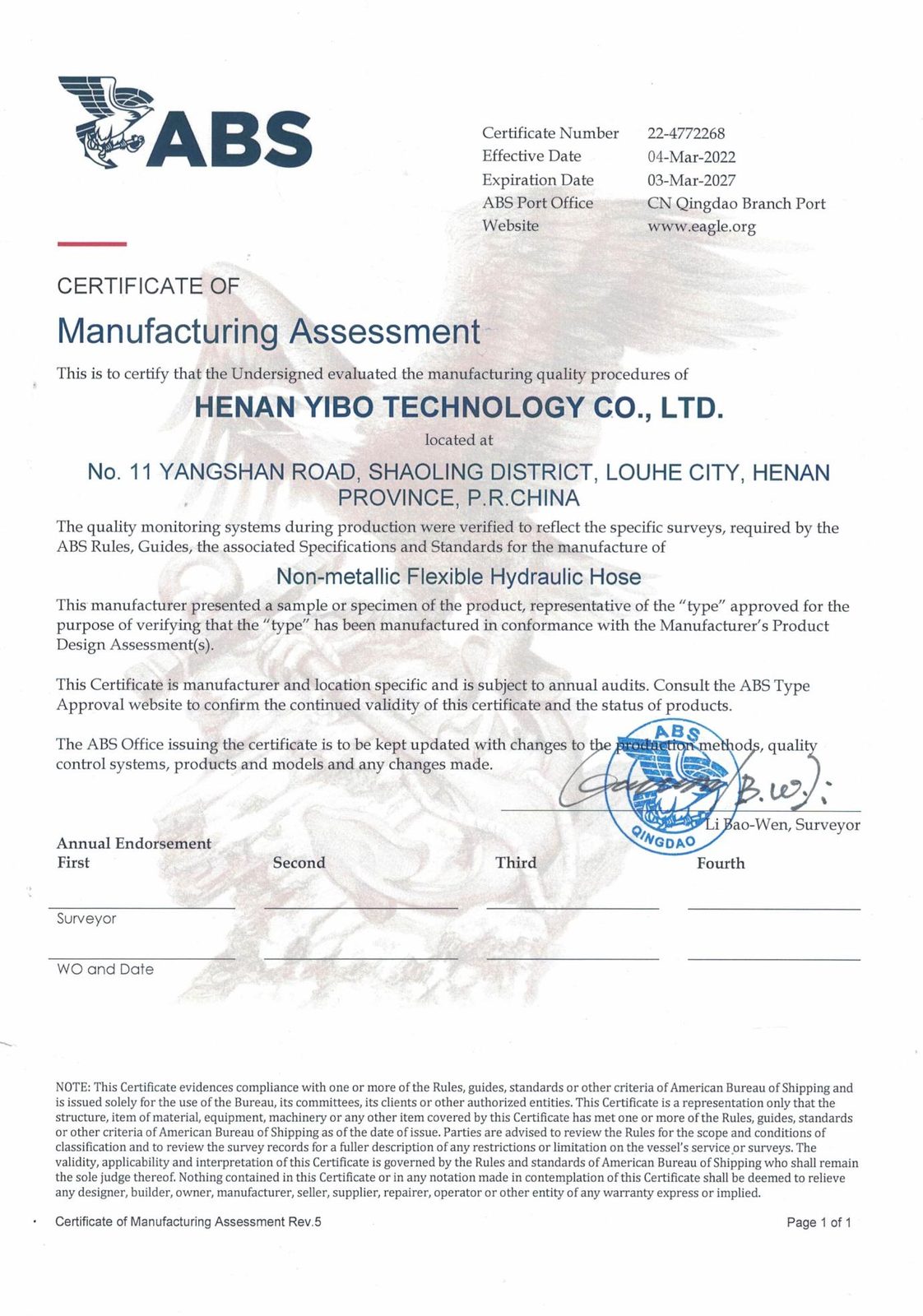
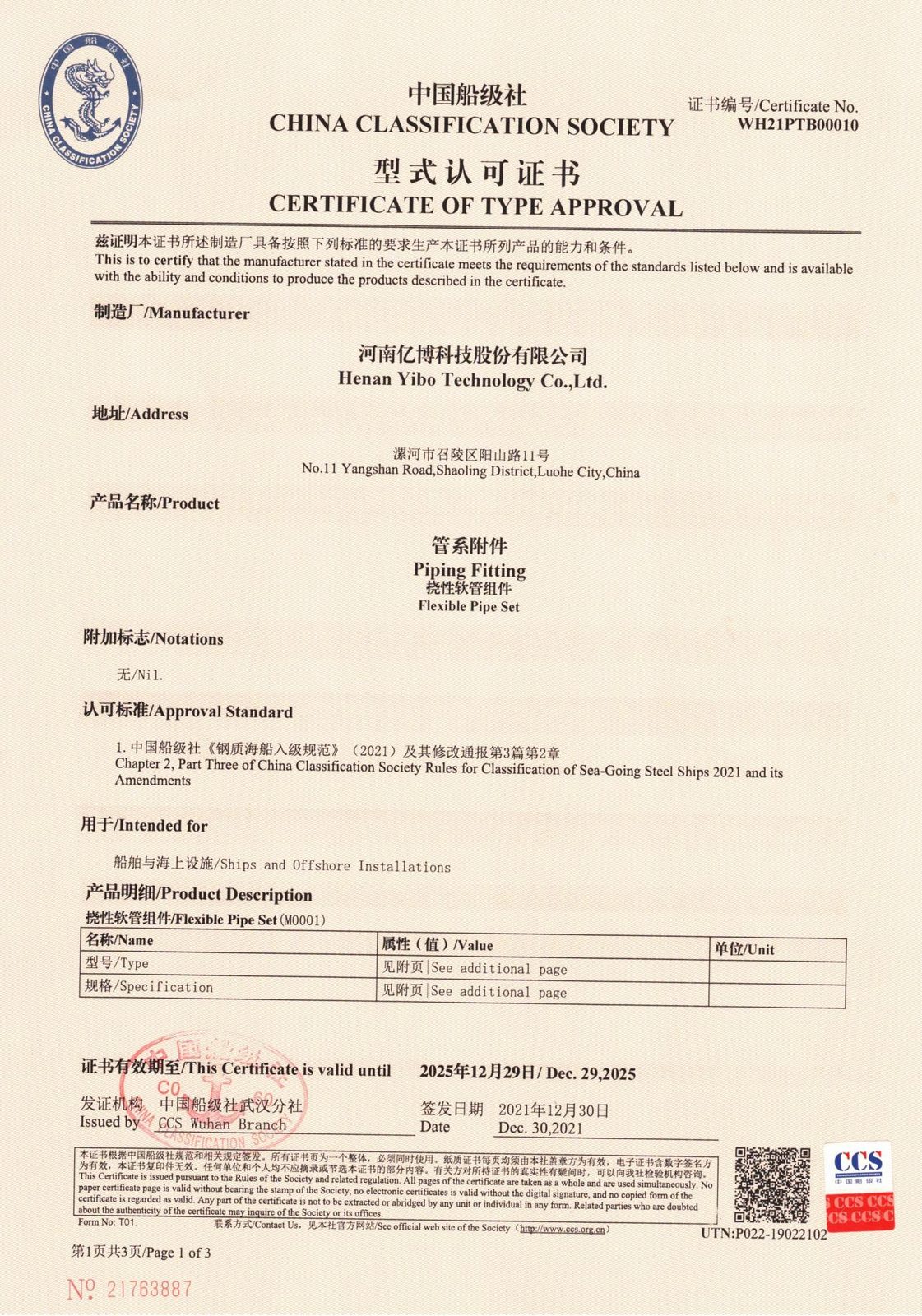
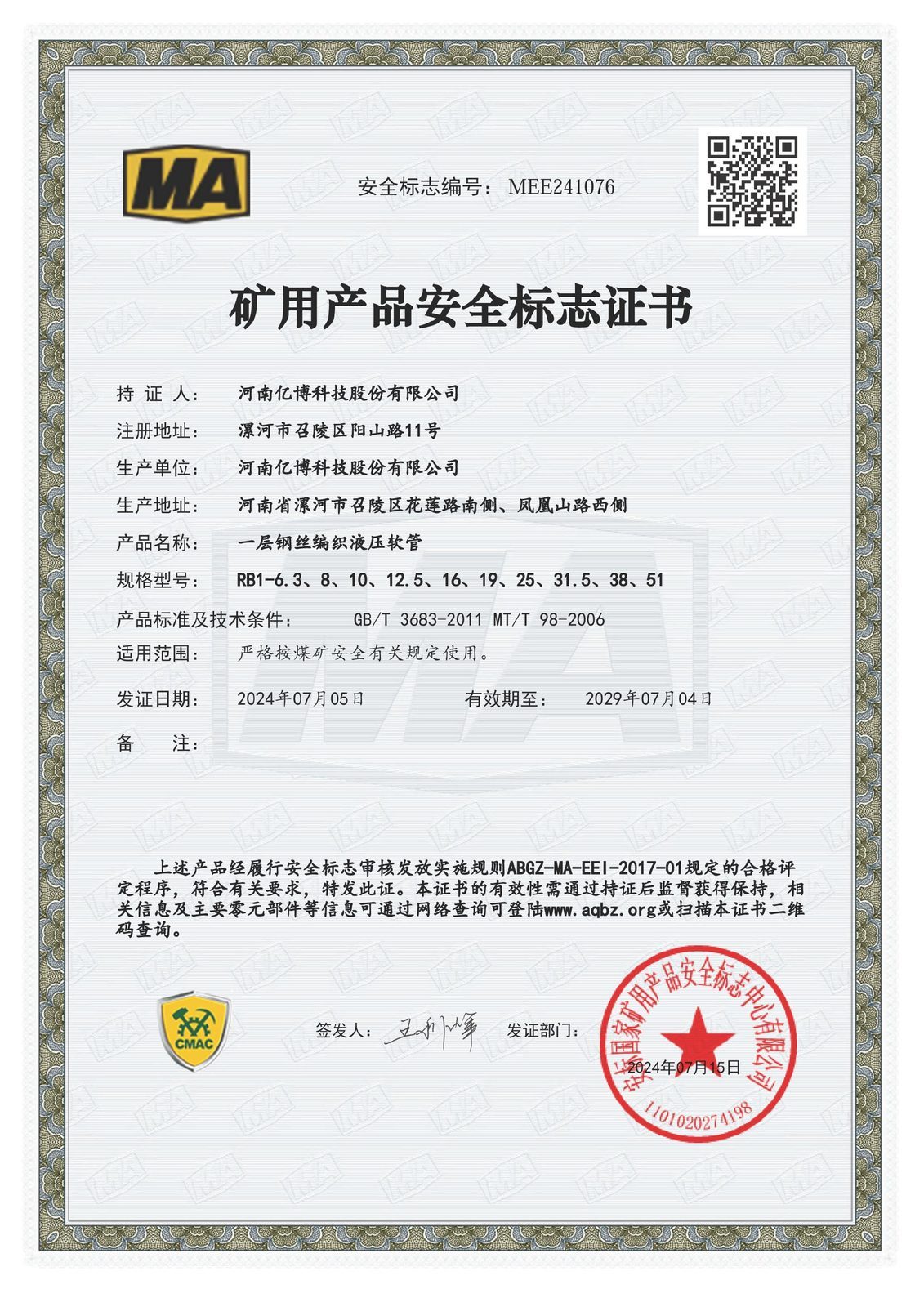
↓Certifications & factory photos
- Published Range
- Nominal bore:6.1–13.5 mm
- Max working pressure:225 bar
- Min burst pressure:900 bar
- Mass per metre:0.18–0.35 kg/m.
- Size range:4 codes in the table, from 1SC-04-06 upward
- Hose Features
- Bend Radius:The published codes route down to 75–130 mm minimum radius.
- Compared on Real Data:The comparison below uses the dimensional figures our own lines produce, not marketing shorthand.
- Narrowed to One Answer:The point of a guide is to end with a single recommendation for your duty.
- Standards Explained:Where two standard designations look similar, we say which property actually separates them.
- Application:Compact hose to EN 857 is the answer when space is the problem.
24 Hours Service Hotline
+86 137 2136 0724


For distributors, OEMs & MRO buyers · 30+ countries · MOQ 100 m · free samples


In stock — ready to ship sooner than custom runs. Ask which sizes →
PRODUCT INTRODUCTION
1SC vs 2SC — 1.1 mm More Diameter, 175 bar More Pressure
Compact hose to EN 857 is bought for one reason: it fits where a standard braided hose will not. That makes the 1SC to 2SC decision different from the usual pressure upgrade, because here the envelope hardly moves at all.
At the 1/4 inch bore, 1SC is rated 22.5 MPa (225 bar) with 90.0 MPa burst, on an outside diameter of 11.8 to 13.2 mm. 2SC at the same bore is rated 40.0 MPa (400 bar), on 12.9 to 14.3 mm. The second braid costs about 1.1 mm of outside diameter and buys 175 bar.
The bend radius does not move at all. All four shared bores carry the same minimum arc in both classes: 75 mm at 1/4 inch, 85 mm at 5/16, 90 mm at 3/8 and 130 mm at 1/2 inch. If a machine was designed around 1SC, 2SC drops into the same clamps.
Data Display
Compact hose to EN 857 is the answer when space is the problem.
1SC vs 2SC, matched by inside diameter
Each cell is working pressure · minimum bend radius · mass per metre. Compact hose holds the same arc in both classes, so the difference column is pressure and weight only.
| Size | 1SC | 2SC | Difference |
|---|---|---|---|
| 1/4 | 225 bar · 75 mm · 0.18 kg/m | 400 bar · 75 mm · 0.28 kg/m | +175 bar · +0.10 kg/m |
| 5/16 | 215 bar · 85 mm · 0.2 kg/m | 350 bar · 85 mm · 0.32 kg/m | +135 bar · +0.12 kg/m |
| 3/8 | 180 bar · 90 mm · 0.27 kg/m | 330 bar · 90 mm · 0.43 kg/m | +150 bar · +0.16 kg/m |
| 1/2 | 160 bar · 130 mm · 0.35 kg/m | 275 bar · 130 mm · 0.52 kg/m | +115 bar · +0.17 kg/m |
| Burst ratio | 4.0x · 90 MPa | 4.0x · 160 MPa | same ratio, 70 MPa more burst |
2SC also covers 5/8 inch (15.5 to 16.7 mm), 3/4 inch (18.6 to 19.8 mm) and 1 inch (25.0 to 26.4 mm), which the 1SC table does not list.
| PRODUCT NAME | NOMINAL INNER DIAMETER (mm) | SPECIFICATIONS (inch) | INNER DIAMETER (ID)mm (min) | INNER DIAMETER (ID)mm (max) | REINFORCEMENT LAYER OUTER DIAMETER (W.D)mm (min) | REINFORCEMENT LAYER OUTER DIAMETER (W.D)mm (max) | OUTER DIAMETER (OD)mm (min) | OUTER DIAMETER (OD)mm (max) | MAXIMUM WORKING PRESSURE W.P (Mpa) | psi | MINIMUM BURST PRESSURE B.P (Mpa) | psi | MINIMUM BEND RADIUS Min.B.R (mm) | REFERENCE WEIGHT W.T (Kg/m) |
|---|---|---|---|---|---|---|---|---|---|---|---|---|---|---|
| 1SC-04-06 | 6.3 | 1/4” | 6.1 | 6.9 | 9.6 | 10.8 | 11.8 | 13.2 | 22.5 | 3,263 | 90.0 | 13,053 | 75.0 | 0.18 |
| 1SC-05-08 | 8 | 5/16“ | 7.7 | 8.5 | 10.9 | 12.1 | 13.1 | 14.5 | 21.5 | 3,118 | 86.0 | 12,473 | 85.0 | 0.20 |
| 1SC-06-10 | 10 | 3/8” | 9.3 | 10.1 | 12.7 | 14.5 | 15.1 | 16.5 | 18.0 | 2,611 | 72.0 | 10,443 | 90.0 | 0.27 |
| 1SC-08-12.5 | 12.5 | 1/2“ | 12.3 | 13.5 | 15.9 | 18.1 | 18.9 | 20.3 | 16.0 | 2,321 | 64.0 | 9,282 | 130.0 | 0.35 |
Values are reproduced from the official YIBO product page. 1SC vs 2SC Compact Hydraulic Hose: psi columns = MPa × 145.038, rounded. 1SC vs 2SC Compact Hydraulic Hose: Bore 6.1–13.5 mm over 4 codes; each row carries its own rating, and the order data sheet governs the batch.
Application & Selection
Compact hose to EN 857 is the answer when space is the problem. 1SC vs 2SC Compact Hydraulic Hose covers 6.1–13.5 mm across 4 published codes.
1SC vs 2SC Compact Hydraulic Hose tops out at 225 bar working and 900 bar minimum burst over its 4 codes. 1SC vs 2SC Compact Hydraulic Hose: From 0.18 to 0.35 kg/m over the 4 rows. 1SC vs 2SC Compact Hydraulic Hose: We crimp and test every build in-house — 4 codes, 6.1–13.5 mm. 1SC vs 2SC Compact Hydraulic Hose runs roughly 20 days from confirmation over its 4 codes, with OEM marking and packing.
WHY THIS HOSE
Why Compact Hose Behaves Differently
A compact range is specified when the routing is already fixed. That changes what counts as a good upgrade.
1.1 mm, Not 3.5 mm
Going 1SC to 2SC adds 1.1 mm of outside diameter at 1/4 inch, from 11.8 to 12.9 mm. The same step between EN 853 classes adds 3.5 mm.
The Arc Stays at 75 mm
Both classes are 75 mm at 1/4 inch and 130 mm at 1/2 inch. A pressure upgrade that does not move the arc is a swap, not a redesign.
400 bar Inside a Clamp
2SC holds 40.0 MPa at 1/4 inch, where a standard 2SN holds the same 40.0 MPa at a 17.7 mm outside diameter. Compact wins on envelope.
0.18 to 0.52 kg/m
The whole 1SC range sits between 0.18 kg/m at 1/4 inch and 0.35 kg/m at 1/2 inch, so weight stays out of the argument.
Tighter Outside Tolerance
The 1/4 inch code is held between 11.8 and 13.2 mm, a band narrow enough to plan a fixed clamp position around.
Table Stops at 12.5 mm
The four shared codes end at 1/2 inch, and only the two-braid table continues to 25 mm. Above 1/2 inch this page no longer applies.
CONSTRUCTION
Thin Cover, One More Braid
Inner Tube
Oil-resistant rubber, bored 6.1 mm to 13.5 mm across the four codes. The compact designation starts at the cover, not the tube.
Reinforcement
One or two steel wire braids, measuring 9.6 to 18.1 mm on 1SC and 11.2 to 19.2 mm on 2SC. The extra 1.6 mm of braid is where the pressure class comes from.
Cover
A thin, tight abrasion-resistant cover: 11.8 to 20.3 mm outside on 1SC, against 12.9 to 21.6 mm on 2SC. This layer is what makes the hose compact.
APPLICATIONS
Where the Envelope Decides
Engine Bays
Fixed routing past exhaust and accessory drive: 75 mm at 1/4 inch is often the only arc that clears.
Aerial Work Platforms
Scissor and boom lift arms with tight cable-chain paths, where 0.18 kg/m keeps the harness load down.
Tractor Steering
Steering lines at 160 to 220 bar on the 3/8 code, a 90 mm arc and a 15.1 mm outside diameter.
Machine Tool Clamp
Clamp circuits that run at 300 bar intermittently, where 2SC holds 33.0 MPa on the same 90 mm arc.
Compact Excavators
Pilot and auxiliary lines that need 400 bar inside an existing 14.3 mm clearance.
Retrofit Without Rework
When a circuit is uprated but the clamps are welded in place, both classes share the 130 mm arc at 1/2 inch.
HIGH-END INDUSTRY DIRECTIONS
Why Compact Ranges Keep Winning Specs
As machines get denser, the routing is settled before the hose is chosen. That is the trend driving this pair.
① Denser Machine Layouts compact hose
Trend: New mobile machines have less space per function every generation.
Dohose: 1SC holds 11.8 to 13.2 mm outside diameter at 1/4 inch, against 17.7 mm for a standard 2SN.
② Pressure Creep high pressure hose
Trend: Circuits once rated 225 bar are being specified at 400.
Dohose: 2SC reaches 40.0 MPa at 1/4 inch without giving up the 75 mm arc.
③ Clamp Positions Fixed Early retrofit hose
Trend: Clamps are welded at fabrication, so the arc is a constraint, not a preference.
Dohose: Identical 75, 85, 90 and 130 mm radii across both classes.
④ Freight and Weight lightweight hose
Trend: Air freight on service kits makes 100 g per metre visible.
Dohose: 1SC runs 0.18 to 0.35 kg/m over the four codes.
⑤ Dual Standard Sourcing EN 857 hose
Trend: Buyers quote EN 857 and SAE 100R16 in the same enquiry.
Dohose: Both classes are published with MPa and psi per row, 22.5 beside 3,263.
⑥ Assembly Traceability crimped hose
Trend: Compact assemblies are crimped to a recorded diameter and logged.
Dohose: Crimp diameter and test date are recorded against the batch.
WHY DOHOSE
Seven Reasons Buyers Stay with Us
Numbers, Not Averages
Every figure for the 1SC Vs 2SC Compact Hydraulic Hose comes from the per-code table: 6.1–13.5 mm, 225 bar working, 900 bar burst.
One Line, Full Range
All 4 codes of the 1SC Vs 2SC Compact Hydraulic Hose come off the same line, so a mixed order in 6.1–13.5 mm ships together.
Length on Demand
Cut-to-length supply for 1SC Vs 2SC Compact Hydraulic Hose; each code carries its own mass, 0.18–0.35 kg/m, so lifting gear can be sized first.
Ends Done Here
Assemblies of 1SC Vs 2SC Compact Hydraulic Hose are crimped on site and held at test pressure before they are boxed.
Export Packing
Coiled in poly bags, then woven bags on pallets — loading plans are drawn for 4-code orders.
OEM Ready
Brand printing and custom packing are standard options on the 1SC Vs 2SC Compact Hydraulic Hose.
Fast, Firm Pricing
A firm price for 1SC Vs 2SC Compact Hydraulic Hose usually returns within 1 hour of your enquiry.
FAQ
1SC vs 2SC — Ten Selection Questions
1SC vs 2SC — what actually changes?
Pressure, and about 1.1 mm of outside diameter. At 1/4 inch 1SC is rated 22.5 MPa (225 bar) on 11.8 to 13.2 mm outside diameter, and 2SC is 40.0 MPa (400 bar) on 12.9 to 14.3 mm. The minimum bend radius is 75 mm on both, so the routing is unchanged and only the rating moves.
Can 2SC replace a standard 2SN hose in the same clamp?
Usually yes, and that is the point of the compact class. 2SC at 1/4 inch delivers 40.0 MPa on a 12.9 to 14.3 mm outside diameter, where a standard 2SN carries the same 40.0 MPa on 17.7 mm. The clamp has to suit the smaller diameter, which is a shim rather than a re-weld.
What is the 1/4 inch 1SC rating and bend radius?
The 1/4 inch code is rated 22.5 MPa (225 bar) with 90.0 MPa (13,053 psi) minimum burst, on an inside diameter of 6.1 to 6.9 mm. Minimum bend radius is 75 mm, mass is 0.18 kg/m and outside diameter is held between 11.8 and 13.2 mm.
What is the 1/2 inch rating on each class?
At 1/2 inch both classes share a 130 mm bend radius, but pressure differs: 16.0 MPa (160 bar) for 1SC and 27.5 MPa (275 bar) for 2SC. Weight is 0.35 kg/m against 0.52 kg/m, on the same 12.3 to 13.5 mm inside diameter.
Why does 1SC drop to 160 bar at 1/2 inch?
Because a single braid over a 13.5 mm bore has less wire per unit of hoop stress than the same braid over 6.9 mm. The range falls from 22.5 MPa at 1/4 inch to 16.0 MPa at 1/2 inch, while burst falls from 90.0 MPa to 64.0 MPa.
Why is the bend radius identical on both classes?
Because the compact standard sets the arc from the bore and the cover thickness, and the second braid adds 1.6 mm inside that envelope. Both are 75 mm at 1/4 inch and 130 mm at 1/2 inch, with only the outside diameter moving, 11.8 mm to 12.9 mm at the smallest code.
Which class for a tight engine bay at 300 bar?
2SC. 1SC at 1/4 inch is 225 bar, so a 300 bar circuit is already above its rating, while 2SC holds 400 bar on a 12.9 to 14.3 mm outside diameter with the same 75 mm arc. The routing does not have to change to gain the pressure.
Which class for a 200 bar pilot line?
1SC, and it is the lighter answer. The 1/4 inch code is 225 bar working at 0.18 kg/m with a 75 mm arc, so a 200 bar pilot line sits under the rating with 90.0 MPa burst behind it. 2SC would add 0.10 kg/m for pressure that line never uses.
What is the minimum order, and how is it packed?
100 m per size, cut to length, across 6.1 mm to 13.5 mm inside diameter. Coils are wrapped and marked with size, class and batch, and the whole 1SC range runs 0.18 to 0.35 kg/m, so a mixed container of four sizes stays light.
What do 1SC and 2SC cost per metre?
Price tracks the braid count: 1SC runs 0.18 kg/m at 1/4 inch to 0.35 kg/m at 1/2 inch, and 2SC carries a second braid at each of the same four bores. Send bore, length, ends and destination and a firm figure comes back the same working day.
Related Products
Automotive Power Steering HOSE
THE HOSE CONSISTS OF A HEAT-RESISTANT OIL SYNTHETIC RUBBER, ONE OR TWO LAYERS OF STEEL WIRE BR…
Compact Pilot HOSE
INNER TUBE: OIL-RESISTANT SYNTHETIC RUBBER. REINFORCEMENT: ONE LAYER OF STEEL WIRE BRAIDING. O…
Compact Two-wire Braided Hydraulic HOSE
The hose consists of an inner tube, a double wire braid reinforcement, and an outer cover.
Fiber Braided HOSE
The hose consists of an inner tube, a double fiber braid reinforcement, and an outer cover.
Get a quote
Please fill out the form below and we will contact you within 1 hour.
We are online 24/7!
We will contact you within 1 hour of receiving your enquiry.
Hotline