
R17 vs R19 Constant-Pressure Hose
SAE 100R17 · 225 bar working / 900 bar burst · SAE 100R17
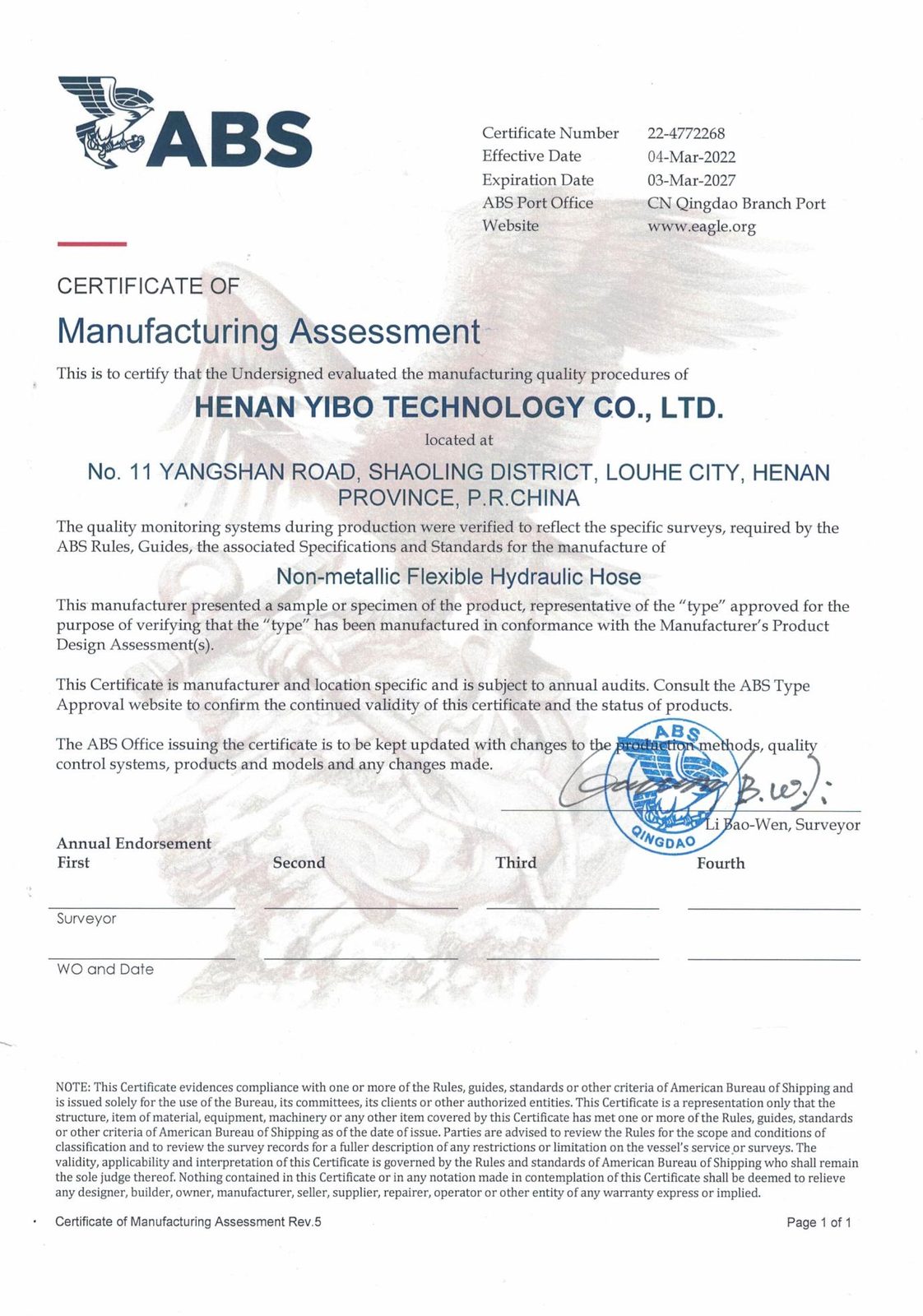
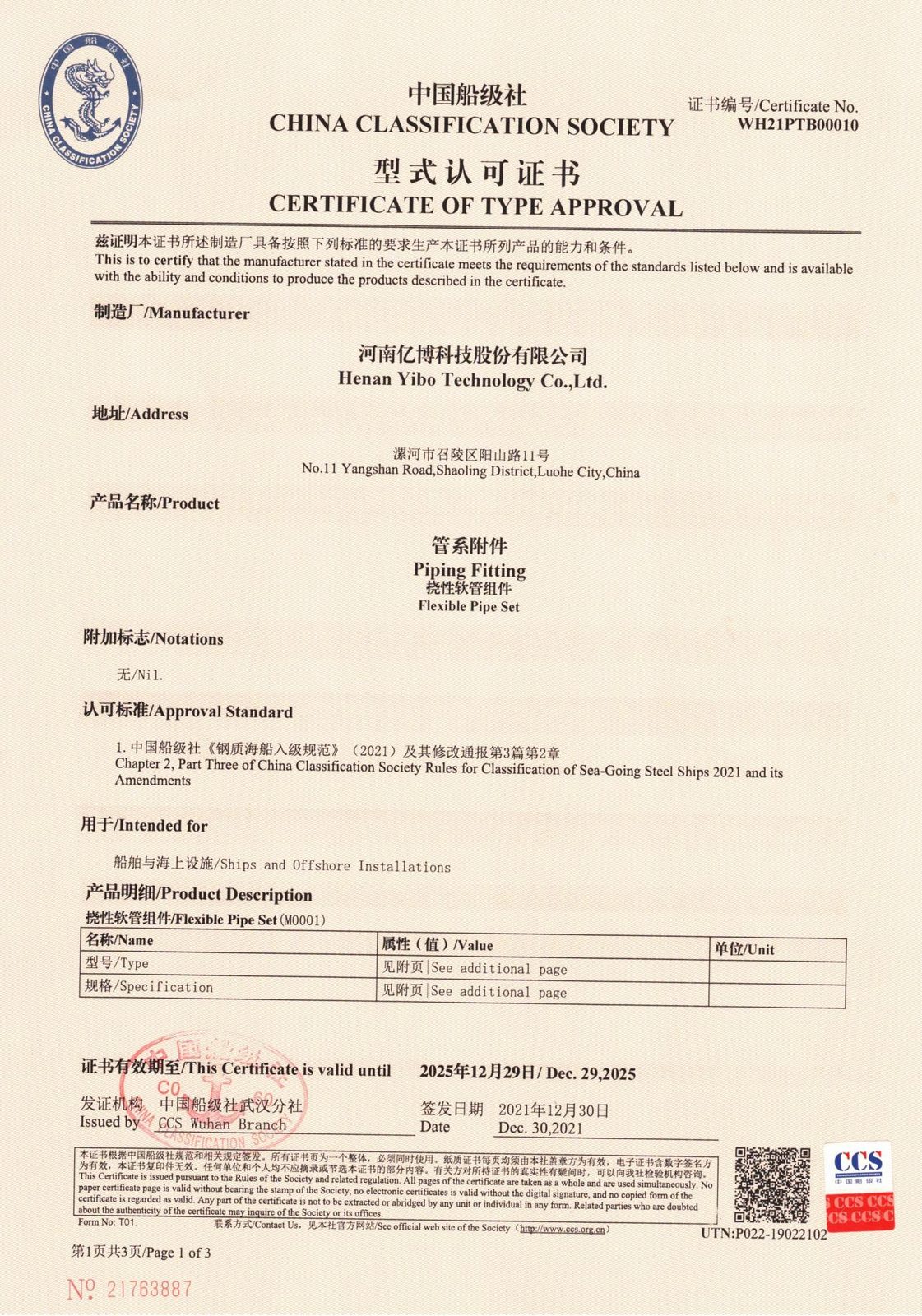
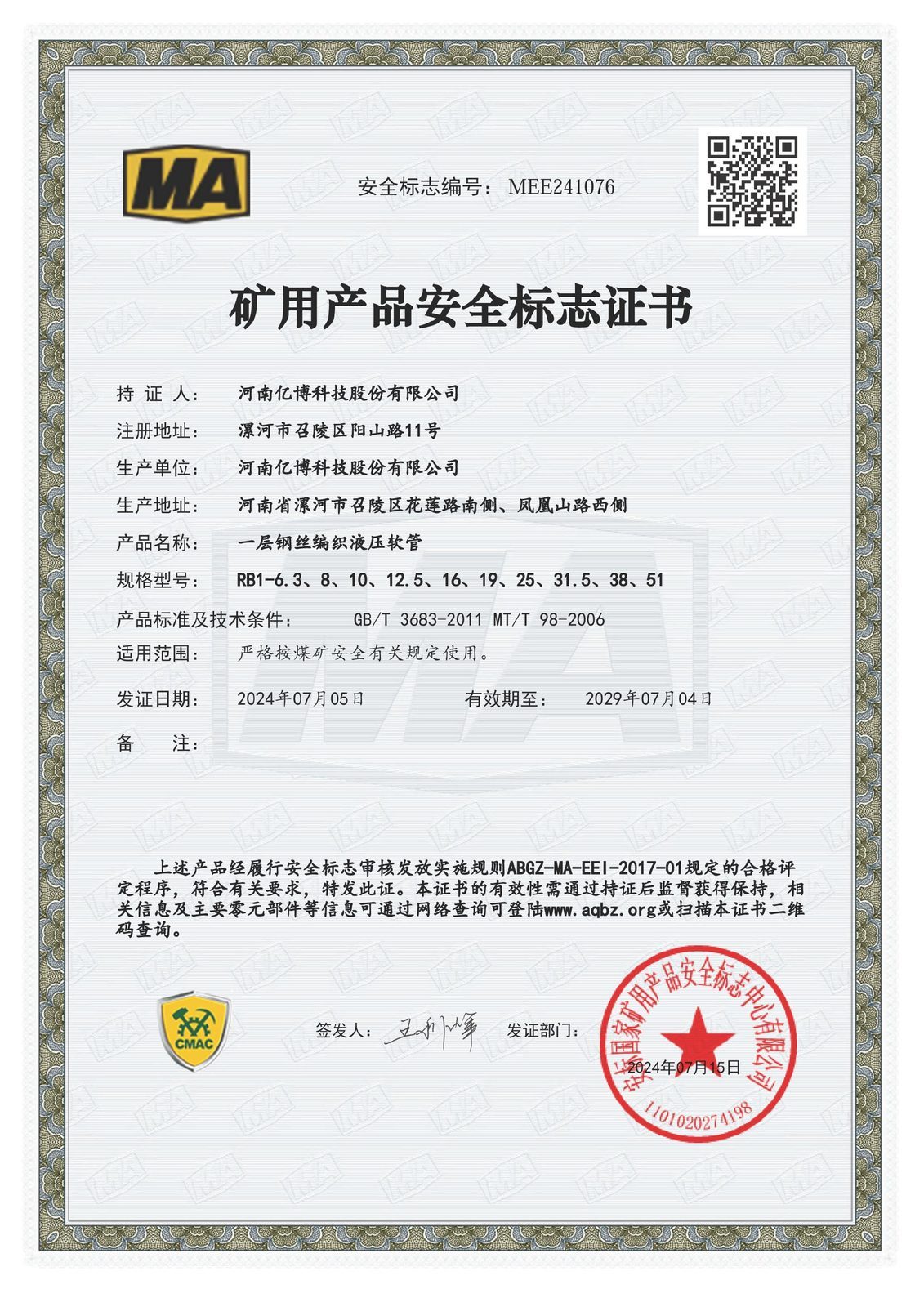
↓Certifications & factory photos
- Published Range
- Max working pressure:225 bar
- Min burst pressure:900 bar
- Mass per metre:0.22–0.68 kg/m
- Nominal bore:8–16 mm across 4 published codes
- Hose Features
- Bend Radius:The published codes route down to 55–100 mm minimum radius.
- Compared on Real Data:The comparison below uses the dimensional figures our own lines produce, not marketing shorthand.
- Narrowed to One Answer:The point of a guide is to end with a single recommendation for your duty.
- Standards Explained:Where two standard designations look similar, we say which property actually separates them.
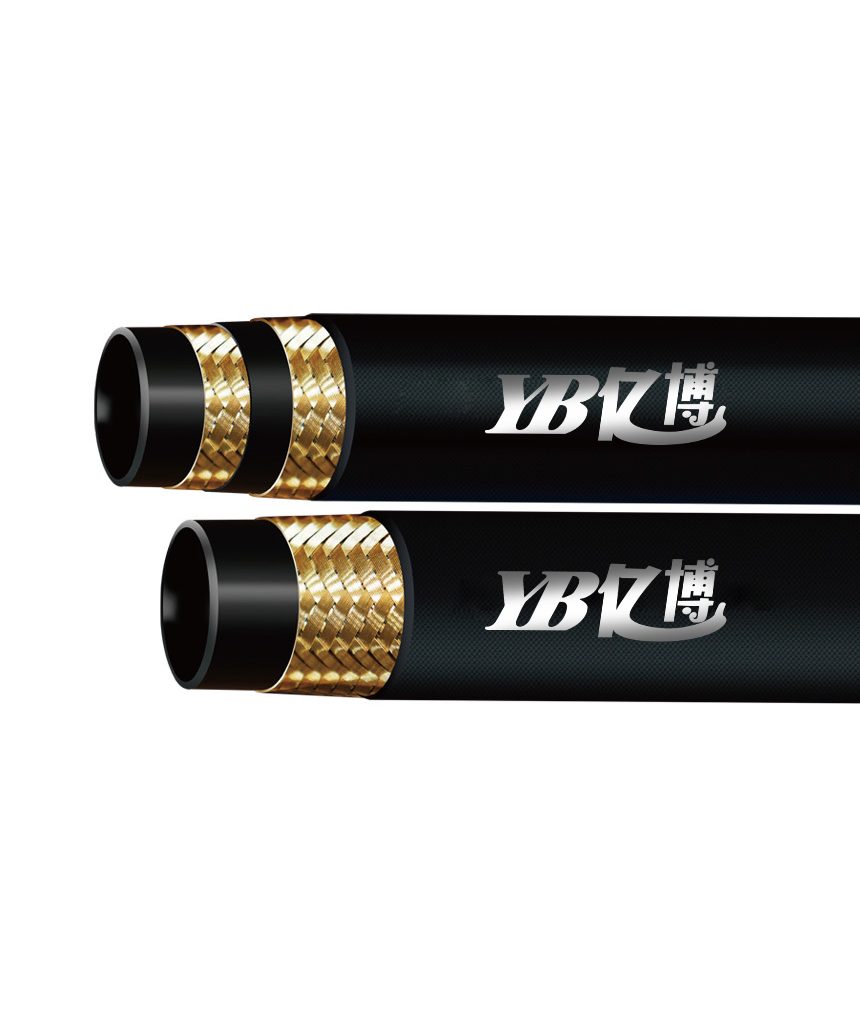
- Application:SAE 100R17 vs R19 constant-pressure hose compared: what constant pressure means and why it simplifies stocking.
24 Hours Service Hotline
+86 137 2136 0724

For distributors, OEMs & MRO buyers · 30+ countries · MOQ 100 m · free samples


In stock — ready to ship sooner than custom runs. Ask which sizes →
PRODUCT INTRODUCTION
R17 vs R19 — 225 bar at 4:1 Burst, or 280 bar at 2:1
Both are constant-pressure hoses: every code in the range carries the same working pressure no matter the bore. That is what makes them easy to stock, and it is usually why a buyer is on this page.
Our R17 table carries 4 codes from 8 mm to 16 mm inner diameter, every one rated 22.5 MPa (225 bar) with 90.0 MPa (900 bar) minimum burst, a 4.0x margin. Bend radius runs 55 to 100 mm and mass 0.22 to 0.68 kg/m.
The comparison table at the top of the specification section pairs the two by inside diameter. Our R19 range carries 7 codes, every one rated 28.0 MPa (280 bar) with 56.0 MPa (560 bar) burst. So R19 gives 55 bar more working pressure and half the burst margin, at the same bend radius and on the same inner diameters.
Data Display
SAE 100R17 vs R19 constant-pressure hose compared: what constant pressure means and why it simplifies stocking.
R17 vs R19, matched by inside diameter
Each cell is working pressure · minimum bend radius · mass per metre. Rows are paired by inside diameter, because the two tables label some codes differently.
| Size | R17 | R19 | Difference |
|---|---|---|---|
| 3/16 | not offered | 280 bar · 45 mm · 0.17 kg/m | — |
| 1/4 | not offered | 280 bar · 50 mm · 0.21 kg/m | — |
| 5/16 | 225 bar · 55 mm · 0.22 kg/m | 280 bar · 55 mm · 0.255 kg/m | +55 bar · +0.04 kg/m |
| 3/8 | 225 bar · 65 mm · 0.28 kg/m | 280 bar · 65 mm · 0.47 kg/m | +55 bar · +0.19 kg/m |
| 1/2 | 225 bar · 90 mm · 0.38 kg/m | 280 bar · 90 mm · 0.59 kg/m | +55 bar · +0.21 kg/m |
| 5/8 | 225 bar · 100 mm · 0.68 kg/m | 280 bar · 100 mm · 0.75 kg/m | +55 bar · +0.07 kg/m |
| Burst ratio | 4.0x · 90 MPa | 2.0x · 56 MPa | R17 keeps double the margin |
R19 also lists 3/16 inch (45 mm bend radius), 1/4 inch (50 mm) and 3/4 inch (120 mm), which R17 does not offer.
R19 also lists 3/16 inch (45 mm bend radius), 1/4 inch (50 mm) and 3/4 inch (120 mm), which R17 does not offer.
| PRODUCT NAME | NOMINAL BORE (mm) | SPECIFICATION (inch) | INSIDE DIAMETER (ID)mm (min) | INSIDE DIAMETER (ID)mm (max) | OUTER DIAMETER OF REINFORCEMENT LAYER (W.D)mm (min) | OUTER DIAMETER OF REINFORCEMENT LAYER (W.D)mm (max) | OUTSIDE DIAMETER (OD)mm (min) | OUTSIDE DIAMETER (OD)mm (max) | MAXIMUM WORKING PRESSURE W.P (Mpa) | psi | MINIMUM BURST PRESSURE B.P (Mpa) | psi | MINIMUM BEND RADIUS Min.B.R (mm) | REFERENCE WEIGHT W.T (Kg/m) |
|---|---|---|---|---|---|---|---|---|---|---|---|---|---|---|
| R17-05-08 | 8 | 5/16“ | 7.7 | 8.5 | 11.8 | 12.8 | 13.7 | 14.9 | 22.5 | 3,263 | 90.0 | 13,053 | 55.0 | 0.22 |
| R17-06-10 | 10 | 3/8” | 9.3 | 10.1 | 13.6 | 14.6 | 15.5 | 16.7 | 22.5 | 3,263 | 90.0 | 13,053 | 65.0 | 0.28 |
| R17-08-12.5 | 12.5 | 1/2“ | 12.3 | 13.5 | 16.8 | 17.8 | 19.4 | 20.6 | 22.5 | 3,263 | 90.0 | 13,053 | 90.0 | 0.38 |
| R17-10-16 | 16 | 5/8” | 15.5 | 16.7 | 22.2 | 23.2 | 23.9 | 25.1 | 22.5 | 3,263 | 90.0 | 13,053 | 100.0 | 0.68 |
Values are reproduced from the official YIBO product page. psi columns = MPa × 145.038, rounded. Across the 4 codes the top rating is 225 bar working / 900 bar minimum burst; the order data sheet governs the batch.
Application & Selection
SAE 100R17 vs R19 constant-pressure hose compared: what constant pressure means and why it simplifies stocking. R17 vs R19 Constant-Pressure Hose is published in 4 codes spanning 8–16 mm bore.
R17 vs R19 Constant-Pressure Hose carries a published 225 bar working, 900 bar minimum burst rating. Plan the supports around 0.22–0.68 kg/m per metre. R17 vs R19 Constant-Pressure Hose assemblies ship crimped and pressure-tested, with metric / BSP / JIC / ORFS ends. R17 vs R19 Constant-Pressure Hose runs roughly 20 days from confirmation over its 4 codes, with OEM marking and packing.
WHY THIS HOSE
Six Numbers That Separate R17 and R19
The two are dimensionally almost the same hose. What separates them is which side of the ratio you are buying: working pressure, or burst margin.
225 bar at Every R17 Code
All four rows from 8 mm to 16 mm are rated 22.5 MPa, so one class covers a whole machine harness without a pressure table taped to the store wall.
R19 Gives 55 bar More
At the same 9.3 to 10.1 mm inner diameter, R17 is 22.5 MPa and R19 is 28.0 MPa. If the circuit runs between 225 and 280 bar, only R19 qualifies.
R17 Keeps a 4:1 Burst
90.0 MPa burst against 22.5 MPa working. R19 is 56.0 MPa against 28.0 MPa, a 2:1 ratio, so the working pressure is closer to the burst pressure on R19 than on R17.
Same Bend Radius, Row for Row
55 mm at the smallest bore, 65 mm at the next, 90 mm and 100 mm above. The two ranges route identically, so a swap does not change the layout.
R17 Is Lighter at Every Bore
0.22 to 0.68 kg/m across the range, against 0.17 to 1.45 kg/m for R19. At the 12.3 to 13.5 mm bore it is 0.38 against 0.59 kg/m.
Both Are Cut and Crimped
Constant-pressure bodies still need the right ferrule. Assemblies are crimped to a recorded diameter and proof-tested before dispatch.
CONSTRUCTION
One Braid, Two Ratios
Inner Tube
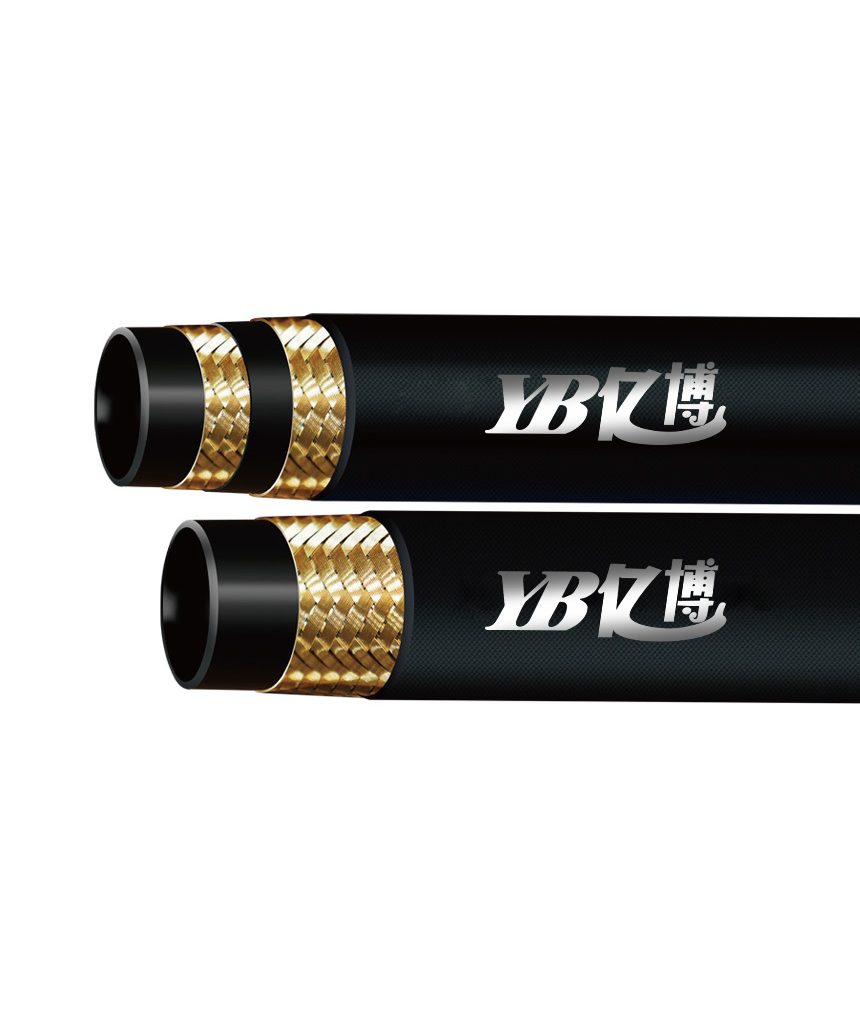
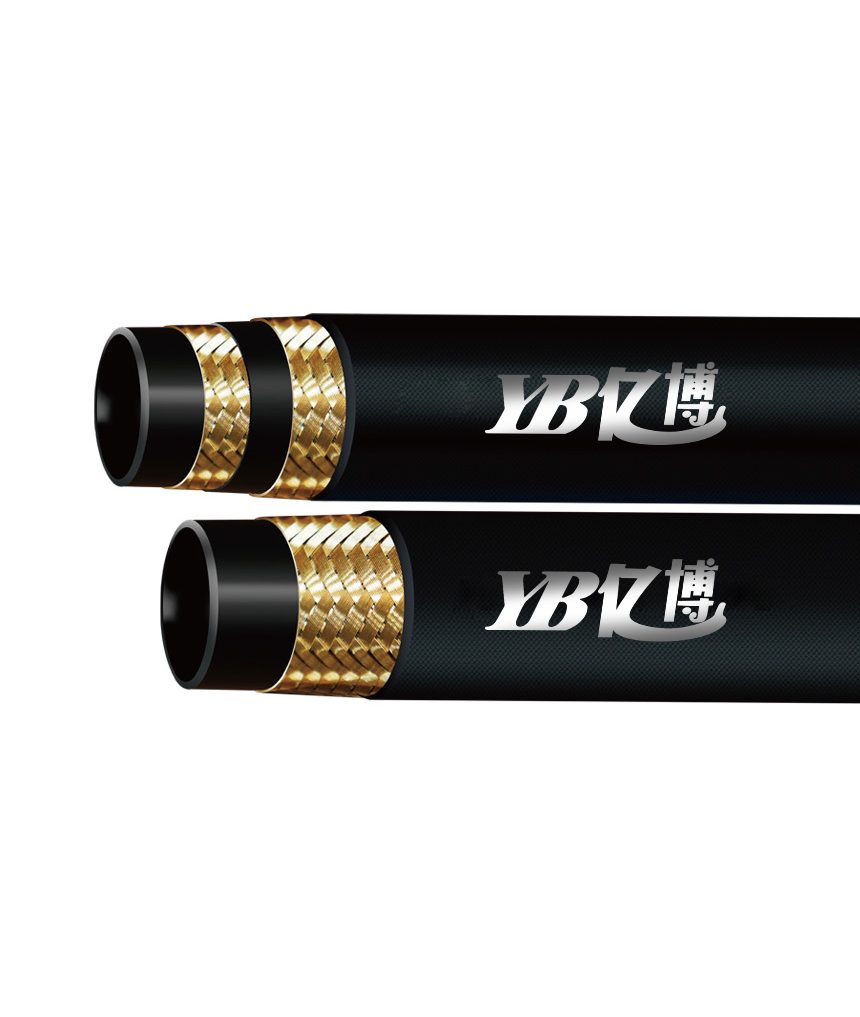
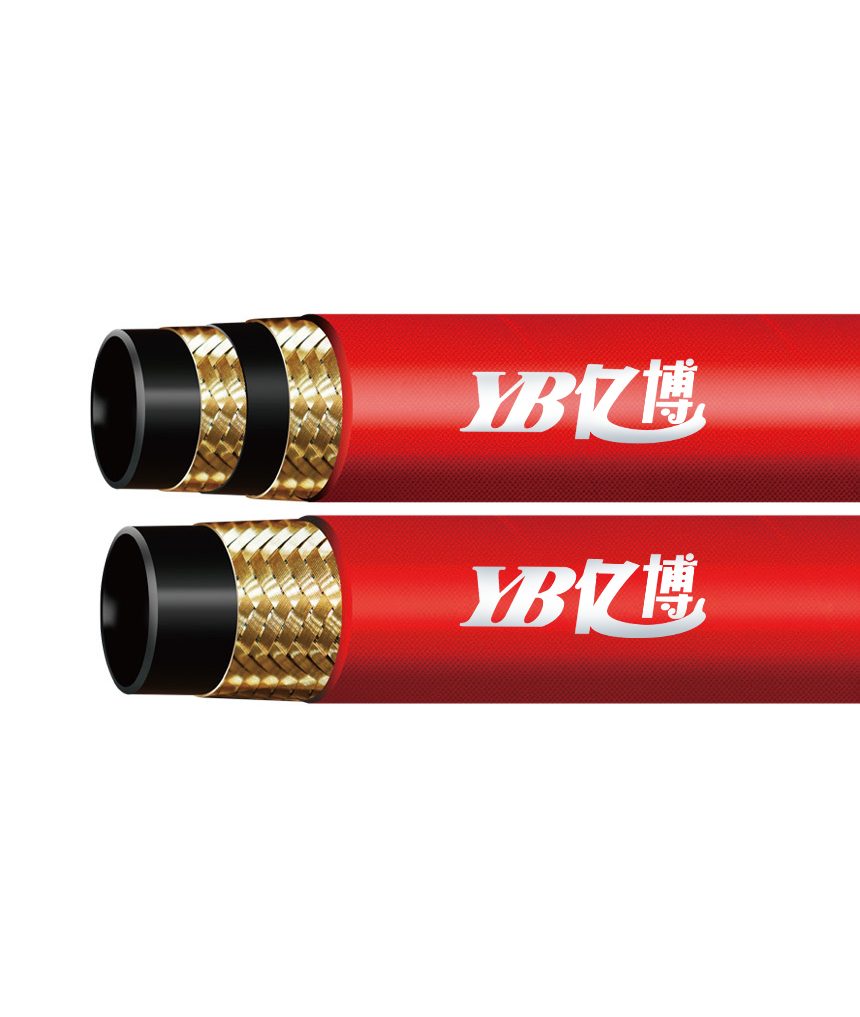
Oil-resistant synthetic rubber (NBR), bored 7.7 to 16.7 mm across the R17 range, the same inner diameters R19 uses.
Reinforcement
A single steel wire braid in both bodies. R17 is rated 22.5 MPa with 90.0 MPa burst, R19 is rated 28.0 MPa with 56.0 MPa burst.
Cover
Abrasion-resistant cover: outside diameter 13.7 to 14.9 mm at the smallest R17 code through to 23.9 to 25.1 mm at the 16 mm code.
APPLICATIONS
Where Constant Pressure Pays
Mixed Fleets
One class across a fleet means one drum in the store instead of a pressure table on the wall.
Pilot & Control Lines
8 mm and 10 mm at 22.5 MPa with a 55 mm bend radius thread through a control block.
Machine Tool Clamp
Clamp and fixture circuits at 225 bar, where the 65 mm bend at the 10 mm bore fits the fixture body.
Agricultural Implements
Lift and steer circuits on implements that run at a fixed pressure regardless of cylinder size.
Tight Routing
Constant-pressure bodies are compact by design: 55 mm at the smallest bore is tighter than a standard braided hose.
Return & Case Drain
Where the return line back-pressure is known and does not need a 4:1 margin to feel safe.
HIGH-END INDUSTRY DIRECTIONS
Why Constant Pressure Is Being Specified
Constant-pressure hose is a stock-keeping decision before it is an engineering one, and the enquiries follow that logic.
① Fewer Stock Lines standard hose
Trend: Distributors and fleets want one pressure class instead of four.
Dohose: All four R17 codes are 22.5 MPa, and all seven R19 codes are 28.0 MPa.
② 280 bar Circuits Appear high pressure hose
Trend: Small mobile circuits keep edging past 225 bar, which is where R19 starts.
Dohose: R19 holds 28.0 MPa at the same bend radius as R17, on the same inner diameters.
③ Burst Ratio Questioned high pressure hose
Trend: Buyers now ask what the burst ratio is, not only the working pressure.
Dohose: R17 is 90.0 MPa at 22.5 MPa working, R19 is 56.0 MPa at 28.0 MPa, and both are printed per row.
④ Compact Routing compact hose
Trend: Pilot circuits keep shrinking, and a 55 mm bend is now a specification item.
Dohose: Both ranges publish 55 mm at the smallest bore.
⑤ Weight on Handheld Tools lightweight hose
Trend: On a hand-held tool or a moving head, 0.38 kg/m against 0.59 kg/m is felt by the operator.
Dohose: R17 runs 0.22 to 0.68 kg/m across the range.
⑥ Traceability traceable hose
Trend: Even small-bore lines are recorded now.
Dohose: Batch and test date are marked on the body and recorded against the order.
WHY DOHOSE
Seven Reasons Buyers Stay with Us
Numbers, Not Averages
Every figure for the R17 Vs R19 Constant-pressure Hose comes from the per-code table: 8–16 mm, 225 bar working, 900 bar burst.
One Line, Full Range
All 4 codes of the R17 Vs R19 Constant-pressure Hose come off the same line, so a mixed order in 8–16 mm ships together.
Length on Demand
Cut-to-length supply for R17 Vs R19 Constant-pressure Hose; each code carries its own mass, 0.22–0.68 kg/m, so lifting gear can be sized first.
Ends Done Here
Assemblies of R17 Vs R19 Constant-pressure Hose are crimped on site and held at test pressure before they are boxed.
Export Packing
Coiled in poly bags, then woven bags on pallets — loading plans are drawn for 4-code orders.
OEM Ready
Brand printing and custom packing are standard options on the R17 Vs R19 Constant-pressure Hose.
Fast, Firm Pricing
A firm price for R17 Vs R19 Constant-pressure Hose usually returns within 1 hour of your enquiry.
FAQ
R17 vs R19 — Ten Selection Questions
R17 vs R19 — what actually differs?
Fifty-five bar and the burst ratio. On the same 9.3 to 10.1 mm inner diameter R17 is rated 22.5 MPa (225 bar) with 90.0 MPa burst, and R19 is rated 28.0 MPa (280 bar) with 56.0 MPa burst. The bend radius is 65 mm on both, so the routing does not change; what changes is whether you buy working pressure or burst margin.
Constant pressure vs a standard braided range — what changes?
Every code in the range carries the same working pressure, so bore size does not change the rating. R17 is 22.5 MPa from 8 mm to 16 mm and R19 is 28.0 MPa across its seven codes. A standard braided range does the opposite, falling from 250 bar at 5 mm to 40 bar at 2 inch.
What is the working pressure of the R17 3/8 inch code?
The 10 mm code is rated 22.5 MPa working (225 bar, 3,263 psi) with 90.0 MPa (900 bar) minimum burst. Minimum bend radius is 65 mm, mass is 0.28 kg/m, and the inner diameter is held between 9.3 and 10.1 mm.
What is the R17 1/2 inch rating and bend radius?
The 12.5 mm code is rated 22.5 MPa (225 bar, 3,263 psi) with 90.0 MPa burst, on an inner diameter of 12.3 to 13.5 mm. Bend radius is 90 mm and mass is 0.38 kg/m. R19 on the same inner diameter is 28.0 MPa at 90 mm but 0.59 kg/m.
Which one for a fleet that runs several pressures?
R17 if every circuit sits at or below 225 bar, because one class then covers the whole fleet at 0.22 to 0.68 kg/m. If any machine runs between 225 and 280 bar, standardise on R19 instead: putting both in the store defeats the point of constant pressure.
Can R17 be used on a pilot line?
Yes, and it is a good fit: 8 mm and 10 mm codes at 22.5 MPa with a 55 mm and 65 mm bend radius. A pilot line sees low flow and a fixed pressure, which is exactly the duty constant-pressure hose is built for.
Why is the burst margin on R19 only 2:1?
That is what the table says: 28.0 MPa working against 56.0 MPa minimum burst, where R17 is 22.5 MPa against 90.0 MPa. A 2:1 ratio is a different design decision, not a defect, but it does mean R19 has less headroom above its rating, so pressure spikes on the circuit matter more.
Why does a constant-pressure line kink at 55 mm?
Because 55 mm is the minimum on the smallest code, and both ranges are compact bodies with little spare wall. Lay the line out at 70 mm and it runs; clamp it at exactly 55 mm with a fitting at an angle and the bore ovalises on the first heat cycle.
Which Chinese manufacturer supplies R17 and R19 in bulk?
YIBO, in Luohe, Henan, braids both constant-pressure ranges on the same line: R17 from 8 mm to 16 mm at 0.22 to 0.68 kg/m, R19 across seven codes to 1.45 kg/m. A distributor stocking both can take one shipment and one test record.
What do R17 and R19 cost per metre?
Price follows the body: R17 runs 0.22 kg/m at 8 mm to 0.68 kg/m at 16 mm, R19 runs 0.17 to 1.45 kg/m across its seven codes. Send bore, length, ends and destination and a firm figure comes back the same working day.
Related Products
Compact Steel WIRE Braid Hydraulic HOSE
The hose consists of an inner tube, one or two layers of steel wire braided reinforcement, and…
Constant Pressure Steel WIRE Braided Hydraul…
The hose consists of an inner tube, one or two layers of steel wire braided reinforcement, and…
HIGH Pressure Steam HOSE
The inner and outer tube layers of the hose are both made of synthetic rubber with excellent h…
HIGH Pulse Constant Pressure Hydraulic HOSE…
THE HOSE CONSISTS OF AN INNER TUBE, A STEEL WIRE BRAIDED OR SPIRAL REINFORCEMENT LAYER, AND AN…
Get a quote
Please fill out the form below and we will contact you within 1 hour.
We are online 24/7!
We will contact you within 1 hour of receiving your enquiry.
Hotline