
Hydraulic Hose for Wheel Loaders
FACTORY DIRECT · ISO 9001 · OEM AVAILABLE · 415 bar working / 1660 bar burst · 4.6–10.1 mm
Reply within 1 hour · Bulk cut-to-length & crimped assemblies · OEM branding
↓Certifications & factory photos
- Hose Construction
- Structure:Inner tube of oil-resistant NBR, two layers of high-tensile steel wire braid, and a chafe-resistant cover
- Working Temperature:−40°C to +100°C, compact routing behind the cab
- Hose Features
- Bend Radius:90–130 mm, sized for the lift arm and hinge crossing — the figure in the table, not a catalogue average.
- Pressure Rating:Rated 415 bar working with 1660 bar minimum burst: a 4.0× safety margin, quoted per code.
- Size Coverage:4 codes in the table, 4.6–10.1 mm bore.
- Mass Per Metre:0.33–0.60 kg/m
- Application:Lift, tilt, steering and quick-coupler circuits on wheel loaders.
24 Hours Service Hotline
+86 137 2136 0724


For distributors, OEMs & MRO buyers · 30+ countries · MOQ 100 m · free samples
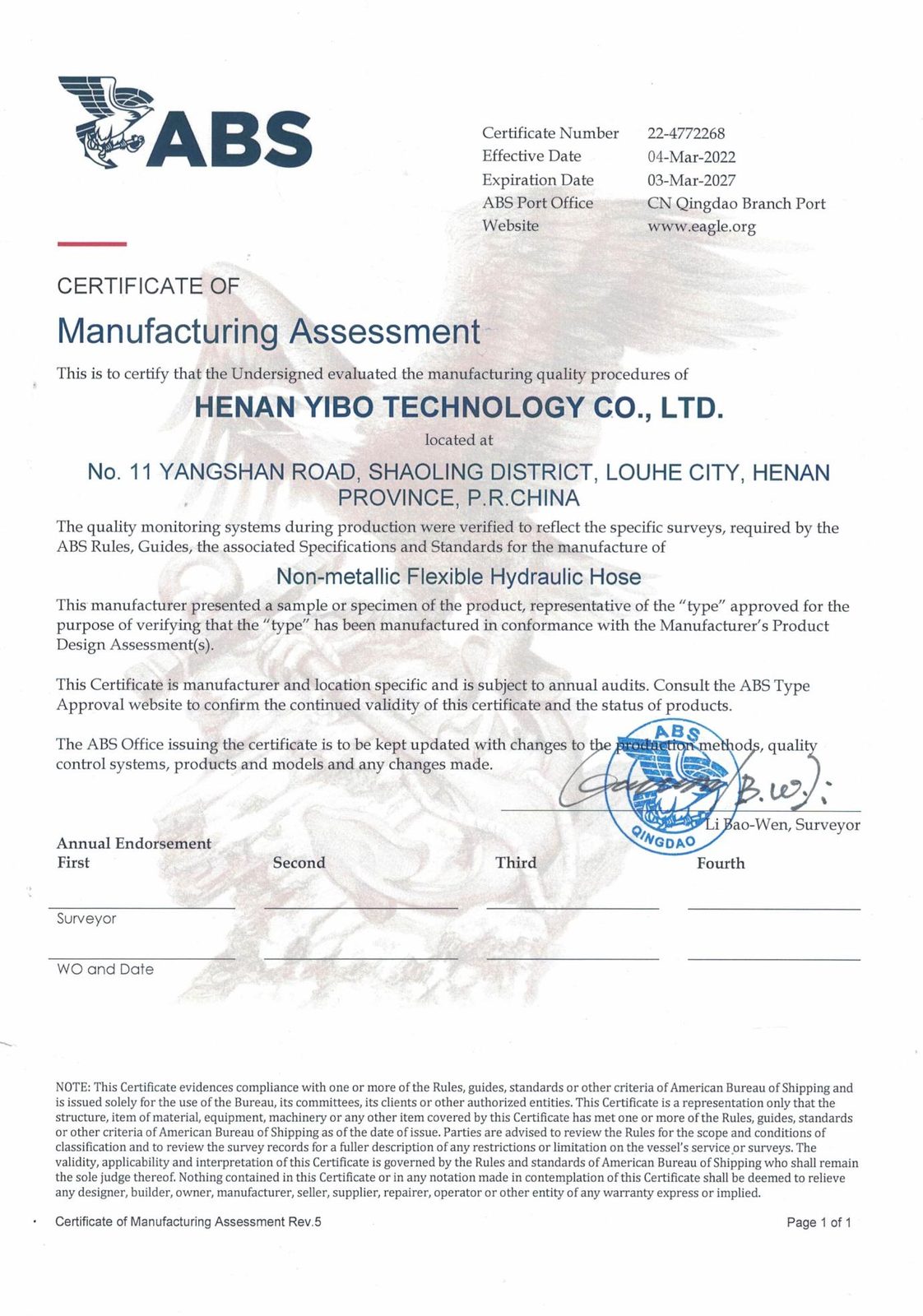
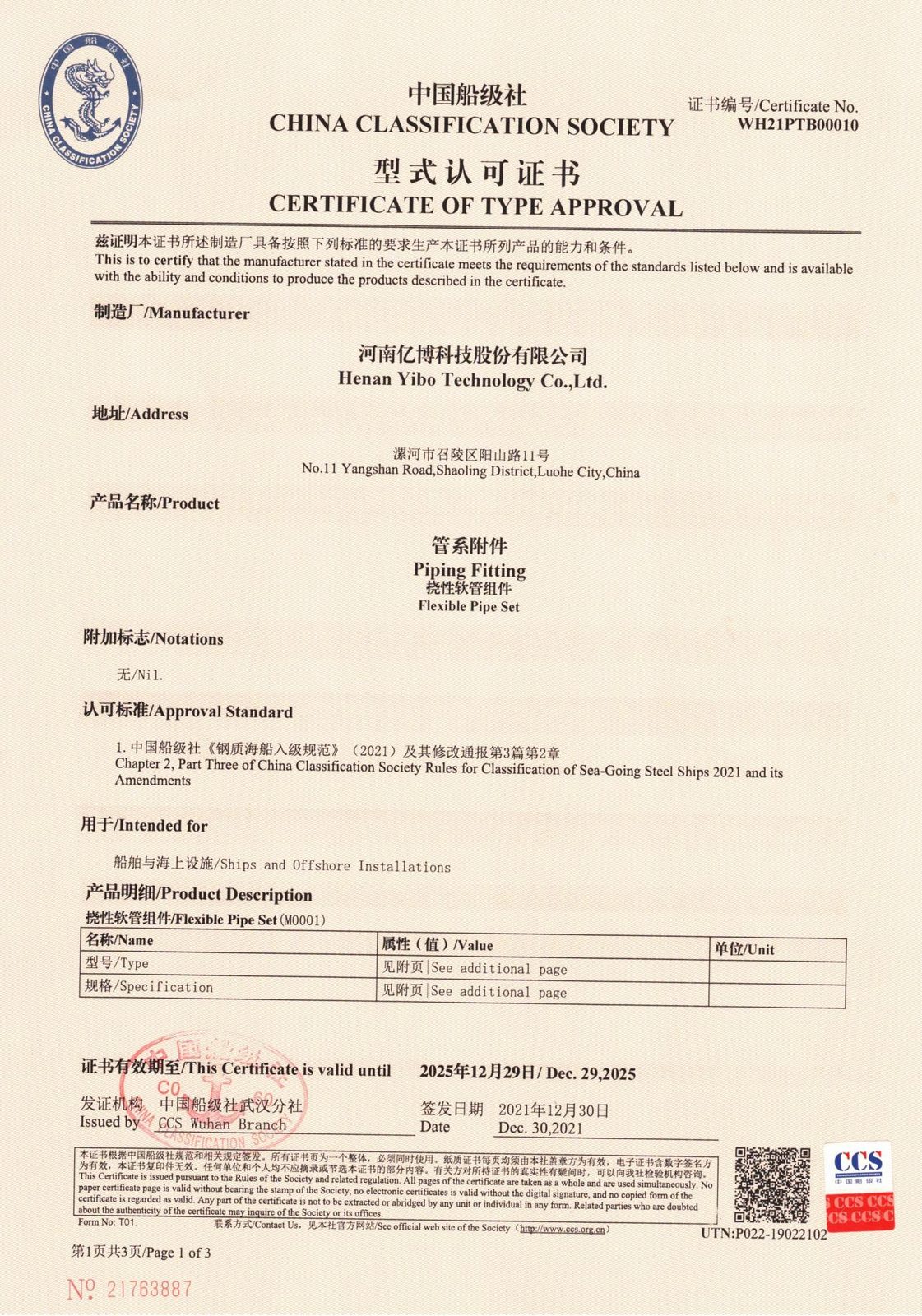
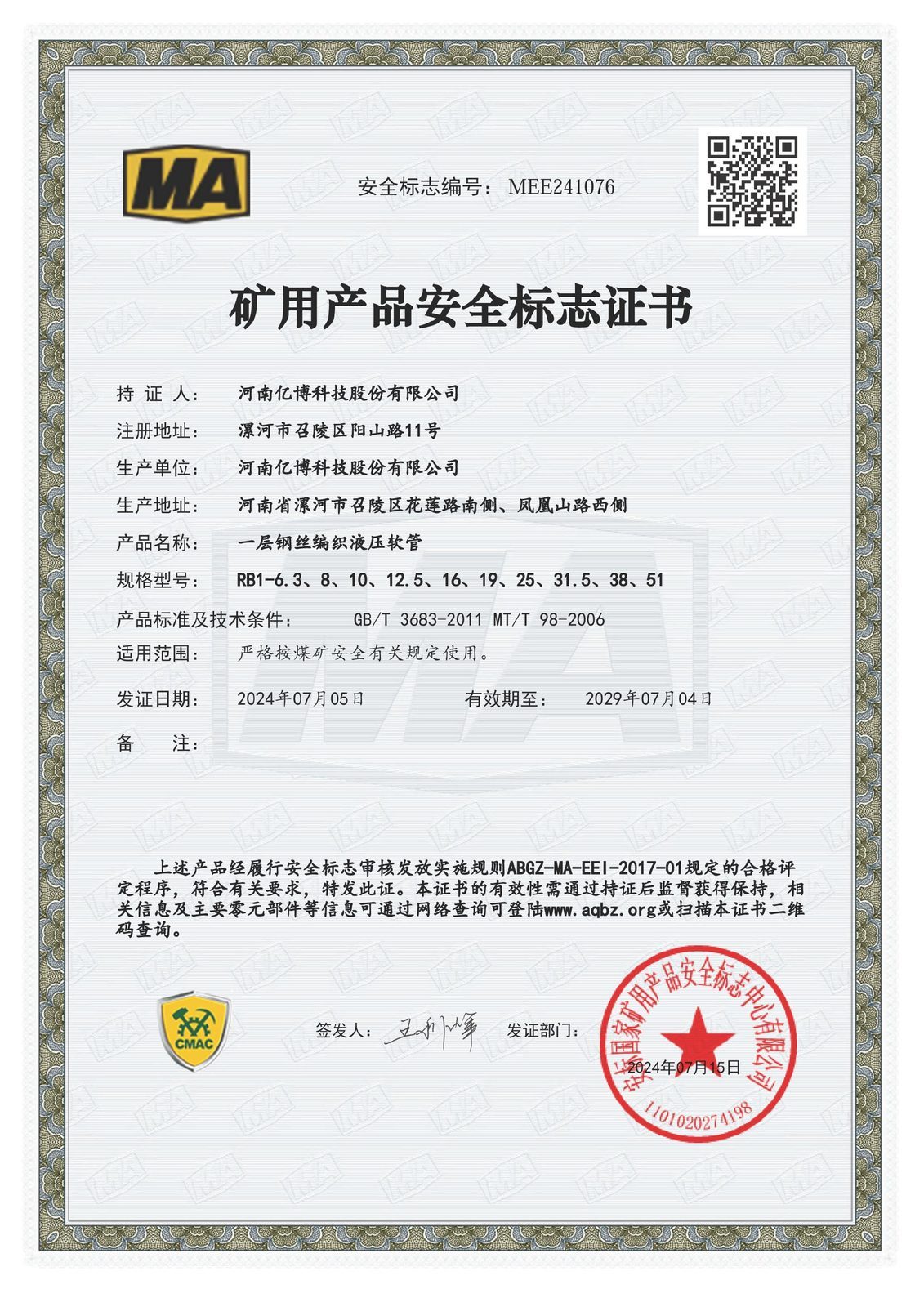


In stock — ready to ship sooner than custom runs. Ask which sizes →
PRODUCT INTRODUCTION
Wheel Loader Hydraulic Hose — Steering, Quick Coupler and Service Lines
A wheel loader splits its hydraulics three ways: steering through a priority valve, lift and tilt on the working rams, and quick coupler, fan and pilot lines. They do not share a pressure class, and they do not share a hose.
This page covers our 2SN small-bore range: 4 codes from 5 mm to 10 mm, rated 41.5 MPa (415 bar) at 5 mm down to 33.0 MPa (330 bar) at 10 mm, with a 4.0x burst margin and a 90 to 130 mm bend radius.
That covers steering, coupler, fan drive and pilot lines. The lift and tilt rams are quoted separately in 1/2 inch to 3/4 inch, because a 10 mm bore is a service line on a loader, not a lift line.
Data Display
A wheel loader cycles continuously — lift, tilt, dump, reverse — for entire shifts.

| PRODUCT NAME | NOMINAL INNER DIAMETER (mm) | SPECIFICATION (inch) | INNER DIAMETER (ID)mm (min) | INNER DIAMETER (ID)mm (max) | REINFORCEMENT LAYER OUTER DIAMETER (W.D)mm (min) | REINFORCEMENT LAYER OUTER DIAMETER (W.D)mm (max) | OUTER DIAMETER (OD)mm (max) | MAXIMUM WORKING PRESSURE W.P (Mpa) | psi | MINIMUM BURST PRESSURE B.P (Mpa) | psi | MINIMUM BENDING RADIUS Min.B.R (mm) | REFERENCE WEIGHT W.T (Kg/m) |
|---|---|---|---|---|---|---|---|---|---|---|---|---|---|
| 2SN-03-05 | 5 | 3/16“ | 4.6 | 5.4 | 10.6 | 11.7 | 16 | 41.5 | 6,019 | 165.0 | 24,076 | 90.0 | 0.31 |
| 2SN-04-06 | 6.3 | 1/4” | 6.2 | 7.0 | 12.1 | 13.3 | 17.7 | 40.0 | 5,802 | 160.0 | 23,206 | 100.0 | 0.35 |
| 2SN-05-08 | 8 | 5/16“ | 7.7 | 8.5 | 13.7 | 14.9 | 19.4 | 35.0 | 5,076 | 140.0 | 20,305 | 115.0 | 0.4 |
| 2SN-06-10 | 10 | 3/8” | 9.3 | 10.1 | 16.1 | 17.3 | 21.7 | 33.0 | 4,786 | 132.0 | 19,145 | 130.0 | 0.49 |
Values are reproduced from the official YIBO product page. Hydraulic Hose for Wheel Loaders: psi columns = MPa × 145.038, rounded. This hose: Bore 4.6–10.1 mm over 4 codes; each row carries its own rating, and the order data sheet governs the batch.
Application & Selection
A loader works its steering, lift and bucket circuits all shift — lift, tilt, dump, reverse. This 2SN hose is built to bend around the articulation joint and survive abrasion against the frame. Four sizes, roughly 5 to 10 mm bore.
415 bar working with a 1,660 bar minimum burst — a 4:1 margin, stepping down as the bore grows. Weight runs 0.33 to 0.6 kg/m. Assemblies are crimped and pressure-tested in-house with metric, BSP, JIC or ORFS ends; about 20 days from confirmation, OEM marking and packing available.
Loader Circuits and What They Demand
Lift and tilt cylinders
The primary work circuit: high cycle counts, a shock load every time the bucket hits a pile, and a route that flexes on every raise. Impulse life decides service life here, not peak pressure.
Steering and articulation
Articulated loaders hinge in the middle and the steering hoses cross that hinge. This is the most common chafe point on the machine — the hose is fine until the routing rubs the cover through against the frame.
Quick-coupler and auxiliary lines
Often added after the fact with whatever hose was on the shelf. These fail first because nobody sized them for the circuit.
Tight Routing Is the Real Constraint
Behind the cab and inside the lift arm there is very little space, and the bend radius a hose needs scales with its outside diameter. A 2SN hose at 10 mm bore wants roughly 100 mm minimum bend radius; force it tighter and the wire braid starts working against itself.
The four published codes here cover 4.6 to 10.1 mm bore at 415 bar working and 1,660 bar burst. If a circuit needs more pressure at a small bore, the answer is usually a compact-braid construction rather than a bigger hose that will not fit.
Where the circuit holds load with the engine off — typically a load-holding valve on the lift cylinder — ask for R17 construction. It holds pressure without creeping, which is what lets a bucket drift down overnight.
Ordering Checklist
Bore, pressure, length, fitting type. For loader work add two: which pivot the hose crosses, and whether the circuit holds load when the engine is off.
Assemblies are crimped and pressure tested in-house, marked to your part number, packed for export. Samples come off the same production run.
WHY THIS HOSE
Five Reasons Loader Buyers Pick This Hose
Loaders are compact machines with compact hose routes. That changes what matters.
Compact Routing
4.6–10.1 mm bore at 415 bar fits behind the cab and inside the lift arm without forcing the bend.
R17 Option
Where the lift circuit holds load with the engine off, R17 construction resists creep — no bucket drift overnight.
Impulse Rated
Shock load every time the bucket hits a pile. Braid construction is sized for cycles, not just peak pressure.
Chafe-Resistant Cover
The hinge crossing is where loaders eat hoses. Cover compound is specced for abrasion, not just oil.
Assembly Tested
Crimped and pressure tested per assembly, marked to your part number.
WHERE IT FAILS
Three Circuits That Fail First
If you are replacing hoses on a loader, these are the three to look at.
Steering Across the Hinge
The single most common chafe point. The hose is fine until the routing rubs the cover through on the frame.
Lift Cylinder Hold Circuit
Creep, not burst. A standard 2SN holds pressure but slowly lets the bucket down — R17 does not.
Quick-Coupler Add-Ons
Fitted later with whatever was on the shelf. Usually the first line to fail because nobody sized it.
HOW WE BUILD IT
Three Steps Before Packing
Bend Radius Check
We confirm the route before quoting, so the hose that arrives fits the space it has to live in.
Crimp and Pressure Test
Every assembly, not a sample. Tagged with a serial.
Export Packing
Coiled, capped, marked to your part number.
WHY THIS HOSE
Six Reasons the Small Lines Matter on a Loader
The big rams get the attention; the small lines stop the machine. These are the four codes that cover them.
415 bar at the 5 mm Code
The smallest code is rated 41.5 MPa (415 bar) with 166 MPa (1,660 bar) minimum burst. Steering and pilot lines run small and still need pressure headroom.
33.0 MPa at 3/8 inch
The 10 mm code is rated 33.0 MPa (330 bar) with a 130 mm bend radius and 0.60 kg/m: the size that covers coupler, fan and auxiliary circuits.
Bend Radius 90 to 130 mm
Published per row, because steering lines run down the frame rail where the routing is fixed by the machine, not by the hose.
Four Codes, One Lot
5 mm to 10 mm braided on one line, so a service kit for one machine ships as a single lot with one test record.
Two Bodies, One Machine
2SN for the small lines, 4SP for lift and tilt rams at 35 MPa. That split is what keeps a loader hose schedule honest.
Crimped and Proof-Tested
Every assembly is crimped with the ferrule for its body and proof-tested, then marked with batch and test date.
CONSTRUCTION
What the Small-Bore Table Covers
Inner Tube
Oil-resistant synthetic rubber (NBR), bored from 4.6 to 5.4 mm at the 5 mm code up to 9.3 to 10.1 mm at 3/8 inch.
Reinforcement
Two layers of high-tensile steel wire braid, giving 41.5 MPa at 5 mm and 33.0 MPa at 10 mm. Lift and tilt rams do not use this body; they use a four-spiral 4SP.
Cover
Abrasion- and weather-resistant cover, outside diameter 16 mm at the 5 mm code through to 21.7 mm at 10 mm.
APPLICATIONS
Line by Line on a Wheel Loader
Steering Priority Circuit
Steering valve and priority block lines, usually 3/8 inch at 33.0 MPa with a 130 mm bend radius.
Quick Coupler
Coupler cylinder and lock lines, at 1/4 inch and 40.0 MPa with a 100 mm bend radius.
Fan Drive & Cooling
Hydraulic fan motor lines at 5/16 inch, where 35.0 MPa and a 115 mm bend fit behind the radiator.
Pilot & Remote Lines
Joystick and pilot pressure lines, where the small bore keeps response sharp.
Lift & Tilt Rams
Quoted separately in 4SP at 35.0 MPa with a 300 mm bend radius, because those circuits pulse at relief pressure.
Service Kits
Four codes cover the small lines on most loaders, which is what a dealer wants in one box.
HIGH-END INDUSTRY DIRECTIONS
What Loader Fleets Ask For
Most of these enquiries come from a dealer building a service kit, or from a fleet standardising across mixed machines.
① Dealer Service Kits standard hose
Trend: Dealers want one box per machine model rather than a coil of each size.
Dohose: 4 codes from 5 mm to 10 mm cover the small lines and ship as one lot.
② Mixed Fleets standard hose
Trend: Contractors run loaders from three manufacturers with different line schedules.
Dohose: One 2SN range and one 4SP range cover both duties across brands.
③ Tighter Frame Rails compact hose
Trend: Steering lines are routed down a frame rail that has no spare room.
Dohose: Bend radius is 90 mm at 5 mm bore and 130 mm at 3/8 inch.
④ Uptime reliable hose
Trend: A failed steering line takes a loader out of the yard, not just off the pile.
Dohose: Assemblies are proof-tested before dispatch rather than sampled.
⑤ Cleanliness clean hydraulic hose
Trend: Loader hydraulics increasingly use proportional control on the steering circuit.
Dohose: Bores are blown through and capped before crimping.
⑥ Traceability traceable hose
Trend: Warranty claims ask which batch a failed line came from.
Dohose: Batch and test date are marked on every assembly and recorded against the order.
WHY DOHOSE
Seven Reasons Buyers Stay with Us
Tolerances on the Sheet
Bore, wall and bend radius for the Hydraulic Hose for Wheel Loaders are printed per code — 4 codes, 5–10 mm, no guessing between shipments.
Mixed Orders Welcome
Order several codes of the Hydraulic Hose for Wheel Loaders at once; 4 sizes in 5–10 mm are built on the same equipment.
No Dead Stock
Order metres, not coils: Hydraulic Hose for Wheel Loaders is cut to length, and mass runs 0.33–0.73 kg/m.
Crimped and Tested
Where a finished line is needed, Hydraulic Hose for Wheel Loaders is crimped and pressure-tested in-house before packing.
Freight-Ready
Coils of Hydraulic Hose for Wheel Loaders are bagged and palletised, with a 40HQ plan supplied before booking.
Your Name on It
The Hydraulic Hose for Wheel Loaders can be printed and packed under your brand for resale.
Quote in One Hour
Send bore, media and end type for Hydraulic Hose for Wheel Loaders — a firm price comes back within 1 hour.
FAQ
Wheel Loader Hose — Ten Questions
2SN or 4SP for the lift and tilt rams?
4SP. At 3/4 inch 2SN is rated 21.5 MPa (215 bar) and 4SP is 35.0 MPa (350 bar) with a 300 mm bend radius, and a loader lift circuit sits at 35 MPa. The table on this page is the 2SN small-bore range for steering, coupler and service lines.
Which lines can use the 2SN body on this page?
Steering, quick coupler, fan drive, pilot and auxiliary. The 5 mm code is rated 41.5 MPa (415 bar) with a 90 mm bend radius, and the 10 mm code is 33.0 MPa with 130 mm; none of those are lift pressures, but all of them need a small bore that still holds.
What is the working pressure of 3/8 inch on a loader?
The 10 mm code is rated 33.0 MPa (330 bar, 4,786 psi) with 132 MPa (1,320 bar) minimum burst. Minimum bend radius is 130 mm, mass is 0.60 kg/m, and the outside diameter is 21.7 mm.
Which size for a quick coupler circuit?
1/4 inch: 40.0 MPa (400 bar) with a 100 mm bend radius and 17.7 mm outside diameter. Coupler lines are short, tight and intermittent, and the 1/4 inch code covers all three without a loop.
What bore for the steering priority circuit?
3/8 inch on most loaders. It passes the steering flow at a sensible velocity and its 33.0 MPa rating sits well above the steering relief, which is usually set far below the main circuit pressure.
Why do steering and pilot lines use different bores?
Because they carry different flows at different speeds. Steering runs 3/8 inch at 33.0 MPa to keep valve response crisp, while pilot lines run 1/4 or 5/16 inch at 40.0 and 35.0 MPa where flow is tiny. Both sit inside the 33.0 to 41.5 MPa band of this table, so the bore is a flow decision, not a pressure one.
2SN vs 4SP on the steering circuit — is the upgrade worth it?
No. Steering relief sits well below 200 bar, while the 3/8 inch 2SN code is already rated 33.0 MPa (330 bar) with 132 MPa burst. Moving to 4SP buys 35.0 MPa that the circuit never uses, and costs a 300 mm bend radius where the frame rail only leaves 130 mm.
Why do loader hoses fail at the fitting?
Because the small lines are the ones that flex. A 5 mm line at 41.5 MPa moves every time the steering turns, and the wire at the ferrule takes that cycle. An under-crimp leaks and an over-crimp crushes the braid, and both look correct from outside, which is why every assembly is proof-tested.
Which Chinese manufacturer supplies wheel loader hose assemblies in bulk?
YIBO, in Luohe, Henan, supplies the 2SN small-bore range on this page — 5 mm to 10 mm at 41.5 to 33.0 MPa — and the 4SP range for the rams from one plant. Send a machine model and the line list and the assemblies are crimped and tested before dispatch.
What does a loader hose cost per metre?
Price follows the body and the ends: 0.60 kg/m for the 3/8 inch 2SN code, 0.33 kg/m for the 5 mm code. A line set is usually quoted as a kit, so send the machine model, the line count and the destination for a firm figure.
Related Products
Automotive Power Steering HOSE
THE HOSE CONSISTS OF A HEAT-RESISTANT OIL SYNTHETIC RUBBER, ONE OR TWO LAYERS OF STEEL WIRE BR…
Compact Pilot HOSE
INNER TUBE: OIL-RESISTANT SYNTHETIC RUBBER. REINFORCEMENT: ONE LAYER OF STEEL WIRE BRAIDING. O…
Compact Single WIRE Braid Hydraulic HOSE
The hose consists of an inner tube, a single wire braid reinforcement, and an outer cover.
Compact Two-wire Braided Hydraulic HOSE
The hose consists of an inner tube, a double wire braid reinforcement, and an outer cover.
Get a quote
Please fill out the form below and we will contact you within 1 hour.
We are online 24/7!
We will contact you within 1 hour of receiving your enquiry.
Hotline