
Hose for Hydraulic Presses and Machine Tools
HIGH PRESSURE · 1,040 bar working / 2,600 bar burst · 3 sizes
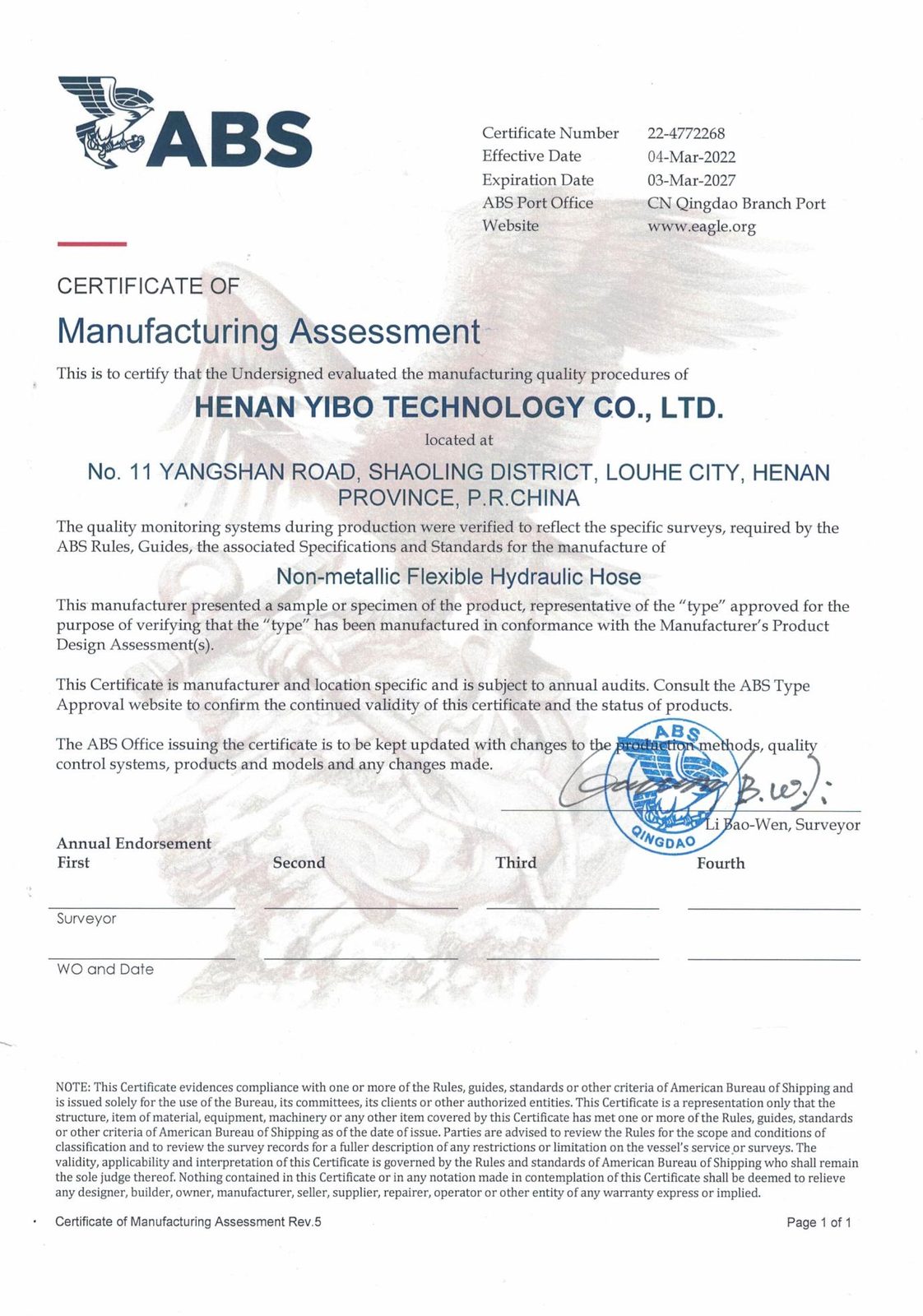
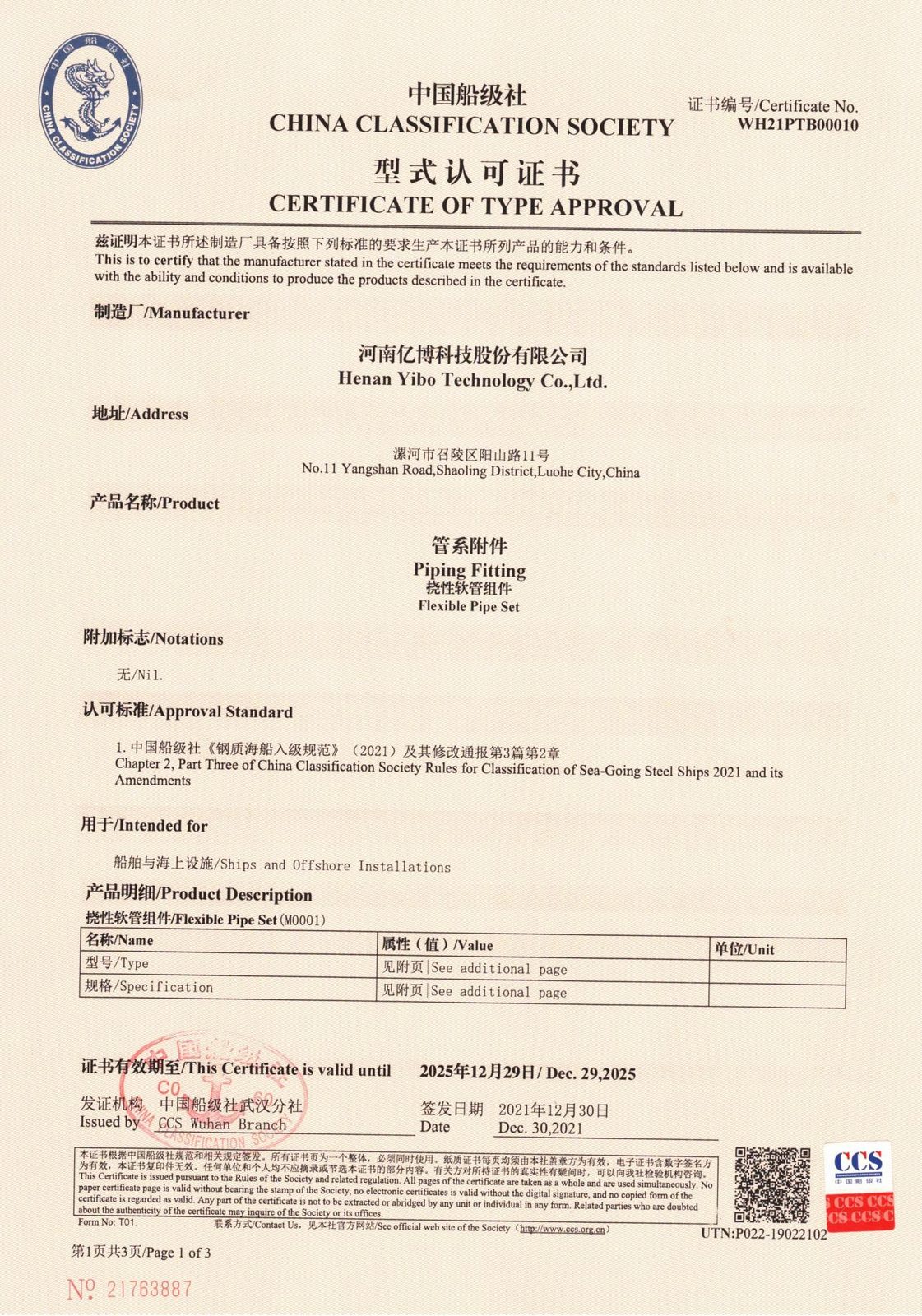
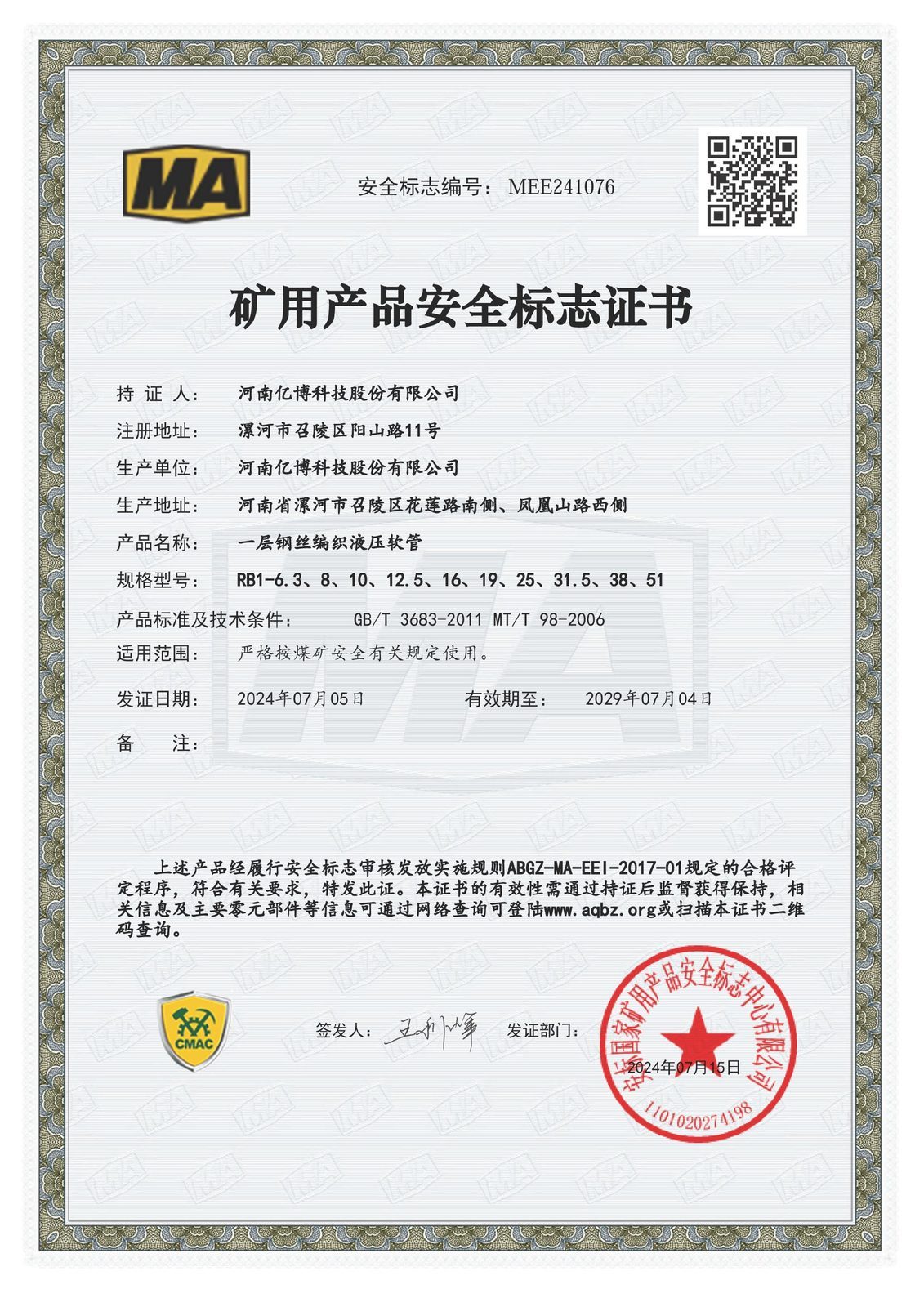
↓Certifications & factory photos
- Published Range
- Max working pressure:1040 bar
- Min burst pressure:2600 bar
- Published sizes:3
- Nominal bore:3–6 mm across 3 published codes
- Hose Features
- Bend Radius:The published codes route down to 60 mm minimum radius.
- Duty-Cycle Matched:The construction is chosen against how hard the machine actually works, not against a catalogue default.
- Failure Mode First:We start from what normally fails on this equipment, then specify the hose that resists it.
- Tested Under Pressure:Working and burst pressure are verified in our own laboratory before shipment.
- Application:Hose for hydraulic presses and machine tools: ultra-high pressure resin hose, braid hose for services and vibration isolation at the power pack.
24 Hours Service Hotline
+86 137 2136 0724


For distributors, OEMs & MRO buyers · 30+ countries · MOQ 100 m · free samples


In stock — ready to ship sooner than custom runs. Ask which sizes →
PRODUCT INTRODUCTION
Ultra-High Pressure Hose for Presses — 1,040 bar at 3 mm Bore
Press and machine-tool hydraulics are the one place where small bore and enormous pressure meet. This page carries our two-layer R7 resin hose: a nylon core, two layers of steel wire braid, and a polyurethane cover, in 3 codes from 3 mm to 6 mm.
Every code is rated 104 MPa (1,040 bar) working with 260 MPa (2,600 bar) minimum burst — a 2.5x margin — and bends to 60 mm at the smallest bore, 85 mm at 6 mm.
That combination is what a press clamp circuit needs: 1,040 bar in a line thinner than a finger, turning inside a frame that has 60 mm to give. A four-spiral rubber hose at 3/8 inch stops at 44.5 MPa (445 bar).
Data Display
Hose for hydraulic presses and machine tools: ultra-high pressure resin hose, braid hose for services and vibration isolation at the power pack.
| PRODUCT NAME | NOMINAL BORE (mm) | LAYERS (layer) | SPECIFICATION (inch) | SPECIFICATION (ID)mm (min) | OUTSIDE DIAMETER (OD)mm (max) | MAXIMUM WORKING PRESSURE W.P (Mpa) | psi | MINIMUM BURST PRESSURE B.P (Mpa) | psi | MINIMUM BEND RADIUS Min.B.R (mm) |
|---|---|---|---|---|---|---|---|---|---|---|
| R7-2-03 | 3 | 2 layers | 1/8” | 3.5 | 7.2 | 104 | 15,084 | 260 | 37,710 | 60 |
| 4 | 2 layers | 5/32“ | 4.1 | 9.8 | 120 | 17,405 | 300 | 43,511 | 65 | |
| R7-3-5 | 5 | 2 layers | 3/16“ | 5.2 | 10.8 | 104 | 15,084 | 260 | 37,710 | 70 |
| R7-4-06 | 6 | 2 layers | 1/4“ | 6.3 | 11.5 | 104 | 15,084 | 260 | 37,710 | 85 |
Values are reproduced from the official YIBO product page. psi columns = MPa × 145.038, rounded. 3 codes from 3 mm to 6 mm bore — the top rating is not the whole story; the order data sheet governs the batch.
Application & Selection
Hose for hydraulic presses and machine tools: ultra-high pressure resin hose, braid hose for services and vibration isolation at the power pack. Hose for Hydraulic Presses and Machine Tools is published in 3 codes spanning 3–6 mm bore.
Hose for Hydraulic Presses and Machine Tools is rated 1,200 bar working and 3,000 bar minimum burst at the top of the 3–6 mm bore range, a 2.5:1 margin. Crimped and tested to the 1,200 bar working figure, across the 3 codes of this range. Allow about 20 days for Hose for Hydraulic Presses and Machine Tools across the 3–6 mm band, OEM branding included.
WHY THIS HOSE
Six Reasons Press Circuits Use This Body
At 1,040 bar the fittings and the bend radius decide whether the line survives, not the burst number alone.
1,040 bar in 3 mm Bore
The smallest code is 3 mm nominal with a 3.5 mm inside diameter and a 7.2 mm outside, rated 104 MPa with 260 MPa burst. Nothing else in our range puts that pressure in that envelope.
60 mm Bend at the Smallest Code
60 mm at the 3 mm code, 70 mm at 5 mm and 85 mm at 6 mm — the routing figure that makes a press frame possible.
Two Wire Layers
The table is explicit: two layers of steel wire braid, which is what takes a resin hose from the 350 bar class up to 1,040 bar.
Nylon Core, PU Cover
A nylon core holds pressure in a thin wall, and the polyurethane cover takes the abrasion of a machine frame without adding bulk.
A 2.5x Burst Margin, Stated
260 MPa burst against 104 MPa working. That is a smaller ratio than the 4.0x used on our lower-pressure ranges, which is why a press line is specified on the working figure rather than on the burst.
Assemblies Built for the Pressure
A 1,040 bar joint is not a field crimp. Assemblies are built with the fitting system made for this tube and proof-tested before dispatch.
CONSTRUCTION
Nylon, Two Braids, Polyurethane
Inner Tube
Nylon, from 3.5 mm inside diameter at the 3 mm code to 6.3 mm at the 6 mm code. The resin core is what allows 1,040 bar in a 7.2 mm outside diameter.
Reinforcement
Two layers of steel wire braid. The second layer is the difference between a 350 bar resin hose and this 1,040 bar body.
Cover
Polyurethane, outside diameter 7.2 mm at the 3 mm code through to 11.5 mm at 6 mm — thin enough to route inside a press frame.
APPLICATIONS
Where 1,040 bar Hose Is Used
Press Clamp Circuits
Clamping and holding circuits on hydraulic presses, where 1,040 bar at 3 mm bore is normal.
Machine Tool Fixtures
Fixture and vice clamping on machining centres, where the line has to bend inside the fixture body.
Test Benches & Burst Rigs
Hydraulic test benches that hold 1,000 bar, where a resin hose is the practical connection.
Torque & Tensioning Tools
Bolt tensioning and torque tools, which run small bore at very high pressure.
Press Safety Circuits
Overload and safety lines on presses, where a thin line is easier to route than a spiral hose.
Portable High-Pressure Pumps
Hand and air-driven pumps at 1,000 bar, where 7.2 mm outside diameter matters at the tool end.
HIGH-END INDUSTRY DIRECTIONS
Why Press Builders Keep Moving to Resin Hose
At 1,000 bar the constraint is not the hose rating. It is the joint and the routing.
① Pressure at Tiny Bore high pressure hose
Trend: Clamp and tooling circuits raise pressure rather than size, because the space is not there.
Dohose: 104 MPa at a 3.5 mm inside diameter and a 7.2 mm outside diameter.
② Frames That Cannot Be Cut compact hose
Trend: Press frames and fixtures are cast or welded before the hydraulic line is chosen.
Dohose: Bend radius is 60 mm at 3 mm bore and 85 mm at 6 mm.
③ Joint Integrity hose assembly
Trend: At 1,000 bar a field crimp is the highest-risk part of the circuit.
Dohose: Assemblies are built with the matching fitting system and proof-tested before dispatch.
④ Repeated Cycling impulse rated hose
Trend: Press clamps cycle thousands of times a shift, so impulse life is a real specification.
Dohose: Two wire layers over a nylon core, with a 260 MPa burst against 104 MPa working.
⑤ Contamination clean hydraulic hose
Trend: Small-bore high-pressure circuits block easily, so cleanliness at the port is a specification item.
Dohose: Bores are blown through and capped before the assembly is built.
⑥ Traceability traceable hose
Trend: A failure at 1,040 bar is a safety event, and the investigation starts with the batch.
Dohose: Batch and test date are marked on the assembly and recorded against the order.
WHY DOHOSE
Seven Reasons Buyers Stay with Us
Numbers, Not Averages
Every figure for the Hose for Hydraulic Presses and Machine Tools comes from the per-code table: 3–6 mm, 1040 bar working, 2600 bar burst.
One Line, Full Range
All 3 codes of the Hose for Hydraulic Presses and Machine Tools come off the same line, so a mixed order in 3–6 mm ships together.
Length on Demand
Cut-to-length supply for Hose for Hydraulic Presses and Machine Tools; each code carries its own mass, published per code, so lifting gear can be sized first.
Ends Done Here
Assemblies of Hose for Hydraulic Presses and Machine Tools are crimped on site and held at test pressure before they are boxed.
Export Packing
Coiled in poly bags, then woven bags on pallets — loading plans are drawn for 3-code orders.
OEM Ready
Brand printing and custom packing are standard options on the Hose for Hydraulic Presses and Machine Tools.
Fast, Firm Pricing
A firm price for Hose for Hydraulic Presses and Machine Tools usually returns within 1 hour of your enquiry.
FAQ
Press and Machine Tool Hose — Ten Questions
Resin hose vs a four-spiral at 3/8 inch?
Pressure per millimetre of outside diameter. This body is rated 104 MPa (1,040 bar) on a 7.2 mm outside diameter at the 3 mm code, while a four-spiral 4SP at 3/8 inch is rated 44.5 MPa (445 bar) on a 22.2 mm outside diameter. Above roughly 500 bar the resin hose is the only practical body.
Two-layer vs single-layer R7 — how much pressure does the second layer buy?
Because one layer reaches about 350 bar on a resin tube and two layers reach 1,040 bar. The table states the layer count explicitly, which matters: a single-layer R7 ordered by mistake would be running at a third of the pressure the circuit needs.
What is the rating at the 3 mm code?
The smallest code has a 3.5 mm inside diameter and a 7.2 mm outside diameter, rated 104 MPa working (1,040 bar, 15,084 psi) with 260 MPa (2,600 bar) minimum burst. Minimum bend radius is 60 mm.
What is the rating at 6 mm?
The largest code has a 6.3 mm inside diameter and an 11.5 mm outside diameter, with the same 104 MPa (1,040 bar) working pressure and 260 MPa burst. Bend radius rises to 85 mm, so the routing budget grows with the bore, not the pressure.
Which codes for a press clamp circuit?
3 mm or 5 mm, depending on the cylinder displacement: a clamp that strokes a few millimetres takes the 3 mm code at a 60 mm bend, while a larger clamp needs the 5 mm code at 70 mm. All three codes share the 1,040 bar rating.
What does 1,040 bar hose cost per metre?
Price follows the bore and the fittings: 3.5 mm inside diameter at 7.2 mm outside on the smallest code, 6.3 mm inside at 11.5 mm outside on the largest, and each takes its own ferrule. A 1,040 bar assembly is quoted per piece rather than per metre, so send the circuit pressure and the end types for a firm figure.
Why does a 1,040 bar assembly leak at the fitting?
Because the joint is the weakest part of a small-bore high-pressure circuit. A ferrule set for a rubber hose cuts a nylon core or leaves it unbonded, and at 104 MPa the leak appears within days. Every assembly here is built with the matching fitting system and proof-tested.
Why does the hose kink at 60 mm?
Because 60 mm is the minimum at 3 mm bore, and a resin core has no spare wall to resist ovalising at the limit. Lay the line out at 75 mm and it runs; clamp it at exactly 60 mm with a fitting at an angle and the clamp circuit starts responding slowly.
Is the 2.5x burst margin enough?
It is what the table states: 260 MPa burst against 104 MPa working. That is lower than the 4.0x on our lower-pressure ranges, which is deliberate for a compact resin body, and it is why a press line is specified on the working pressure and the relief setting rather than on the burst number.
Which Chinese manufacturer supplies 1,000 bar resin hose assemblies?
YIBO, in Luohe, Henan, supplies the two-layer R7 range in 3 codes from 3 mm to 6 mm bore, all rated 104 MPa with 260 MPa burst, with matching fittings crimped and proof-tested in-house.
Related Products
Automotive Power Steering HOSE
THE HOSE CONSISTS OF A HEAT-RESISTANT OIL SYNTHETIC RUBBER, ONE OR TWO LAYERS OF STEEL WIRE BR…
Compact Pilot HOSE
INNER TUBE: OIL-RESISTANT SYNTHETIC RUBBER. REINFORCEMENT: ONE LAYER OF STEEL WIRE BRAIDING. O…
Compact Single WIRE Braid Hydraulic HOSE
The hose consists of an inner tube, a single wire braid reinforcement, and an outer cover.
Compact Two-wire Braided Hydraulic HOSE
The hose consists of an inner tube, a double wire braid reinforcement, and an outer cover.
Get a quote
Please fill out the form below and we will contact you within 1 hour.
We are online 24/7!
We will contact you within 1 hour of receiving your enquiry.
Hotline