
Hose for Marine Vessels
STEAM / HOT WATER · OIL & FUEL · SUCTION / VACUUM RATED · 20 bar working / 60 bar burst
Reply within 1 hour · Bulk cut-to-length & crimped assemblies · OEM branding
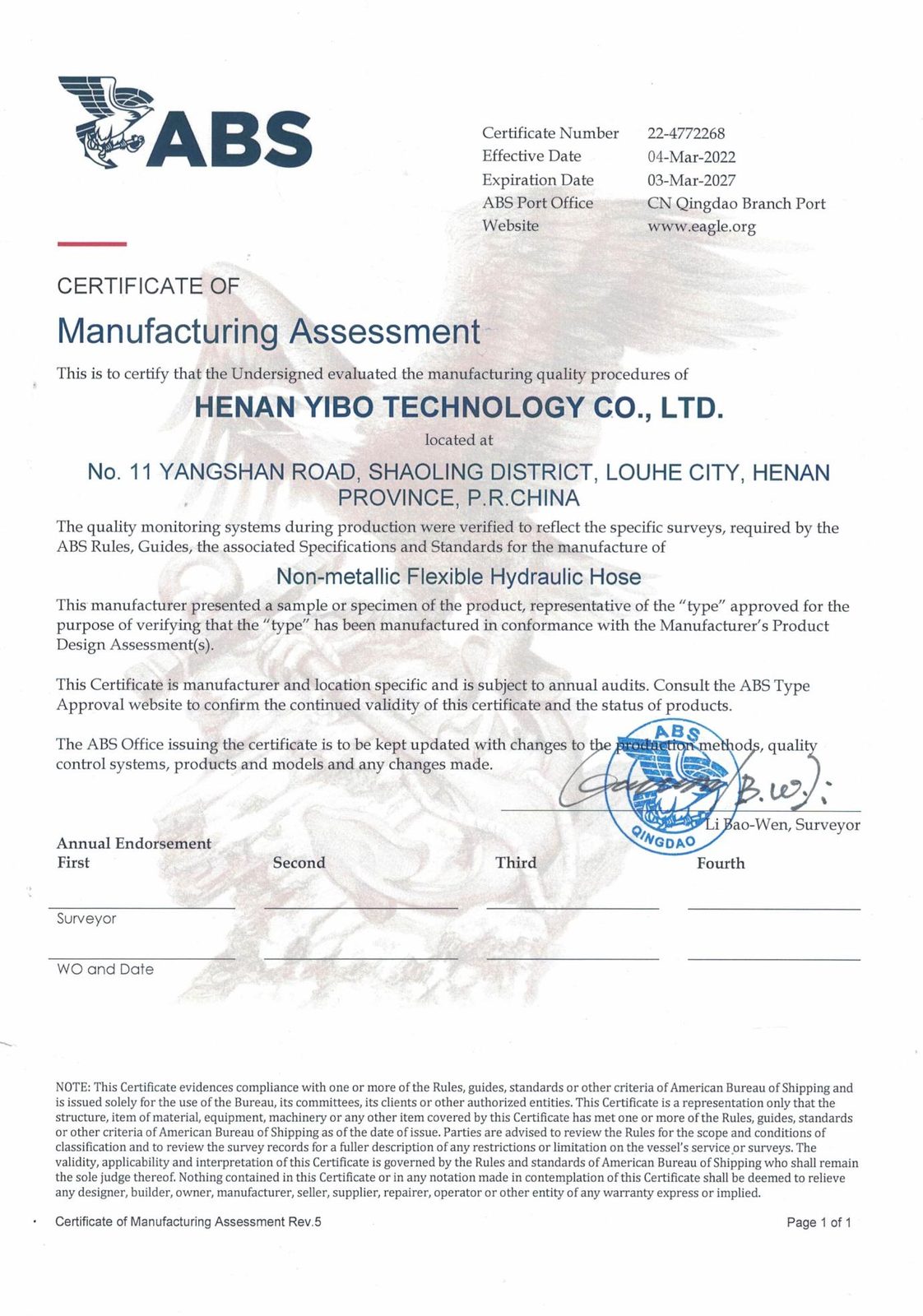
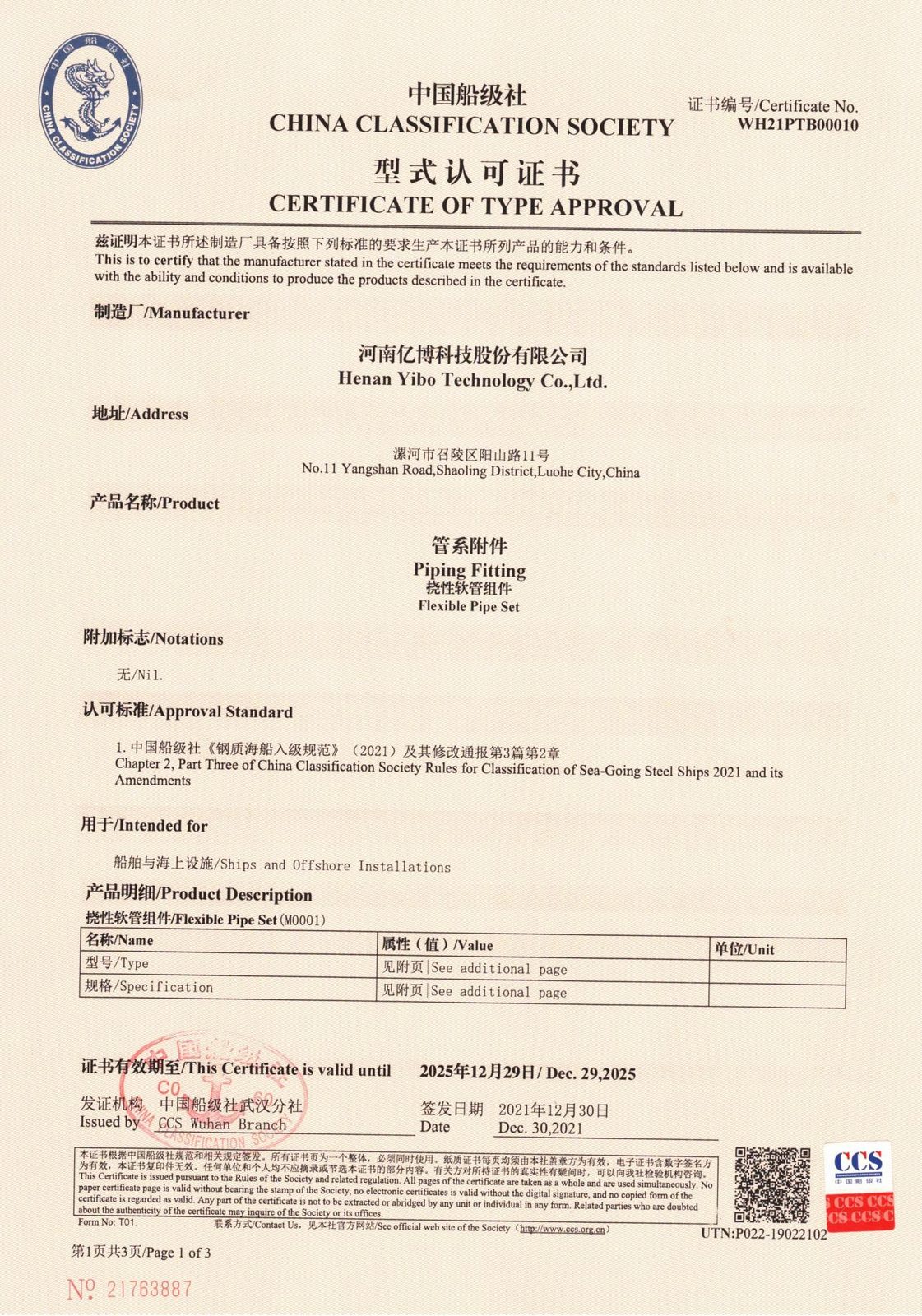
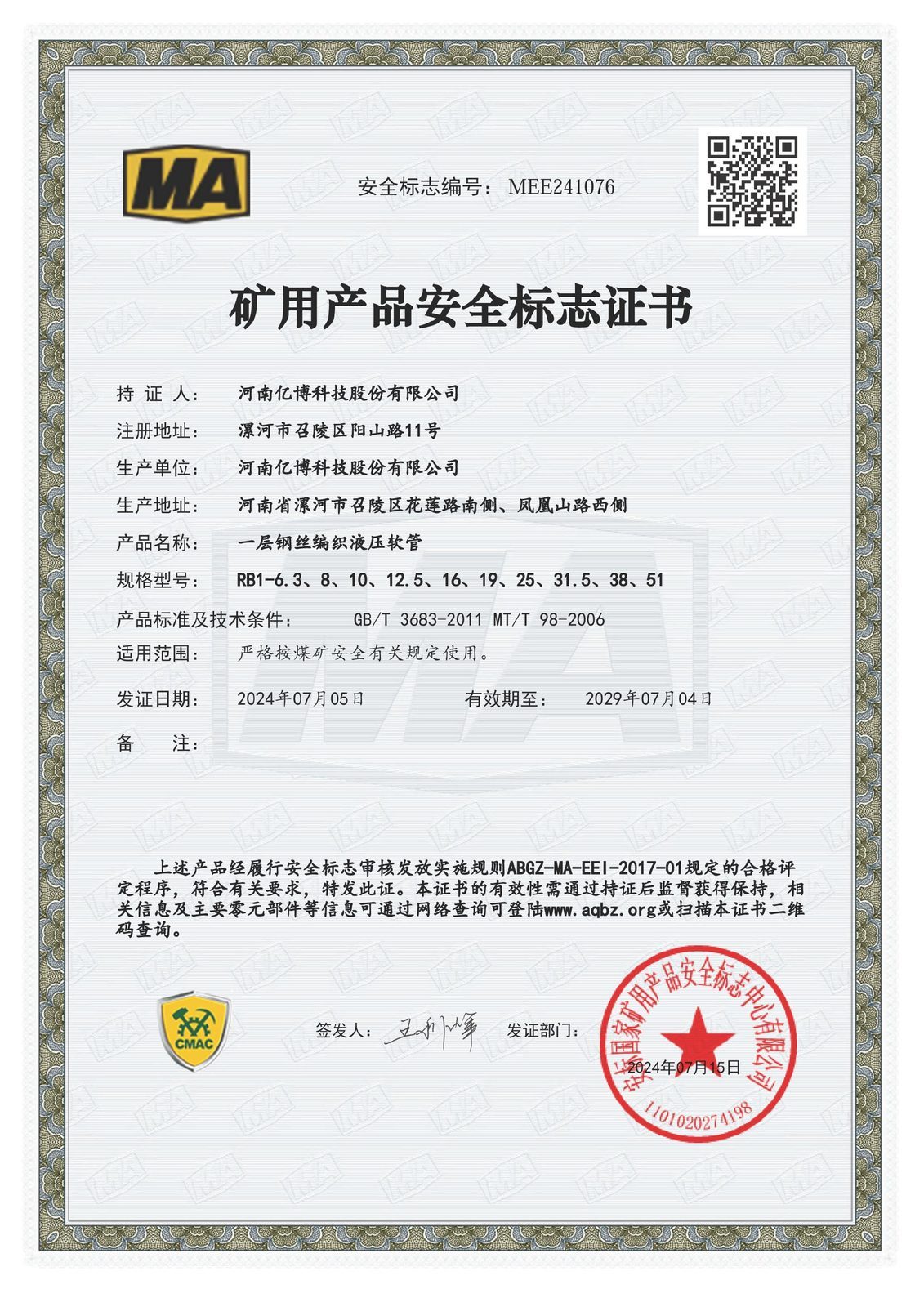
↓Certifications & factory photos
- Hose Construction
- Structure:Inner tube, textile braid reinforcement with helical wire for vacuum duty, and a CR outer cover
- Working Temperature:−40°C to +100°C, with continuous hot water service inside the published range
- Hose Features
- Bend Radius:Published codes route down to 60–130 mm minimum radius — the figure in the table, not a catalogue average.
- Pressure Rating:Rated 20 bar working with 60 bar minimum burst: a 3:1 safety margin, quoted per code in the table.
- Size Coverage:4 codes in the table, 6–13 mm bore.
- Mass Per Metre:0.18–0.36 kg/m.
- Application:Fuel transfer, bilge and suction lines, steam and hot water services on board, in hose that resists salt water.
24 Hours Service Hotline
+86 137 2136 0724


For distributors, OEMs & MRO buyers · 30+ countries · MOQ 100 m · free samples


In stock — ready to ship sooner than custom runs. Ask which sizes →
PRODUCT INTRODUCTION
Marine Vessel Hose — Small Bore, Long Runs, Vacuum Duty
A vessel routes hose through spaces no plant would accept: behind a bulkhead, under a floor plate, along a bilge keel. That makes the bend radius and the coil length more important than the pressure, which is why this range is small bore and long length.
Four codes run from 6 to 13 mm inside diameter, every one rated 20 bar working with 60 bar minimum burst, a 3:1 margin. Coils are 100 m on every code, long enough to pull a run in one piece between compartments instead of jointing inside a void.
The construction is textile braid with a helical wire for vacuum duty, under a CR cover. That helical wire is the difference between a hose that holds suction and one that flattens the first time a pump pulls with the valve closed.
Data Display
Marine hose for shipboard use: fuel transfer, bilge and suction lines, steam and hot water services, and hose that resists salt water.

| INNER DIAMETER I.D. (mm) | INNER DIAMETER I.D. (inch) | OUTER DIAMETER O.D. (mm) | OUTER DIAMETER W.P (psi) | OUTER DIAMETER W.P (bar) | psi | OUTER DIAMETER B.P. (psi) | OUTER DIAMETER B.P. (bar) | psi | BENDING RADIUS B.R. (mm) | WEIGHT (kg/m) | LENGTH (ft) | LENGTH (m) |
|---|---|---|---|---|---|---|---|---|---|---|---|---|
| 6 | 1/4" | 14 | 300 | 20 | 290 | 900 | 60 | 870 | 60 | 0.18 | 328 | 100 |
| 8 | 5/16" | 16 | 300 | 20 | 290 | 900 | 60 | 870 | 80 | 0.21 | 328 | 100 |
| 10 | 3/8" | 18 | 300 | 20 | 290 | 900 | 60 | 870 | 100 | 0.25 | 328 | 100 |
| 13 | 1/2" | 22 | 300 | 20 | 290 | 900 | 60 | 870 | 130 | 0.36 | 328 | 100 |
Values are reproduced from the official YIBO product page. psi columns = MPa × 145.038, rounded. 20 bar working and 60 bar minimum burst is the ceiling of this range; the order data sheet governs the batch.
Application & Selection
This marine hose covers fuel transfer, bilge and suction lines, steam and hot water service, and general deck use where the hose has to resist salt water. Four sizes, 6 to 13 mm bore, each with its own pressure and weight in the table below.
Rated 20 bar working with a 60 bar minimum burst. End fittings — metric, BSP, JIC or ORFS — are crimped and pressure-tested in-house. Allow about 20 days from order confirmation; OEM cover marking and export packing on request.
WHY THIS HOSE
Six Reasons to Choose This Marine Hose
Built for salt air, tight engine rooms and surveyor sign-off — not just for pressure.
Multi-Media Service
Fuel transfer, bilge suction, steam and hot water from one hose family, so a vessel carries fewer spare part numbers.
Salt-Spray Resistant Cover
CR cover compound resists ozone, UV and salt spray. On deck, the cover is what fails first — this one is built for it.
Vacuum Rated
Suction lines run under negative pressure. The reinforcement is sized for it, not just for the burst figure.
Compact Bend Radius
Engine rooms and deck lockers leave little room. A hose that routes cleanly chafes less and lasts longer.
Metric / BSP / JIC / ORFS
All four fitting families crimped and pressure tested in-house, matched to the assembly you are replacing.
Test Sheet Per Assembly
Serial-matched pressure test records, which is what a class surveyor asks for — not a batch certificate.
WHY THIS HOSE
Four Reasons a Vessel Specifies This Range
Shipboard hose is chosen for the space it has to pass through and the suction it has to survive.
Helical Wire for Vacuum
A textile braid alone collapses under suction. The helical wire holds the bore open on bilge and suction lines, which is the duty this range is built for.
60 mm at 1/4 Inch
The smallest code turns in a 60 mm arc, which is what a bulkhead penetration and a floor plate actually allow.
100 m on Every Code
One coil spans a run without a joint in a space nobody wants to open again. Joints in a void are the ones that leak unnoticed.
3:1 on 20 bar
Shipboard transfer and service lines run at low pressure. The published ratio is 3:1 on 60 bar, and it is quoted at that rather than dressed up.
CR Cover Against Salt
The cover is the layer that meets salt water and sunlight. It is a different requirement from the tube, which only meets the medium.
180 g per Metre at 1/4 Inch
0.18 kg/m at the smallest code to 0.36 kg/m at 1/2 inch. A 100 m coil is 18 to 36 kg, light enough to carry down a companionway.
CONSTRUCTION
Textile Braid, Helical Wire, CR Cover
Inner Tube
A tube selected for fuel, bilge water and hot water service, bored 6 mm to 13 mm. Small bore keeps the run light and the coil manageable.
Reinforcement
Textile braid for pressure, with a helical wire wound in for vacuum duty. The two do different jobs: the braid resists bursting, the wire resists collapse.
Cover
A CR cover that resists salt water, ozone and sunlight, taking outside diameter to 14 to 22 mm across the four codes.
APPLICATIONS
Where It Runs on Board
Bilge and Suction Lines
The vacuum duty this range is built for: a 13 mm bore, held open by the helical wire when the pump pulls and the valve is shut.
Fuel Transfer
Day tank and transfer lines at 20 bar, where a 60 mm arc at the smallest code clears a bulkhead penetration.
Steam and Hot Water Service
On-board service lines within the -40 ℃ to +100 ℃ range, on the same body and the same 3:1 margin.
Deck Washdown
Salt water at low pressure, where the CR cover rather than the tube takes the weathering.
Engine Room Services
Cooling and service lines that have to be pulled through a crowded engine room in one length.
Shipyard and Refit
New-build and refit runs where a 100 m coil avoids a joint behind a lining.
HIGH-END INDUSTRY DIRECTIONS
What Marine Buyers Ask For
Marine enquiries are specific about space and suction, and vague about pressure, because the pressure is rarely the problem.
① Suction Rather Than Pressure vacuum hose
Trend: Bilge and transfer lines are specified by vacuum, not by bar.
Dohose: Helical wire wound in for vacuum duty, with 60 bar burst behind it.
② Long Single Runs long length hose
Trend: Joints behind linings are treated as a defect waiting to happen.
Dohose: 100 m coils on all four codes.
③ Tight Penetrations compact routing
Trend: Bulkhead and floor penetrations are fixed by the yard.
Dohose: 60 mm arc at 1/4 inch, 130 mm at 1/2 inch.
④ Salt and UV marine hose
Trend: Deck runs are exposed to salt spray and sunlight year round.
Dohose: CR cover on all four codes, outside diameter 14 to 22 mm.
⑤ Hot Service Onboard hot water hose
Trend: Steam and hot water services share the same routing as fuel lines.
Dohose: Rated -40 ℃ to +100 ℃ within the published range.
⑥ Refit Documentation traceable hose
Trend: Class surveys ask for the batch and the test record.
Dohose: Batch and test date are marked on each length.
WHY DOHOSE
Seven Reasons Buyers Stay with Us
Numbers, Not Averages
Every figure for the Hose for Marine Vessels comes from the per-code table: 6–13 mm, 20 bar working, 60 bar burst.
One Line, Full Range
All 4 codes of the Hose for Marine Vessels come off the same line, so a mixed order in 6–13 mm ships together.
Length on Demand
Cut-to-length supply for Hose for Marine Vessels; each code carries its own mass, 0.18–0.36 kg/m, so lifting gear can be sized first.
Ends Done Here
Assemblies of Hose for Marine Vessels are crimped on site and held at test pressure before they are boxed.
Export Packing
Coiled in poly bags, then woven bags on pallets — loading plans are drawn for 4-code orders.
OEM Ready
Brand printing and custom packing are standard options on the Hose for Marine Vessels.
Fast, Firm Pricing
A firm price for Hose for Marine Vessels usually returns within 1 hour of your enquiry.
FAQ
Marine Vessel Hose — Ten Questions
Will it collapse under suction?
No, provided it is used within its published arc. The body carries a helical wire inside a textile braid specifically for vacuum duty, so a 13 mm bore at a 130 mm bend radius holds its shape when a pump pulls against a closed valve. A braid without the wire would flatten.
What is the difference between this and a delivery hose?
The helical wire and the small bore. A delivery hose pushes at pressure and does not need to resist collapse; this one does both, at 20 bar working and 60 bar burst, in bores from 6 to 13 mm.
Can this replace a hydraulic line on deck machinery?
No. This range is rated 20 bar working with a 3:1 margin, which is a transfer and service rating, not a hydraulic one. Deck machinery hydraulics run an order of magnitude higher and need a spiral or braided body with a 4:1 margin.
What is the working pressure and burst pressure?
Every code is 20 bar working with 60 bar minimum burst, published in bar and psi per row as 290 psi working and 870 psi burst. The margin is 3:1 across all four bores, from 6 mm to 13 mm.
What arc does the 1/2 inch code need?
The 13 mm code needs a 130 mm minimum bend radius on a 22 mm outside diameter, at 20 bar and 0.36 kg/m. The smallest code, at 6 mm, turns in 60 mm, so the arc grows with the bore rather than staying constant.
Why is the coil length fixed at 100 m?
Because a marine run is usually pulled between compartments and a joint behind a lining is the one that leaks unnoticed. Every code is supplied in a 100 m coil, which is 328 ft, at 0.18 to 0.36 kg/m so a full coil stays carryable.
Which code for a bilge suction line?
The 13 mm code at 20 bar, on a 130 mm arc. Suction lines are sized for flow and for the wire that keeps them open, and the 0.36 kg/m weight is the heaviest on the range but still light in a 100 m coil.
What temperature range does the cover take?
Minus 40 to plus 100 ℃ within the published range, with continuous hot water service inside it. Steam and hot water services share the same body as fuel transfer, so one range covers both on board.
What is the minimum order and lead time?
100 m per size, cut to length, and the standard coil is already 100 m. Production runs about 20 days from confirmation, and OEM marking and packing are available for yards and chandlers.
What does it cost per metre?
Price follows the bore: 0.18 kg/m at 1/4 inch, 0.21 at 5/16, 0.25 at 3/8 and 0.36 kg/m at 1/2 inch. Send the service, the bore, the length and the destination port, and a firm figure comes back the same working day.
Related Products
AIR / Water Delivery HOSE
Inner Tube: NR + SBR (Natural Rubber + Styrene Butadiene Rubber) / Reinforcement: High-strengt…
Aircraft Refueling HOSE
Structure: special fuel-resistant rubber inner liner, resistant to swelling and permeation of…
Animal Feed/grain HOSE
Inner rubber layer: wear-resistant natural rubber (brown). reinforcement layer: high-strength…
Conductive Chemical Suction and Discharge HOSE
The inner wall adopts uhmwpe+epdm material, featuring high temperature resistance, oxidation r…
Get a quote
Please fill out the form below and we will contact you within 1 hour.
We are online 24/7!
We will contact you within 1 hour of receiving your enquiry.
Hotline