
Hose for Injection Moulding Machines
HIGH PRESSURE · 350 bar working / 1400 bar burst · 4 sizes
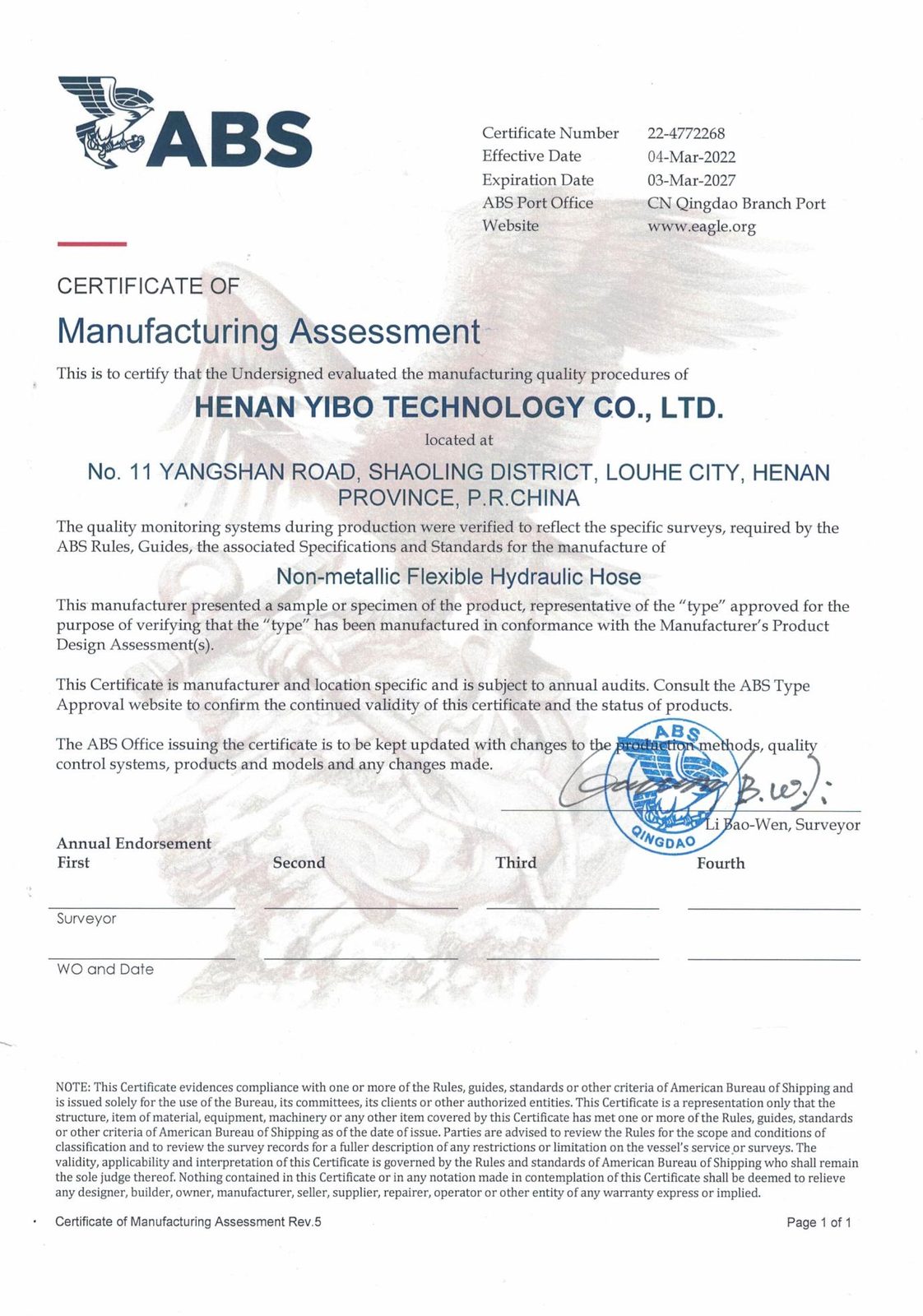
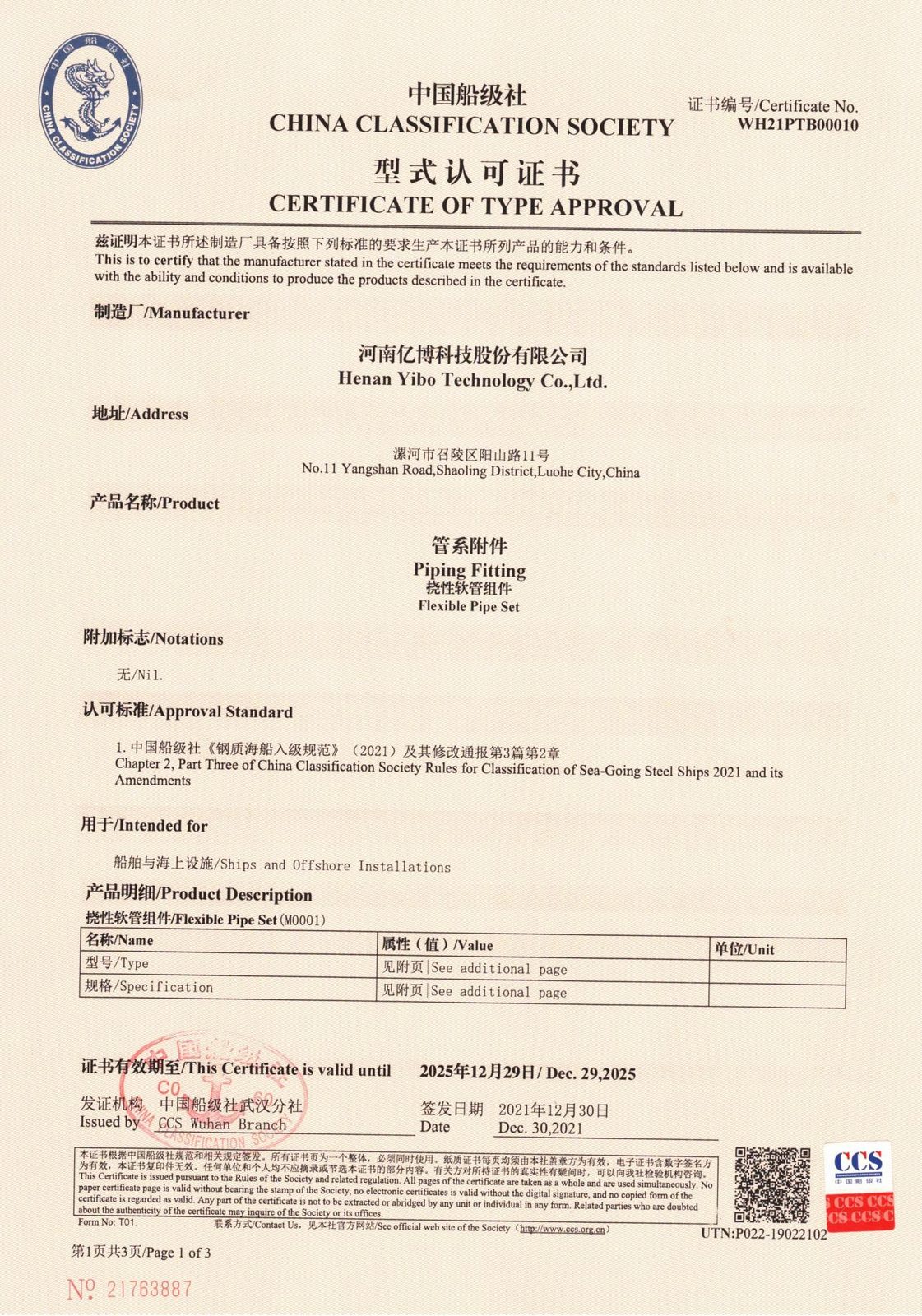
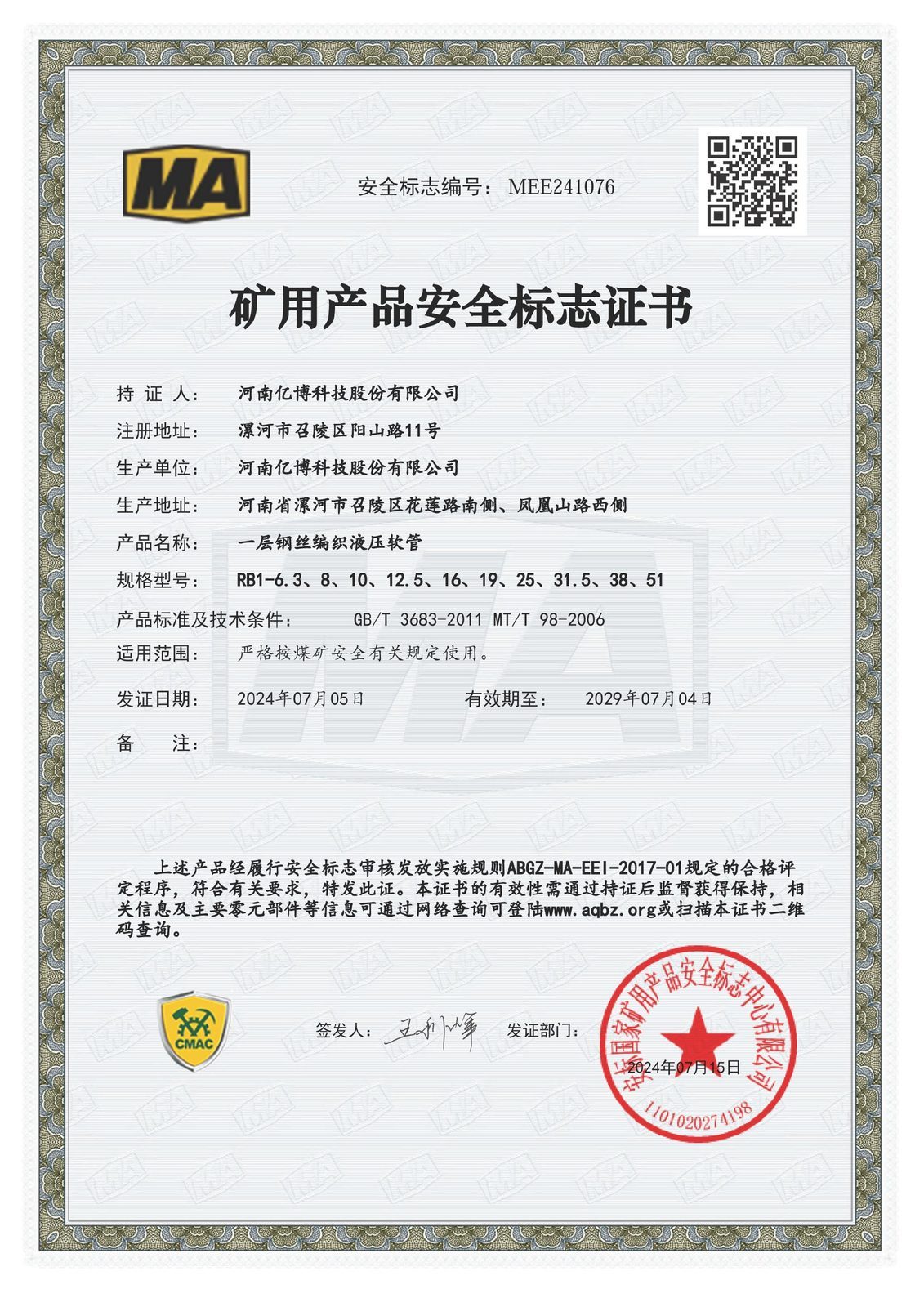
↓Certifications & factory photos
- Published Range
- Max working pressure:350 bar
- Min burst pressure:1400 bar
- Published sizes:4
- Nominal bore:5–10 mm across 4 published codes
- Hose Features
- Bend Radius:The published codes route down to 30–65 mm minimum radius.
- Duty-Cycle Matched:The construction is chosen against how hard the machine actually works, not against a catalogue default.
- Failure Mode First:We start from what normally fails on this equipment, then specify the hose that resists it.
- Tested Under Pressure:Working and burst pressure are verified in our own laboratory before shipment.
- Application:Injection moulding runs a fast, repetitive cycle with the hydraulics under pressure for a high proportion of every cycle.
24 Hours Service Hotline
+86 137 2136 0724


For distributors, OEMs & MRO buyers · 30+ countries · MOQ 100 m · free samples


In stock — ready to ship sooner than custom runs. Ask which sizes →
PRODUCT INTRODUCTION
Thermoplastic Hose for Injection Moulding — 350 bar in a 30 mm Bend
An injection moulding machine runs a fast, repetitive cycle with the hydraulics under pressure for most of it, inside a frame that was closed long before the hose was chosen. That is a routing problem first and a pressure problem second.
This page carries our R7 thermoplastic resin hose: 4 codes from 5 mm to 10 mm bore, rated 35.0 MPa (350 bar) at 5 mm down to 22.5 MPa (225 bar) at 10 mm, with minimum burst from 140 MPa to 90 MPa.
The number that matters here is the bend radius: 30 mm at the 5 mm code and 65 mm at 10 mm. A rubber two-braid body on the same 5 mm bore needs 90 mm and carries 41.5 MPa, so R7 trades 65 bar for 60 mm of routing space.
Data Display
Injection moulding runs a fast, repetitive cycle with the hydraulics under pressure for a high proportion of every cycle.
| PRODUCT NAME | NOMINAL BORE (mm) | SPECIFICATION (inch) | SPECIFICATION (ID)mm (min) | OUTSIDE DIAMETER (OD)mm (max) | MAXIMUM WORKING PRESSURE W.P (Mpa) | psi | MINIMUM BURST PRESSURE B.P (Mpa) | psi | MINIMUM BEND RADIUS Min.B.R (mm) |
|---|---|---|---|---|---|---|---|---|---|
| R7-3-05 | 5 | 3/16“ | 4.8 | 9.8 | 35.0 | 5,076 | 140 | 20,305 | 30 |
| R7-4-06 | 6 | 1/4“ | 6.3 | 12.7 | 27.5 | 3,989 | 110 | 15,954 | 40 |
| R7-5-08 | 8 | 5/16” | 7.9 | 14.3 | 25.0 | 3,626 | 100 | 14,504 | 55 |
| R7-6-10 | 10 | 3/8“ | 10.3 | 15.9 | 22.5 | 3,263 | 90 | 13,053 | 65 |
Values are reproduced from the official YIBO product page. psi columns = MPa × 145.038, rounded. 4 codes in this table; the order data sheet governs the batch.
Application & Selection
Injection moulding runs a fast, repetitive cycle with the hydraulics under pressure for a high proportion of every cycle. Hose for Injection Moulding Machines is published in 4 codes spanning 5–10 mm bore. The 5 to 10 mm bore keeps the outside diameter at 9.8 to 15.9 mm, slim enough to route through the tie-bar space of an injection-moulding platen.
Working and burst rating of Hose for Injection Moulding Machines peak at 350 / 1,400 bar, a 4:1 margin. Assemblies of Hose for Injection Moulding Machines are crimped and pressure-tested in-house, with metric / BSP / JIC / ORFS ends. Allow about 20 days for Hose for Injection Moulding Machines across the 5–10 mm band, OEM branding included.
WHY THIS HOSE
Six Reasons R7 Fits Inside a Moulding Frame
On a moulding machine the clamp and injection lines are the ones that get re-routed, and they get re-routed because there is no room.
30 mm Bend at 5 mm Bore
A rubber two-braid body on the same 5 mm bore needs 90 mm, so R7 buys 60 mm of routing space inside a frame that is already closed.
350 bar at the 5 mm Code
35.0 MPa with 140 MPa (1,400 bar) minimum burst. Small bore does not mean low pressure on a moulding machine, where clamp circuits are set high.
Four Codes, 5 mm to 10 mm
R7-3-05 through R7-6-10 covers a clamp line, an ejector line and a core pull from one range, all at 22.5 MPa or above.
Outside Diameter From 9.8 mm
At the 5 mm code the body measures 9.8 mm outside, so a bundle of clamp and ejector lines passes through a gap a rubber hose fills.
Thermoplastic, Not Rubber
The tube is a resin rather than an elastomer, which is what allows a thin wall and a tight bend at the same pressure class.
Assemblies Crimped and Tested
Thermoplastic needs its own fitting system, so assemblies are built with the matching ferrule and proof-tested, not clamped on site.
CONSTRUCTION
Resin Tube, Fibre Braid, Thin Cover
Inner Tube
Thermoplastic resin core, bored from 4.8 mm to 10.3 mm across the four codes. A resin core is what makes a 30 mm bend possible at 350 bar.
Reinforcement
High-tensile fibre braid, giving 35.0 MPa at the 5 mm code and 22.5 MPa at 10 mm, with burst at 140 MPa and 90 MPa respectively.
Cover
Thin abrasion-resistant cover: outside diameter 9.8 mm at the 5 mm code and 15.9 mm at 10 mm, which is most of what makes the tight bend possible.
APPLICATIONS
Line by Line on a Moulding Machine
Clamp Circuit
Clamp close and clamp open lines at 350 bar on the 5 mm code, where the manifold leaves 30 mm of room.
Injection & Hold
Injection and hold-pressure lines that stay pressurised through the dwell, at 27.5 MPa on the 6 mm code.
Ejector & Core Pull
Ejector and core-pull circuits at 25.0 MPa on the 8 mm code with a 55 mm bend radius.
Mould Height & Carriage
Carriage and nozzle-touch lines where the hose moves on every cycle, so a thin body matters.
Hot Runner & Valve Gate
Small auxiliary lines at 10 mm bore, rated 22.5 MPa with a 65 mm bend radius.
Robotic Take-Out
Take-out and sprue-picker circuits on the same frame, where the run is short and the bend is tight.
HIGH-END INDUSTRY DIRECTIONS
What Moulding Machine Buyers Ask For
Two things drive this specification: the frame is fixed, and the cycle never stops.
① Frame Already Closed compact hose
Trend: Machines are re-piped in the field, and the frame does not get bigger.
Dohose: R7 bends to 30 mm at the 5 mm code, against 90 mm for a rubber two-braid body.
② Dwell Under Pressure high pressure hose
Trend: Injection and hold circuits sit under pressure for seconds at a time, not a spike.
Dohose: 35.0 MPa at 5 mm with 140 MPa burst, printed per row.
③ Thin Walls, Tight Bundles compact hose
Trend: Clamp, ejector and core-pull lines share one channel inside the frame.
Dohose: Outside diameter runs 9.8 mm at 5 mm bore to 15.9 mm at 10 mm.
④ Cleanliness at the Valve clean hydraulic hose
Trend: Proportional and servo valves on a moulding machine specify cleanliness at the port.
Dohose: Bores are blown through and capped before the assembly is crimped.
⑤ Uptime reliable hose
Trend: A failed clamp line stops a mould and costs a shift, not a hose.
Dohose: Assemblies are proof-tested before dispatch rather than sampled.
⑥ Traceability traceable hose
Trend: Automotive moulders keep batch records for every line in the cell.
Dohose: Batch and test date are marked and recorded against the order.
WHY DOHOSE
Seven Reasons Buyers Stay with Us
Published Per Code
The Hose for Injection Moulding Machines is published code by code — 4 rows, 5–10 mm, each with its own pressure and mass.
One Factory, Whole Range
From the smallest to the largest bore in 5–10 mm, the Hose for Injection Moulding Machines is made in one plant — no second source.
Cut to the Metre
Take the length the job needs — Hose for Injection Moulding Machines is cut from the coil, with published per code published so handling can be planned.
Tested Before Boxing
Every assembly built from Hose for Injection Moulding Machines passes a hydrostatic test before it leaves the plant.
Packed for the Container
Pallet layouts for Hose for Injection Moulding Machines are planned against the container, so freight per metre stays predictable.
Private Label
Printing, labels and packing for Hose for Injection Moulding Machines can carry a distributor brand.
Same-Hour Reply
Bore, quantity and ends are enough to price Hose for Injection Moulding Machines; the reply goes out within 1 hour.
FAQ
Moulding Machine Hose — Ten Questions
R7 vs a rubber two-braid hose for a moulding machine?
Bend radius against pressure. At 5 mm bore the rubber two-braid body is rated 41.5 MPa and needs 90 mm to bend, while R7 is rated 35.0 MPa and bends to 30 mm. If the frame leaves 40 mm, only R7 fits at all; if the line is at 400 bar, only the rubber body qualifies.
What changes at the fitting with a thermoplastic hose?
Everything about the joint. A resin tube does not take a rubber hose ferrule, so R7 uses its own fitting system crimped to a recorded setting. A 35.0 MPa clamp line fitted with the wrong ferrule is the single most common failure we see returned from this application.
What is the working pressure of 3/8 inch R7?
The 10 mm code is rated 22.5 MPa working (225 bar, 3,263 psi) with 90 MPa (13,053 psi) minimum burst. Minimum bend radius is 65 mm, the inside diameter is 10.3 mm and the outside diameter is 15.9 mm.
What bore for a clamp circuit at 250 bar?
The 8 mm code, at exactly 25.0 MPa (250 bar) with a 55 mm bend radius. The 6 mm code reaches 27.5 MPa but its 40 mm bend radius and 6.3 mm bore limit the flow; the 10 mm code is rated 22.5 MPa, so it cannot take 250 bar at all.
Which lines on a moulding machine use R7?
Clamp, injection and hold, ejector, core pull, carriage and the small valve-gate runs. The 5 mm code at 350 bar covers clamp, the 6 mm at 275 bar covers injection, and the 8 mm at 250 bar covers ejector and core pull.
Can R7 replace a hose that keeps rubbing on the frame?
Only if the pressure allows. R7 is thinner and bends tighter, so it sits away from the frame, but at 10 mm bore it is rated 22.5 MPa. Where the circuit is at 350 bar, the answer is to re-route the rubber line rather than to fit a body that cannot hold the pressure.
Why does an R7 assembly fail right at the fitting?
Because thermoplastic has almost no forgiveness at the joint: a 35.0 MPa clamp line has nothing to spare, and the tube does not compress the way rubber does, so a ferrule set for a rubber hose either cuts the core or leaves it unbonded. The failure then appears within days, not months, which is how you know it was the crimp.
Why does the hose kink at 30 mm?
Because 30 mm is the minimum on the 5 mm code, not a working radius. At the limit a resin core ovalises and stays oval, and the flow restriction shows up as slow clamp response rather than as a leak. Lay it out at 40 mm and the line behaves.
Which Chinese manufacturer supplies R7 hose and assemblies?
YIBO, in Luohe, Henan, supplies the four R7 codes from 5 mm to 10 mm bore with matching fittings, crimped and proof-tested in-house. Send the machine model and the line list and the assemblies arrive ready to fit.
What does an R7 hose cost, and how is it packed?
Price follows the code and the ends: the 5 mm code is rated 35.0 MPa and the 10 mm code 22.5 MPa, and each takes a different ferrule. Send bore, length, end types and quantity, and a firm figure comes back the same working day.
Related Products
Automotive Power Steering HOSE
THE HOSE CONSISTS OF A HEAT-RESISTANT OIL SYNTHETIC RUBBER, ONE OR TWO LAYERS OF STEEL WIRE BR…
Compact Pilot HOSE
INNER TUBE: OIL-RESISTANT SYNTHETIC RUBBER. REINFORCEMENT: ONE LAYER OF STEEL WIRE BRAIDING. O…
Compact Single WIRE Braid Hydraulic HOSE
The hose consists of an inner tube, a single wire braid reinforcement, and an outer cover.
Compact Two-wire Braided Hydraulic HOSE
The hose consists of an inner tube, a double wire braid reinforcement, and an outer cover.
Get a quote
Please fill out the form below and we will contact you within 1 hour.
We are online 24/7!
We will contact you within 1 hour of receiving your enquiry.
Hotline