
MATERIAL SUCTION AND DISCHARGE HOSE
HIGH WEAR RESISTANT · ANTI-STATIC · SUCTION / VACUUM RATED · 10 bar working / 30 bar burst · 51–152 mm
↓Certifications & factory photos
- Hose Construction
- Structure:Inner Tube: NR + BR (Natural Rubber + Butadiene Rubber) /
- Reinforcement:High-strength polyester cord + spiral steel wire + conductive copper wire /
- Cover:NR + SBR (Natural Rubber + Styrene Butadiene Rubber)
- Hose Features
- Bend Radius:Minimum bend radius 4–6 mm across the published codes — the figure in the table, not a catalogue average.
- Pressure Rating:10 bar working pressure and 30 bar minimum burst — a 3.0× margin taken straight from the published column.
- Size Coverage:7 published codes spanning 51 mm to 152 mm bore, from 51 upward.
- Mass Per Metre:From 1.73 to 7.27 kg/m depending on bore.
- Application:Suitable for the transfer of abrasive materials such as dry cement, gravel, and lime, as well as rubber compounds.
24 Hours Service Hotline
+86 137 2136 0724


For distributors, OEMs & MRO buyers · 30+ countries · MOQ 100 m · free samples
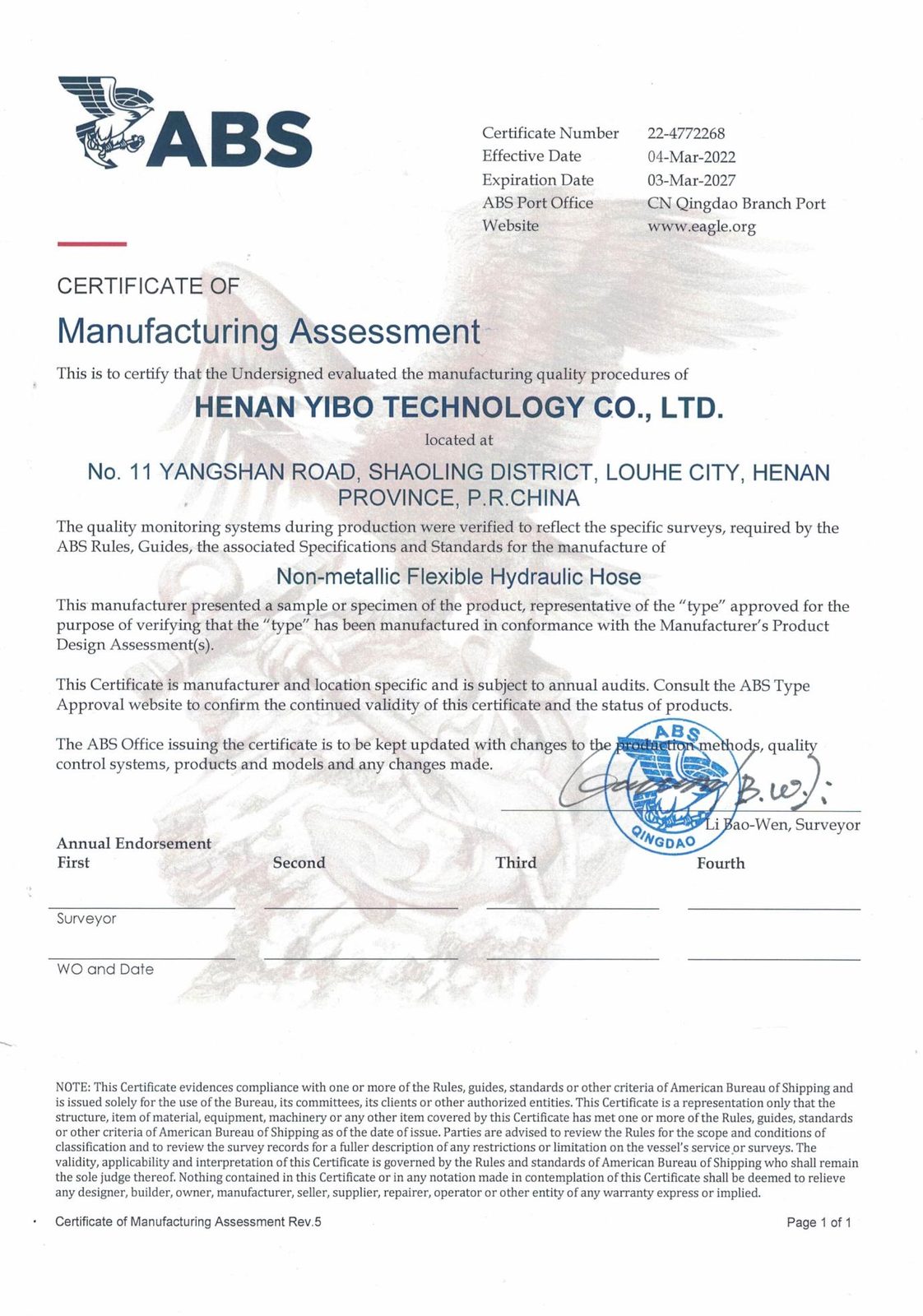
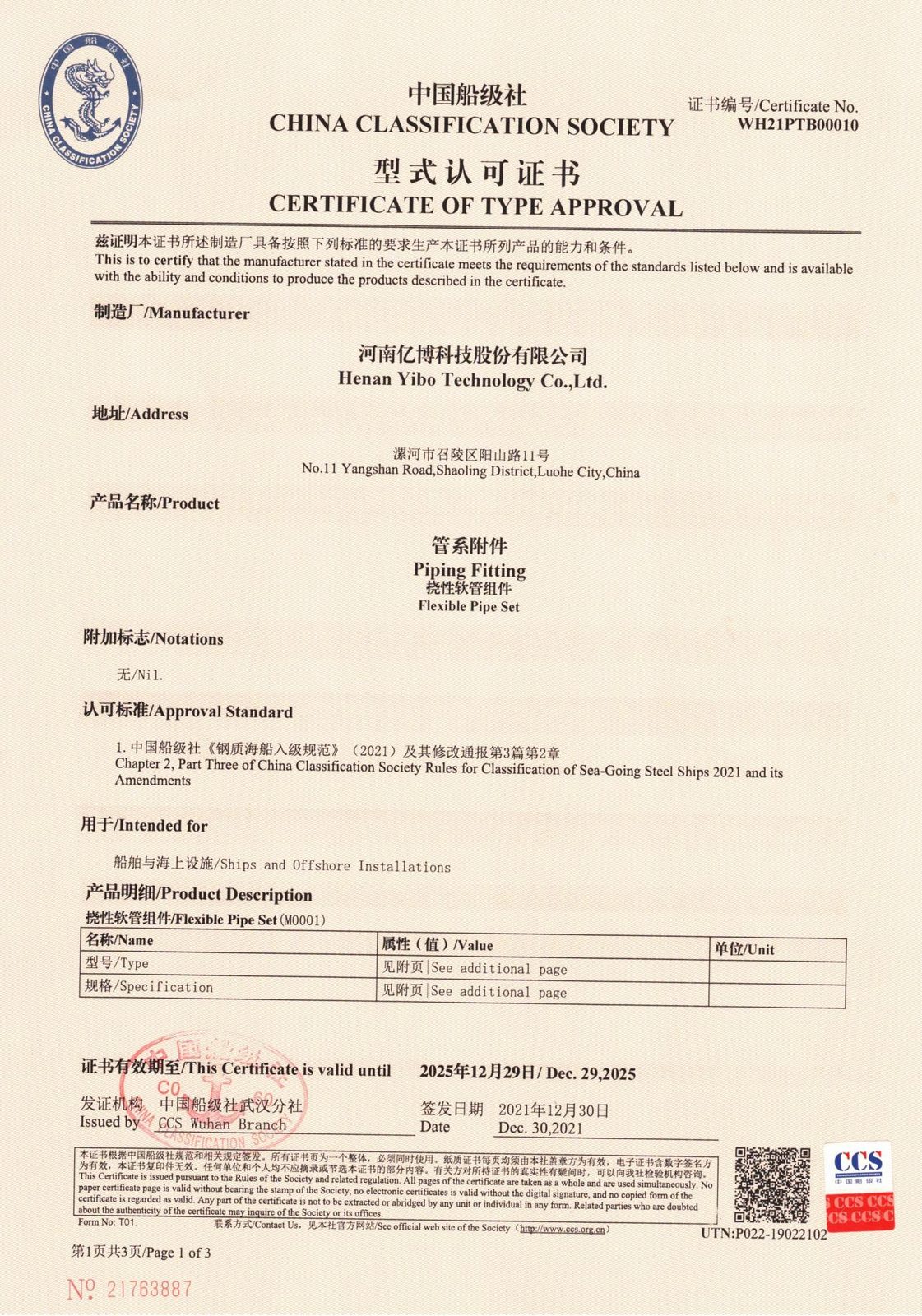
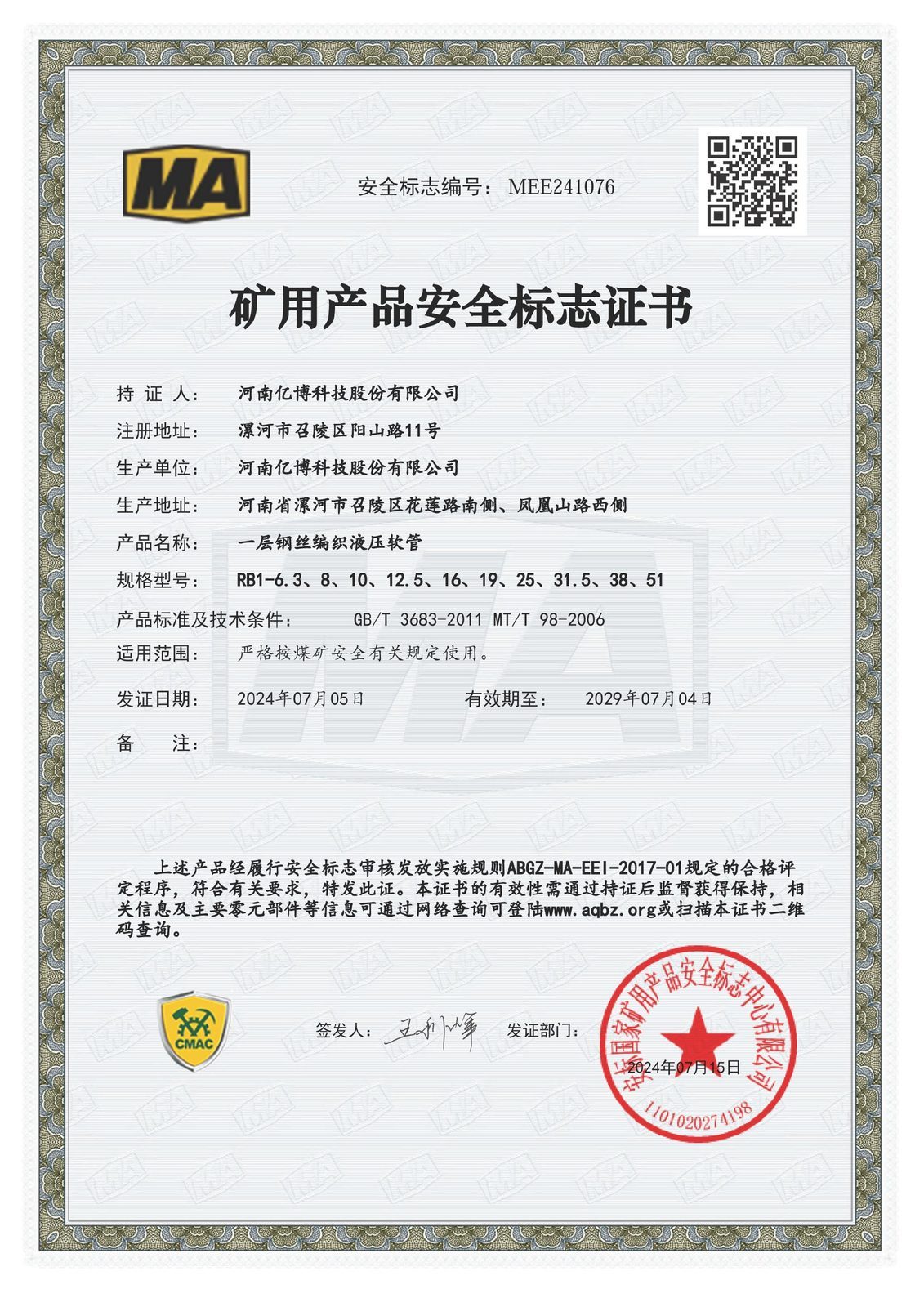


In stock — ready to ship sooner than custom runs. Ask which sizes →
PRODUCT INTRODUCTION
Material Suction Hose — How High It Will Lift, and What Happens When It Plugs
A suction hose is bought for a lift height, not for a pressure. This one is published from 51 mm to 152 mm inside diameter with a 10 bar working rating and 30 bar minimum burst, but what decides whether it survives a shift is how far the material has to be raised and what the line does the moment a strainer blocks.
The number that answers that is not on the sheet as a figure: it is the spiral steel wire in the wall. Raising dry cement, gravel or lime means the bore is squeezed from outside for as long as the intake runs, and a cord body at 152 mm would fold the first time the vacuum peaked.
The wall behind the bore is published as a layer rather than guessed: 6.0 mm on the 6 inch code, 5.0 mm from 3 to 5 inch and 4.0 mm on the 2 and 2-1/2 inch codes. Weight runs 1.73 kg/m at 2 inch to 7.27 kg/m at 6 inch, and the 5 and 6 inch codes come as 30.5 m pieces because a longer one is a rigging job.
Data Display
| INNER DIAMETER I.D. (mm) | INNER DIAMETER I.D. (inch) | OUTER DIAMETER O.D. (mm) | WORKING PRESSURE W.P (psi) | WORKING PRESSURE W.P (bar) | psi | BURST PRESSURE B.P. (bar) | psi | BURST PRESSURE B.P. (bar) | psi | Abrasion-Resistant Layer Thickness Tubethickness (mm) | WEIGHT (kg/m) | LENGTH (ft) | LENGTH (m) |
|---|---|---|---|---|---|---|---|---|---|---|---|---|---|
| 51 | 2" | 67.4 | 150 | 10 | 145 | 30 | 435 | 30 | 435 | 4.0 | 1.73 | 200 | 61 |
| 64 | 2-1/2" | 81.4 | 150 | 10 | 145 | 30 | 435 | 30 | 435 | 4.0 | 2.40 | 200 | 61 |
| 76 | 3" | 95.8 | 150 | 10 | 145 | 30 | 435 | 30 | 435 | 5.0 | 3.18 | 200 | 61 |
| 102 | 4" | 124.6 | 150 | 10 | 145 | 30 | 435 | 30 | 435 | 5.0 | 4.26 | 200 | 61 |
| 127 | 5" | 151.2 | 150 | 10 | 145 | 30 | 435 | 30 | 435 | 5.0 | 5.55 | 100 | 30.5 |
| 152 | 6" | 178.6 | 150 | 10 | 145 | 30 | 435 | 30 | 435 | 6.0 | 7.27 | 100 | 30.5 |
| Note: Other technical data can be customized on request. |
Values are reproduced from the official YIBO product page. MATERIAL SUCTION AND DISCHARGE HOSE: psi columns = MPa × 145.038, rounded. MATERIAL SUCTION AND DISCHARGE HOSE: Ratings run to 10 bar working / 30 bar minimum burst over the 51–152 mm bore band; the order data sheet governs the batch.
Application & Selection
Suitable for the transfer of abrasive materials such as dry cement, gravel, and lime, as well as rubber compounds. MATERIAL SUCTION AND DISCHARGE HOSE covers 51–152 mm across 7 published codes. The tube carries a 4.0 to 6.0 mm abrasion-resistant layer so the hose survives repeated suction of wet gravel and lime slurry without thinning through the wall.
MATERIAL SUCTION AND DISCHARGE HOSE tops out at 10 bar working over its 6 codes. MATERIAL SUCTION AND DISCHARGE HOSE weighs 1.73–7.27 kg/m. MATERIAL SUCTION AND DISCHARGE HOSE: Assemblies are crimped and pressure-tested in-house, metric / BSP / JIC / ORFS ends, across the 6 codes in the 51–152 mm band. Smallest order of MATERIAL SUCTION AND DISCHARGE HOSE: 100 m, covering its 6 codes.
WHY THIS HOSE
Six Things That Decide Whether a Suction Line Holds
On an intake the pressure figure is the easy half. The hard half is the moment the vacuum spikes and the wall has to stay round.
Lift Height Before Bore
A line that has to raise material several metres needs a bigger bore than one drawing from a pit at the same rate, because the vacuum is doing more of the work and the wall is taking more of the load.
A Plug Is the Design Case
A blocked strainer takes the vacuum up instantly. The spiral wire is sized for that moment rather than for the steady state, and it is why a suction line is not a pressure hose used backwards.
6.0 mm at the Big End
The rubber behind the bore is 6.0 mm on the 6 inch code and 4.0 mm at 2 inch, so the intake where material arrives fastest is also the one with the most to wear through.
Wire Carries Two Loads
The same spiral resists collapse on the intake stroke and gives the wall something to push against on the discharge stroke, which is why one hose covers both halves of an unloading cycle.
Wagons and Barges
The 127 mm code at 5.55 kg/m is a rail wagon size and the 152 mm code at 7.27 kg/m a barge size, both supplied as 30.5 m pieces for the same handling reason.
Static at the Intake
A conductive copper wire runs the length of the reinforcement, because dry material entering a hose at speed is where the charge is generated, not where it leaves.
CONSTRUCTION
Abrasion Rubber, Wire, Cover
Inner Tube
NR blended with BR, with 4.0 to 6.0 mm of abrasion-resistant rubber behind the bore, in sizes from 51 mm to 152 mm.
Reinforcement
High-strength polyester cord with spiral steel wire and a conductive copper wire: the wire resists the collapse load, the copper carries the static.
Cover
NR blended with SBR, from 67.4 mm outside at the 2 inch code to 178.6 mm at 6 inch, against the ground a suction line is dragged over.
APPLICATIONS
Where the Material Has to Be Raised
Barge Hold
The 152 mm code at 7.27 kg/m, lifting from a hold into a receiving hopper.
Rail Wagon
The 127 mm code at 5.55 kg/m, on a 30.5 m piece run to the discharge point.
Silo Outlet
The 102 mm code at 4.26 kg/m, drawing dry cement from the base of a silo.
Pit and Sump
The 64 mm code at 2.40 kg/m, on a vacuum unit intake with a short lift.
Gravel and Lime
The 76 mm code at 3.18 kg/m, where the material is coarse and the wall is 5.0 mm.
Bagging Hopper
The 51 mm code at 1.73 kg/m, the smallest bore, on a short intake run.
HIGH-END INDUSTRY DIRECTIONS
What an Unloading Crew Asks
The questions come from the deck of a barge, not from a specification sheet, and they are about lift, plugs and weight.
① Vacuum Unloading suction hose
Trend: Holds and pits are emptied by vacuum.
Dohose: Spiral wire from 51 to 152 mm.
② The Plug That Stops a Shift material hose
Trend: A blocked intake raises the vacuum at once.
Dohose: Wire sized for the spike, not the steady state.
③ Intake Wear abrasion resistant hose
Trend: The first metre takes the material head-on.
Dohose: 6.0 mm behind the bore at 6 inch.
④ Dust in the Hold anti static hose
Trend: Dry bulk in an enclosed hold is a risk.
Dohose: Copper wire along the reinforcement.
⑤ Bigger Holds large bore hose
Trend: Barges are emptied in fewer passes.
Dohose: 152 mm at 178.6 mm outside.
⑥ Two People, One Piece heavy hose
Trend: 5 and 6 inch are moved by rigging.
Dohose: 30.5 m pieces at 5.55 and 7.27 kg/m.
WHY DOHOSE
Seven Reasons Buyers Stay with Us
Numbers, Not Averages
Every figure for the Material Suction and Discharge Hose comes from the per-code table: 51–152 mm, 10 bar working, 30 bar burst.
One Line, Full Range
All 6 codes of the Material Suction and Discharge Hose come off the same line, so a mixed order in 51–152 mm ships together.
Length on Demand
Cut-to-length supply for Material Suction and Discharge Hose; each code carries its own mass, 7.27 kg/m, so lifting gear can be sized first.
Ends Done Here
Assemblies of Material Suction and Discharge Hose are crimped on site and held at test pressure before they are boxed.
Export Packing
Coiled in poly bags, then woven bags on pallets — loading plans are drawn for 6-code orders.
OEM Ready
Brand printing and custom packing are standard options on the Material Suction and Discharge Hose.
Fast, Firm Pricing
A firm price for Material Suction and Discharge Hose usually returns within 1 hour of your enquiry.
FAQ
Material Suction Hose — Ten Questions
How high will this hose lift material?
That depends on the vacuum unit rather than on the hose, but the hose sets the limit: a 152 mm bore at 7.27 kg/m holds its shape under a harder pull than a smaller one, while the 51 mm code at 1.73 kg/m is for a short lift from a pit.
Why does a blocked strainer flatten the line?
The vacuum goes to its maximum in seconds, and the bore is loaded from outside at its worst. The spiral wire is what keeps the 102 mm code from folding; without it the same wall would flatten and the line would have to be stripped to clear.
Is this the same as the material transfer version?
Same table, different duty. Both are 10 bar over 51 mm to 152 mm, but this one is bought for the intake side, where the load comes from outside, and the transfer version is bought for pushing material into a bin.
What is the rating on the 4 inch code?
10 bar working with 30 bar minimum burst, on a 102 mm bore, a 124.6 mm outside diameter, 5.0 mm of rubber behind the bore and 4.26 kg per metre.
Which bore for unloading a barge?
The 152 mm code at 6 inch and 7.27 kg/m, supplied as a 30.5 m piece. A rail wagon is usually the 127 mm code at 5.55 kg/m, on the same piece length.
Can it draw dry cement out of a silo?
Yes — that is a 102 mm bore at 4.26 kg/m, with 5.0 mm of abrasion-resistant rubber behind the bore. The material arrives at the intake faster than anywhere else in the line, which is why the wall is thickest where the bore is largest.
Can it replace a cord-only hose on the intake?
No. Without the spiral wire the same 102 mm bore folds the first time the vacuum peaks, and the 10 bar rating says nothing about that case at all. The load is on the other face: a pressure hose is pushed outward, an intake is squeezed inward.
Why is the wall thicker on the largest bore?
Because more material passes the wall per hour. The rubber behind the bore is 4.0 mm at 51 and 64 mm, 5.0 mm from 76 to 127 mm and 6.0 mm at 152 mm, so the wear allowance grows with the throughput.
What is the minimum order?
One piece, cut to the lift, in any of the six sizes from 51 mm to 152 mm. The four smaller codes come as 61 m coils and the 127 and 152 mm codes as 30.5 m pieces.
How is the hose priced?
Per metre by bore: 1.73 kg/m at the 2 inch code against 7.27 kg/m at 6 inch. Send the material, the lift height, the vacuum unit and the destination for a firm figure.
Related Products
AIR / Water Delivery HOSE
Inner Tube: NR + SBR (Natural Rubber + Styrene Butadiene Rubber) / Reinforcement: High-strengt…
Aircraft Refueling HOSE
Structure: special fuel-resistant rubber inner liner, resistant to swelling and permeation of…
Animal Feed/grain HOSE
Inner rubber layer: wear-resistant natural rubber (brown). reinforcement layer: high-strength…
Conductive Chemical Suction and Discharge HOSE
The inner wall adopts uhmwpe+epdm material, featuring high temperature resistance, oxidation r…
Get a quote
Please fill out the form below and we will contact you within 1 hour.
We are online 24/7!
We will contact you within 1 hour of receiving your enquiry.
Hotline