
CONDUCTIVE CHEMICAL TRANSFER HOSE
ANTI-STATIC · CHEMICAL RESISTANT · UV / OZONE RESISTANT · 10 bar working / 30 bar burst · 19–102 mm
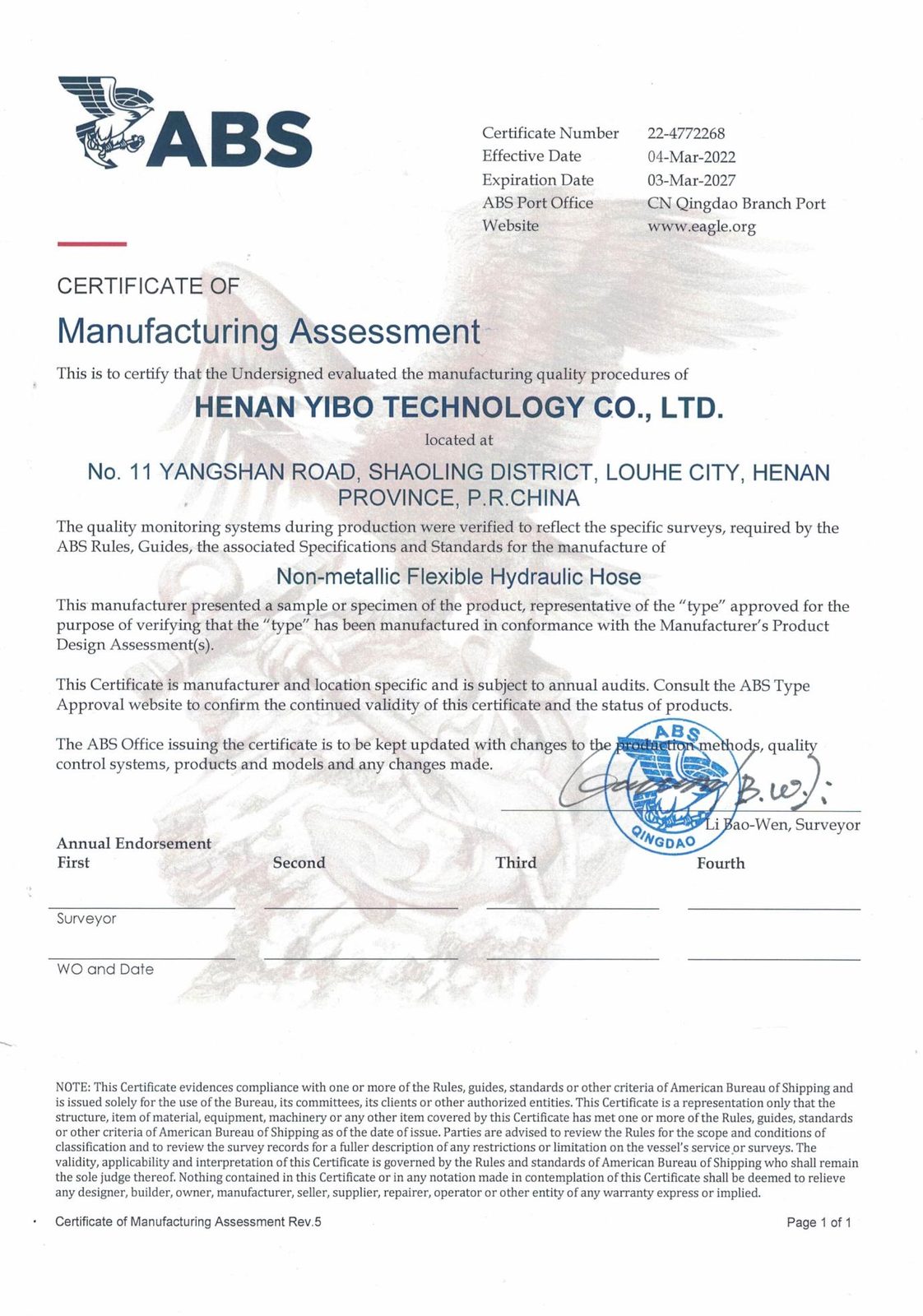
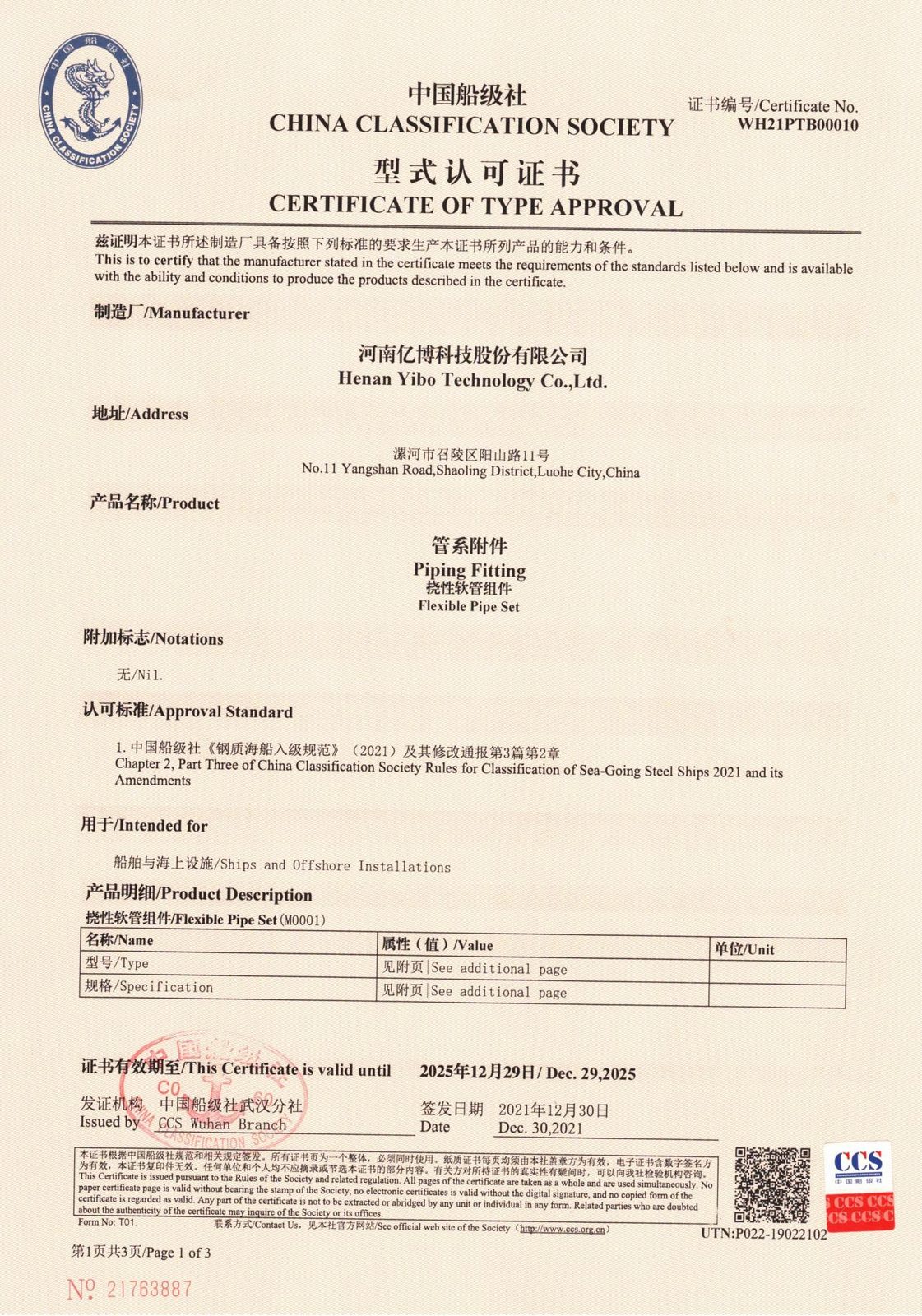
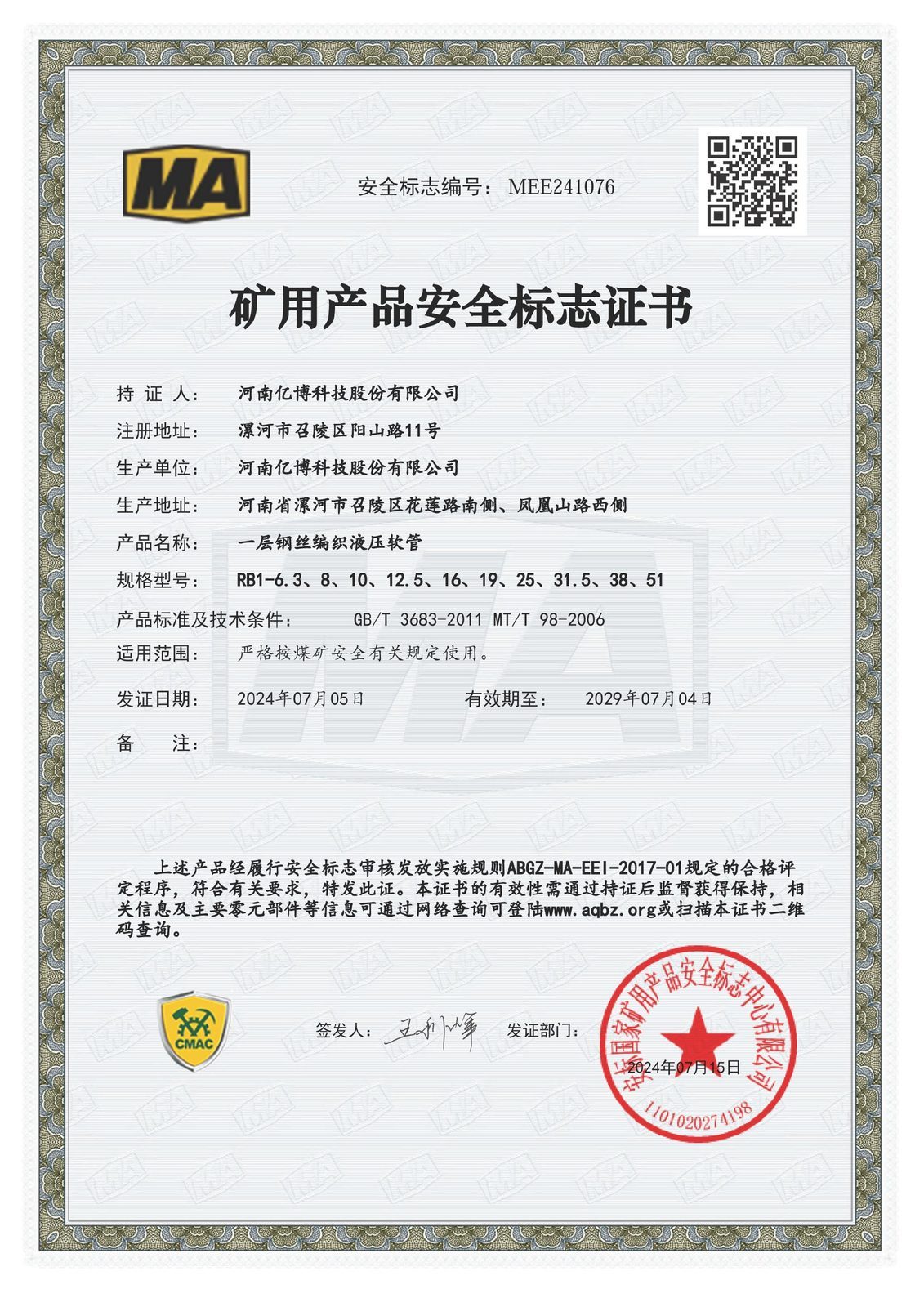
↓Certifications & factory photos
- Hose Construction
- Structure: inner liner of conductive UHMWPE+EPDM composite for corrosion and static resistance; high‑strength synthetic fiber winding reinforcement for good pressure resistance; integral conductive layer for static elimination; EPDM outer cover with uv‑resistant, aging‑resistant and wear‑resistant performance
- Working Temperature:‑35℃ ~ +100℃
- Hose Features
- Pressure Rating:10 bar working against 30 bar minimum burst — a 3.0× margin.
- Mass Per Metre:0.63–3.34 kg/m across the published codes; every figure is per code, not an average.
- Application:Applications: for pressure transfer of various corrosive media under explosion‑proof and anti‑static conditions, conveying strong acids, strong alkalis and organic solvents, widely used in fine chemical, lithium‑ion new energy, pharmaceutical and tank transfer
- Outer Diameter:Outer diameter 31.2–117.4 mm across the published bores.
- Supply Length:Standard supply length 40 m.
24 Hours Service Hotline
+86 137 2136 0724


For distributors, OEMs & MRO buyers · 30+ countries · MOQ 100 m · free samples


In stock — ready to ship sooner than custom runs. Ask which sizes →
PRODUCT INTRODUCTION
Conductive Chemical Transfer Hose — Static Handled, 10 bar
This is the filling side of a chemical transfer: the hose that puts product into a tanker, a drum or a reactor, built with a conductive UHMWPE and EPDM composite liner so that charge does not build up as the medium moves, in ten codes from 19 mm to 102 mm, at 10 bar working and 30 bar minimum burst.
The published duty is pressure transfer of corrosive media under explosion-proof and anti-static conditions. That is a specific pairing: an aggressive product in a hazardous area, where the hose has to be both chemically resistant and electrically dissipative rather than merely conductive on its surface.
Two of the ten codes are worth noting on the sheet — 45 mm at 1-3/4 inch and 57 mm at 2-1/4 inch. Those are not the sizes a catalogue invents; they are standard flange and camlock sizes, which is why they are published between 38 and 64 mm. Mass runs 0.63 kg/m at 19 mm to 3.34 kg/m at 102 mm, the service window is -35 °C to +100 °C, and every code ships in 40 m lengths.
Data Display
| ITEM CODE | I.D (mm) | I.D (inch) | O.D mm | W.P (bar) | psi | W.P (psi) | B.P (bar) | psi | B.P (psi) | WEIGHT kg/m | MAX LENGTH m |
|---|---|---|---|---|---|---|---|---|---|---|---|
| ASCHD019-150 | 19 | 3/4" | 31.2 | 10 | 145 | 150 | 30 | 435 | 450 | 0.63 | 40 |
| ASCHD025-150 | 25 | 1" | 37.2 | 10 | 145 | 150 | 30 | 435 | 450 | 0.78 | 40 |
| ASCHD032-150 | 32 | 1-1/4" | 44.6 | 10 | 145 | 150 | 30 | 435 | 450 | 0.96 | 40 |
| ASCHD038-150 | 38 | 1-1/2" | 51.6 | 10 | 145 | 150 | 30 | 435 | 450 | 1.21 | 40 |
| ASCHD045-150 | 45 | 1-3/4" | 58.6 | 10 | 145 | 150 | 30 | 435 | 450 | 1.40 | 40 |
| ASCHD051-150 | 51 | 2" | 64.6 | 10 | 145 | 150 | 30 | 435 | 450 | 1.56 | 40 |
| ASCHD057-150 | 57 | 2-1/4" | 70.6 | 10 | 145 | 150 | 30 | 435 | 450 | 1.72 | 40 |
| ASCHD064-150 | 64 | 2-1/2" | 78.6 | 10 | 145 | 150 | 30 | 435 | 450 | 2.19 | 40 |
| ASCHD076-150 | 76 | 3" | 90.6 | 10 | 145 | 150 | 30 | 435 | 450 | 2.56 | 40 |
| ASCHD102-150 | 102 | 4" | 117.4 | 10 | 145 | 150 | 30 | 435 | 450 | 3.34 | 40 |
Values are reproduced from the official YIBO product page. psi columns = MPa × 145.038, rounded. Across the 10 codes the top rating is 10 bar working / 30 bar minimum burst; the order data sheet governs the batch.
Application & Selection
CONDUCTIVE CHEMICAL TRANSFER HOSE — Industrial & Food Hose. Applications: for pressure transfer of various corrosive media under explosion‑proof and anti‑s. CONDUCTIVE CHEMICAL TRANSFER HOSE covers 19–102 mm across 10 published codes.
Across the 10 codes of CONDUCTIVE CHEMICAL TRANSFER HOSE the top figure is 10 bar working against 30 bar minimum burst — 3:1. From 0.63 to 3.34 kg/m over the 10 rows. Metric / BSP / JIC / ORFS ends are crimped and pressure-tested in-house, outside diameter 31.2–117.4 mm. CONDUCTIVE CHEMICAL TRANSFER HOSE runs roughly 20 days from confirmation over its 10 codes, with OEM marking and packing.
WHY THIS HOSE
Six Reasons the Static Path Is Part of the Spec
A hose filling a tanker in a hazardous area is asked for two things at once: it must not react, and it must not hold a charge.
Conductive Liner, Not a Strap
The conductivity is built into the UHMWPE and EPDM liner rather than added as an external bonding strap, so the dissipation path is the wetted surface itself and does not depend on a fitting being re-made correctly after every service.
Explosion-Proof Duty
The published application states explosion-proof and anti-static conditions, which is the reason a plant buys this hose instead of the general chemical version at the same bore.
Ten Bores Including 45 and 57
19, 25, 32, 38, 45, 51, 57, 64, 76 and 102 mm — the two odd sizes are standard flange connections, published so a line does not need a reducer at each end.
10 bar, 30 bar Burst
Every code is 10 bar working with 30 bar minimum burst, a 3:1 margin, which is the class a transfer pump and a filling arm actually work in.
UHMWPE Against Wear
The liner is a UHMWPE and EPDM composite, so it meets both the chemical attack and the particle wear of a product that is pumped rather than poured.
40 m From the Pump
Every code is supplied in 40 m, so a filling point can be reached from a pump skid without a coupling in the middle of the line.
CONSTRUCTION
Conductive Liner, Fibre, Cover
Inner Liner
A conductive UHMWPE and EPDM composite, published for corrosion resistance and static dissipation, in bores from 19 mm to 102 mm.
Reinforcement
High-strength synthetic fibre winding, sized for pressure resistance at 10 bar working and 30 bar burst.
Cover
The outer cover over the winding, from 31.2 mm outside at the 19 mm code to 117.4 mm at 102 mm.
APPLICATIONS
Where Product Goes In
Tanker Loading
The 76 mm code at 3 inch, filling a road tanker at 10 bar through a loading arm.
Drum Filling
The 25 mm code at 1 inch, on a filling head in a hazardous area.
Reactor Charging
The 45 mm code at 1-3/4 inch, straight onto a standard flange without a reducer.
Pipework Transfer
The 57 mm code at 2-1/4 inch, matched to a plant connection that is neither 2 nor 2-1/2 inch.
IBC Decanting
The 32 mm code at 1-1/4 inch, on a pump-fed transfer in a bunded area.
Bulk Delivery
The 102 mm code at 3.34 kg/m, where the bore sets the filling time.
HIGH-END INDUSTRY DIRECTIONS
What a Hazardous Area Requires
The paperwork asks for bonding and the hose asks for a dissipative liner. Both have to be true at the same time.
① Zone Classification anti static hose
Trend: Filling points sit in classified zones.
Dohose: Conductive liner, explosion-proof duty.
② Bonding Audits conductive hose
Trend: Continuity is checked and recorded.
Dohose: Dissipation through the wetted liner.
③ Odd Flange Sizes flange hose
Trend: Plant connections are not all 2 or 3 inch.
Dohose: 45 mm at 1-3/4, 57 mm at 2-1/4.
④ Aggressive Products chemical hose
Trend: More concentrated products are pumped.
Dohose: UHMWPE and EPDM composite liner.
⑤ Faster Filling large bore hose
Trend: Turnaround is measured in minutes.
Dohose: 102 mm at 117.4 mm outside, 40 m per length.
⑥ Cold Mornings low temperature hose
Trend: Outdoor loading bays run cold.
Dohose: -35 °C to +100 °C window.
WHY DOHOSE
Seven Reasons Buyers Stay with Us
Tolerances on the Sheet
Bore, wall and bend radius for the Conductive Chemical Transfer Hose are printed per code — 10 codes, 19–102 mm, no guessing between shipments.
Mixed Orders Welcome
Order several codes of the Conductive Chemical Transfer Hose at once; 10 sizes in 19–102 mm are built on the same equipment.
No Dead Stock
Order metres, not coils: Conductive Chemical Transfer Hose is cut to length, and mass runs 0.63–3.34 kg/m across the published codes; every figure is per code, not an average.
Crimped and Tested
Where a finished line is needed, Conductive Chemical Transfer Hose is crimped and pressure-tested in-house before packing.
Freight-Ready
Coils of Conductive Chemical Transfer Hose are bagged and palletised, with a 40HQ plan supplied before booking.
Your Name on It
The Conductive Chemical Transfer Hose can be printed and packed under your brand for resale.
Quote in One Hour
Send bore, media and end type for Conductive Chemical Transfer Hose — a firm price comes back within 1 hour.
FAQ
Conductive Chemical Transfer Hose — Ten Questions
Conductive transfer hose vs the standard chemical hose — what changes?
The liner and where the charge goes. This one is a conductive UHMWPE and EPDM composite published for explosion-proof and anti-static duty at 10 bar, so the same bore can be used where a general chemical hose would need a separate bonding arrangement.
Can the non-conductive suction version replace this one on a filling line?
It will fit the bore, and it is the wrong purchase: the static dissipation is the reason for this page, and a hose without it puts the charge back into the fitting. On the 51 mm code the two parts look identical on the coil and are not interchangeable.
What is the rating on the 2 inch code?
10 bar working with 30 bar minimum burst, on a 51 mm bore, a 64.6 mm outside diameter and 1.56 kg per metre, in a 40 m length.
Why are 45 mm and 57 mm in the range?
Because they are real connections: 1-3/4 inch and 2-1/4 inch flanges and camlocks exist, and publishing 45 and 57 mm between 38 and 64 mm means a line does not need a reducer at each end.
Will it handle concentrated acid and caustic?
The published duty is pressure transfer of corrosive media under explosion-proof conditions, at 10 bar across all ten codes. The liner is a UHMWPE and EPDM composite, so it is chosen for both the attack and the wear of a pumped product.
Where is it used — loading or unloading?
Loading: tanker filling, drum filling, reactor charging and pipework transfer, from 19 mm up to the 102 mm code. The unloading version of the same family is the suction and discharge hose, a separate page and a separate part number.
Why is the burst margin 3:1 rather than 4:1?
Because 30 bar burst against 10 bar working is what the table publishes on every code. It is the margin a filling pump and a loading arm are built to, and quoting 4:1 would be inventing a figure the sheet does not carry.
Why does a conductive liner lose its dissipation?
Usually because the wetted surface has been abraded through or the fitting has been re-made without the liner being brought into contact with it. The path is the liner, so a worn patch at the bend is the first thing to inspect on the 76 mm code.
What is the minimum order?
One length from the 40 m coil in any of the ten codes from 19 mm to 102 mm, or cut pieces with crimped ends. Assemblies are tested before dispatch and marked with the bore and the liner grade.
How is the hose priced?
Per metre by bore: 0.63 kg/m at the 19 mm code through 3.34 kg/m at 102 mm. Send bore, medium, zone classification and destination for a firm figure, with the conductive liner confirmed on the order.
Related Products
AIR / Water Delivery HOSE
Inner Tube: NR + SBR (Natural Rubber + Styrene Butadiene Rubber) / Reinforcement: High-strengt…
Aircraft Refueling HOSE
Structure: special fuel-resistant rubber inner liner, resistant to swelling and permeation of…
Animal Feed/grain HOSE
Inner rubber layer: wear-resistant natural rubber (brown). reinforcement layer: high-strength…
Conductive Chemical Suction and Discharge HOSE
The inner wall adopts uhmwpe+epdm material, featuring high temperature resistance, oxidation r…
Get a quote
Please fill out the form below and we will contact you within 1 hour.
We are online 24/7!
We will contact you within 1 hour of receiving your enquiry.
Hotline