
EXPLOSIVE CONVEYING HOSE
HIGH WEAR RESISTANT · ANTI-STATIC · 20 bar working / 100 bar burst
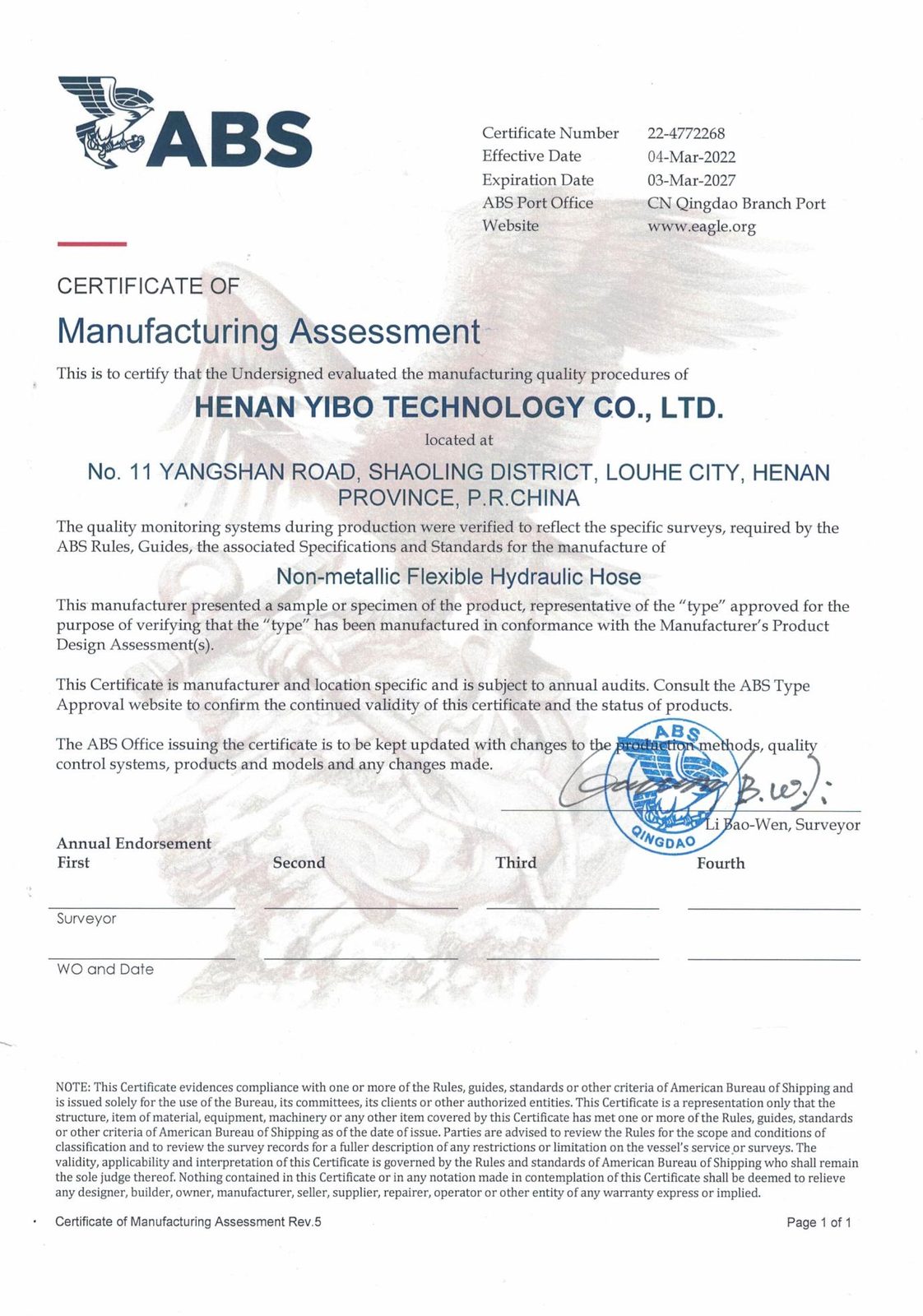
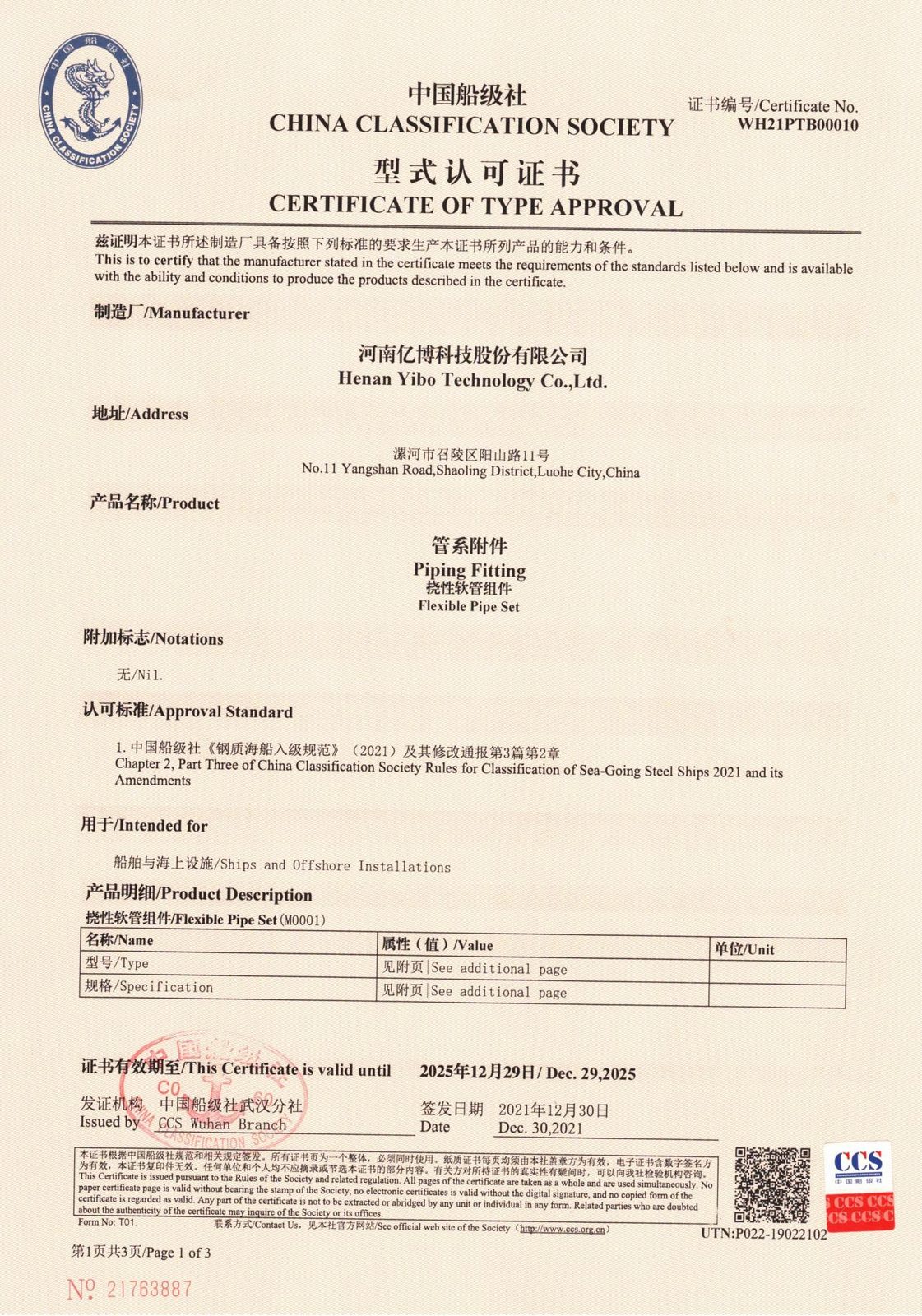
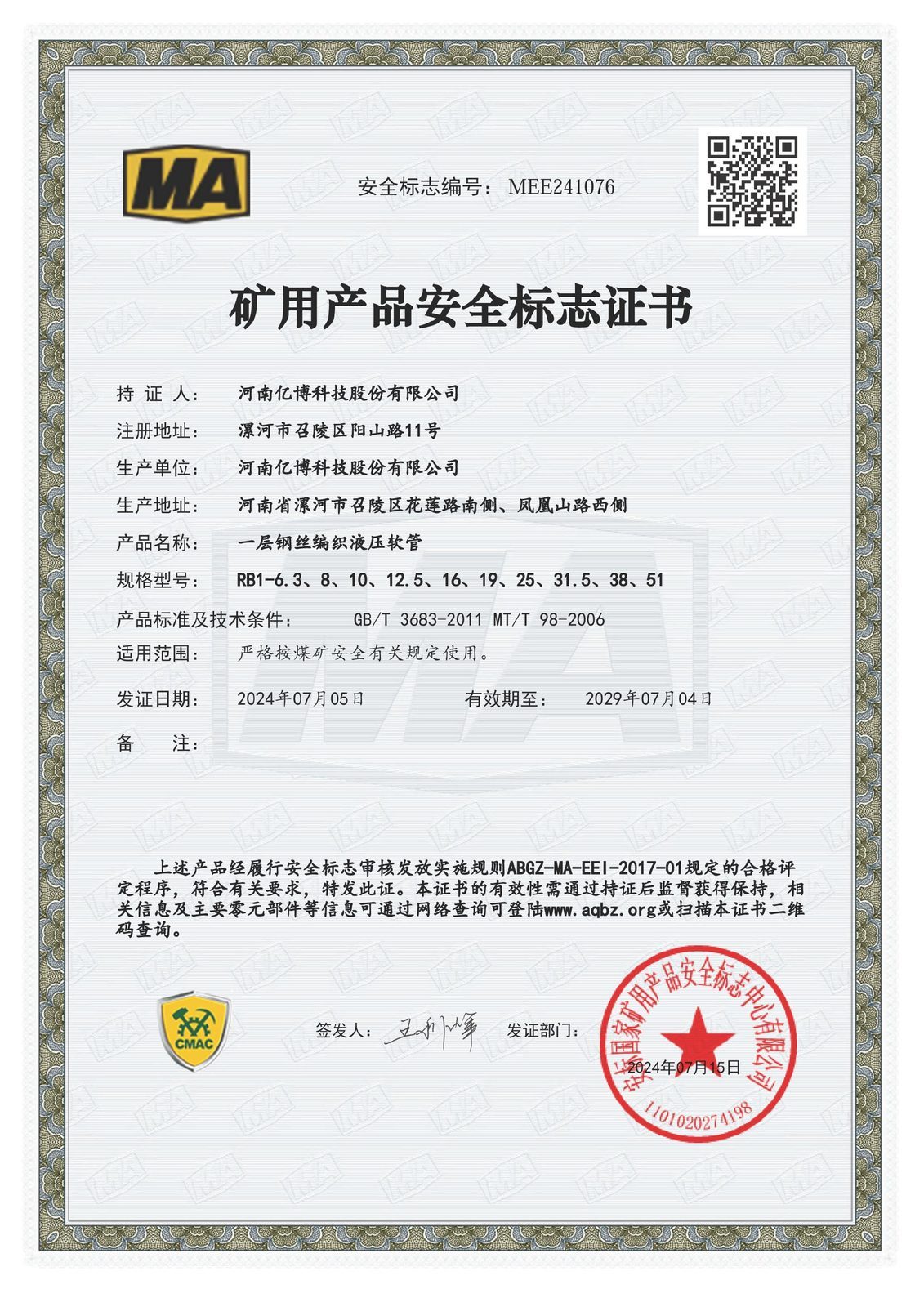
↓Certifications & factory photos
- Hose Construction
- Structure: anti-static special rubber inner liner, low friction, no spark generation to prevent static accumulation. multi-layer high-strength fiber braided reinforcement, high tensile strength, pressure resistant and good toughness. wear-resistant, aging-resistant and anti-static rubber cover, impact resistant and resistant to external abrasion damage
- Working Temperature:-40°C-90°C
- Hose Features
- Pressure Rating:20 bar working against 100 bar minimum burst — a 5.0× margin.
- Mass Per Metre:0.70 kg/m on the one published bore.
- Application: suitable for industrial explosive conveying, explosive charging operation, mining blasting sites, and explosive material transfer in dangerous goods workshops.
- Outer Diameter:Outer diameter 34 mm across the published bores.
- Supply Length:Standard supply length 40 m.
24 Hours Service Hotline
+86 137 2136 0724


For distributors, OEMs & MRO buyers · 30+ countries · MOQ 100 m · free samples


In stock — ready to ship sooner than custom runs. Ask which sizes →
PRODUCT INTRODUCTION
Explosive Conveying Hose — 20 bar Working, 100 bar Burst
This hose has one bore and one job: 19 mm inside, 34 mm outside, 20 bar working with 100 bar minimum burst, in 40 m lengths at 0.70 kg per metre — for conveying industrial explosives and for charging holes on a blasting site.
The 5:1 burst margin is the highest on any page in this range, and it is there for a reason that has nothing to do with pumping. A line that carries explosives has to stay intact through a surge, a blocked charge or a hose that is dropped on rock, so the wall is built well past its working figure.
The liner is an anti-static special rubber, published as low friction and non-sparking, to stop static accumulating as the product moves. Around it sits a multi-layer high-strength fibre braid, and the cover is published for wear, ageing and impact resistance. The service window is -40 °C to 90 °C.
There is only one code on this page and that is deliberate. A charging hose is not selected by flow rate the way a transfer hose is; it is selected by whether it can be pushed into a hole, dragged across a bench and left full of product between shifts, which is a single 19 mm bore at 0.70 kg per metre and not a size range.
Data Display
| ITEM CODE | I.D (mm) | I.D (inch) | O.D mm | W.P (bar) | psi | W.P (psi) | B.P (bar) | psi | B.P (psi) | WEIGHT kg/m | MAX LENGTH m |
|---|---|---|---|---|---|---|---|---|---|---|---|
| FEPSD019-230 | 19 | 3/4" | 34 | 20 | 290 | 300 | 100 | 1,450 | 1500 | 0.70 | 40 |
Values are reproduced from the official YIBO product page. psi columns = MPa × 145.038, rounded. Across the 1 codes the top rating is 20 bar working / 100 bar minimum burst; the order data sheet governs the batch.
Application & Selection
Application: suitable for industrial explosive conveying, explosive charging operation, mining blasting sites, and explosive material transfer in dangerous goods workshops. EXPLOSIVE CONVEYING HOSE covers 19–19 mm across 1 published codes.
Across the 1 codes of EXPLOSIVE CONVEYING HOSE the top figure is 20 bar working against 100 bar minimum burst — 5:1. Plan the supports around 0.7–0.7 kg/m per metre. We crimp and test every build in-house, 1 codes in all. Allow about 20 days from confirmation for EXPLOSIVE CONVEYING HOSE; OEM marking and packing on request.
WHY THIS HOSE
Six Reasons the Margin Is 5:1
Every other hose in this range is rated at 3:1 or 4:1. This one is not, and the difference is the product it carries.
Five Times the Working Figure
100 bar burst behind a 20 bar working rating is a 5:1 margin, the widest on the sheet, chosen so a surge or an impact does not become a rupture.
Anti-Static Liner
The liner is published as anti-static and low friction, so the product slides without generating the charge that a dry, fast-moving powder produces in an ordinary tube.
Non-Sparking by Design
The published claim is no spark generation, which is what makes the hose suitable for charging holes at a blasting site rather than only for a workshop transfer.
One Bore, One Purpose
19 mm inside and 34 mm outside is the size a charging hose is made in; there is no size range on this page because there is nothing to choose between.
Fibre Braid, Not Wire
A multi-layer high-strength fibre braid gives the 100 bar without the stiffness of wire, so the hose can be pushed into a hole and handled by hand.
Cover for a Blasting Site
The cover is published for wear, ageing and impact resistance, against the rock, the ground and the truck bed a charging line is dragged across.
CONSTRUCTION
Anti-Static Liner, Fibre, Cover
Inner Liner
An anti-static special rubber, published as low friction and non-sparking, on a 19 mm bore.
Reinforcement
Multi-layer high-strength fibre braid, published for tensile strength, pressure resistance and toughness at a 5:1 margin.
Cover
A wear-resistant, ageing-resistant and anti-static rubber cover, published for impact resistance and resistance to external abrasion.
APPLICATIONS
Where a Charging Hose Is Used
Hole Charging
The 19 mm bore on a 40 m length, feeding a charge into a blast hole.
Site Transfer
The same 19 mm code moving product between a magazine and a charging truck at 20 bar.
Explosive Conveying
Pneumatic conveying of industrial explosive through a 34 mm outside diameter body.
Dangerous Goods Workshops
Transfer of explosive material in a workshop where a spark is not an option.
Mining Blasting
The same hose on a bench, dragged across rock and re-positioned between holes.
Magazine to Vehicle
A 40 m run from a store to a truck, at 0.70 kg per metre.
HIGH-END INDUSTRY DIRECTIONS
What a Blasting Contractor Specifies
The questions are about static, sparks and the wall, not about flow rate.
① Static in Dry Product anti static hose
Trend: Dry explosive generates charge in a tube.
Dohose: Anti-static liner, published as non-sparking.
② Surge on a Blocked Hole pressure hose
Trend: A blocked charge spikes the line.
Dohose: 100 bar burst on 20 bar working.
③ Handling on Rock abrasion resistant hose
Trend: Hose is dragged over broken ground.
Dohose: Impact and abrasion resistant cover.
④ Cold Sites low temperature hose
Trend: Blasting runs through winter.
Dohose: -40 °C to 90 °C window.
⑤ One Specification explosive hose
Trend: Sites standardise on a single hose size.
Dohose: 19 mm bore, one code, 40 m.
⑥ Traceable Lots certified hose
Trend: Each length is recorded against a site.
Dohose: Tested and marked per length before dispatch.
WHY DOHOSE
Seven Reasons Buyers Stay with Us
Numbers, Not Averages
Every figure for the Explosive Conveying Hose comes from the per-code table: 19–19 mm, 20 bar working, 100 bar burst.
One Line, Full Range
All 1 codes of the Explosive Conveying Hose come off the same line, so a mixed order in 19–19 mm ships together.
Length on Demand
Cut-to-length supply for Explosive Conveying Hose; each code carries its own mass, 0.70 kg/m on the one published bore, so lifting gear can be sized first.
Ends Done Here
Assemblies of Explosive Conveying Hose are crimped on site and held at test pressure before they are boxed.
Export Packing
Coiled in poly bags, then woven bags on pallets — loading plans are drawn for 1-code orders.
OEM Ready
Brand printing and custom packing are standard options on the Explosive Conveying Hose.
Fast, Firm Pricing
A firm price for Explosive Conveying Hose usually returns within 1 hour of your enquiry.
FAQ
Explosive Conveying Hose — Ten Questions
Explosive conveying hose vs a general material hose — what changes?
The margin and the liner. This one is rated 20 bar with 100 bar burst — a 5:1 margin — and carries an anti-static, non-sparking liner, where a general material hose is built to 3:1 and has no static claim at all.
Can it replace a metal pipe on a charging line?
Where the run is short and has to move, yes, and the fibre braid gives a 34 mm outside diameter that can be handled by hand into a hole. A metal pipe cannot be pushed into a blast hole, which is the reason this hose exists.
What is the bore and outside diameter?
19 mm inside and 34 mm outside, on the one published code, at 20 bar working with 100 bar burst and 0.70 kg per metre.
How long is a length, and how is it cut?
40 m as published. It is cut to the run, and the cut end is fitted with the charging nozzle a site uses rather than being left as an open bore.
Will it carry industrial explosive safely?
That is the published duty: industrial explosive conveying, explosive charging, mining blasting and transfer in dangerous goods workshops. The liner is anti-static and low friction, and the 100 bar burst sits behind a 20 bar working figure on a 34 mm outside diameter.
Can it be used on a charging truck and at a magazine?
Yes — the same 19 mm code covers both, on a 40 m length, at 0.70 kg per metre. It is one specification because a site does not want two different charging hoses in the store.
Why is the margin 5:1 when other hoses are 4:1?
Because of what the product is. 100 bar burst on 20 bar working is the published figure, and it covers a blocked charge, a surge and a hose that has been dropped on rock — none of which a transfer hose in the same range has to survive.
Why does the liner have to be low friction?
Because a dry product moving fast through a rough bore generates static and can also compact against the wall. On a 19 mm bore there is very little cross-section to spare, so a low-friction anti-static liner lets the product pass and keeps the charge from building — the same reason the cover is published as anti-static.
What is the minimum order?
One length of 40 m on the single 19 mm code, or a cut piece for a shorter run. Each length is tested and marked before dispatch, the lot is recorded against the site it ships to, and 0.70 kg per metre keeps a 40 m piece within one person handling.
How is the hose priced?
Per metre on the 19 mm bore at 0.70 kg/m, with the ends made up to the charging nozzle the site uses. Send the run length, the nozzle thread and the operating pressure for a firm figure.
Related Products
AIR / Water Delivery HOSE
Inner Tube: NR + SBR (Natural Rubber + Styrene Butadiene Rubber) / Reinforcement: High-strengt…
Aircraft Refueling HOSE
Structure: special fuel-resistant rubber inner liner, resistant to swelling and permeation of…
Animal Feed/grain HOSE
Inner rubber layer: wear-resistant natural rubber (brown). reinforcement layer: high-strength…
Conductive Chemical Suction and Discharge HOSE
The inner wall adopts uhmwpe+epdm material, featuring high temperature resistance, oxidation r…
Get a quote
Please fill out the form below and we will contact you within 1 hour.
We are online 24/7!
We will contact you within 1 hour of receiving your enquiry.
Hotline