
INNER LINER PU WEAR-RESISTANT HOSE
HIGH WEAR RESISTANT · SUCTION / VACUUM RATED · DREDGING / SLURRY · 20 bar working / 60 bar burst · 19–25 mm
↓Certifications & factory photos
- Hose Construction
- Structure: polyurethane (pu) inner liner with super high wear resistance and resistant to particle erosion. multi-layer high-strength fiber braid and spiral steel wire composite reinforcement, anti-negative pressure and tear resistant. aging-resistant rubber cover, weatherproof and protect the reinforcement layer
- Working Temperature:-30℃ ~ +80℃
- Hose Features
- Pressure Rating:20 bar working pressure and 60 bar minimum burst — a 3.0× margin taken straight from the published column.
- Application: suitable for suction and transport of sand, gravel, mineral powder, coal powder, cement slurry and granular materials.
- Outer Diameter:38–44 mm outside diameter over the range.
- Supply Length:Supplied in 61 m lengths, as published per code in the table.
24 Hours Service Hotline
+86 137 2136 0724


For distributors, OEMs & MRO buyers · 30+ countries · MOQ 100 m · free samples
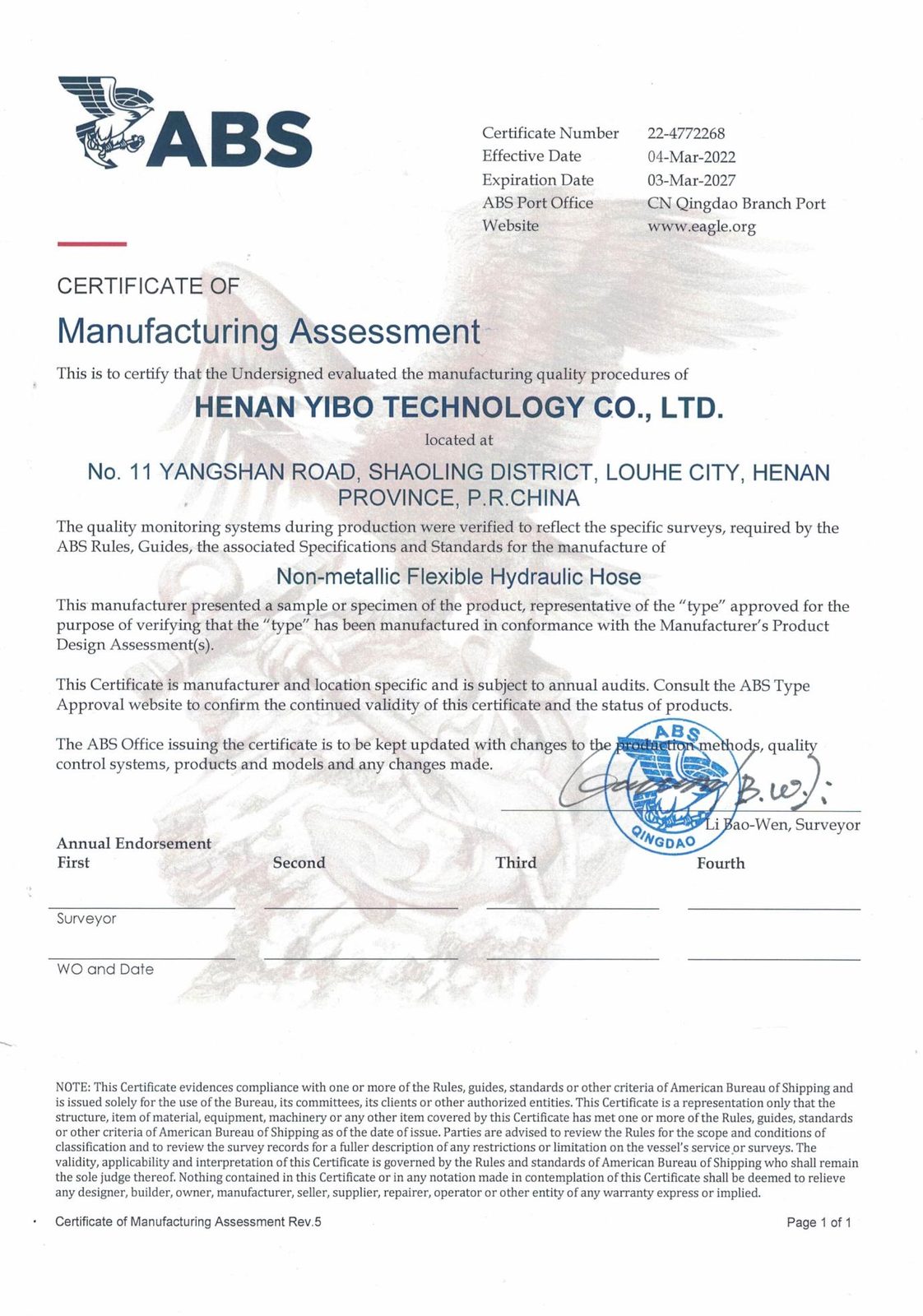
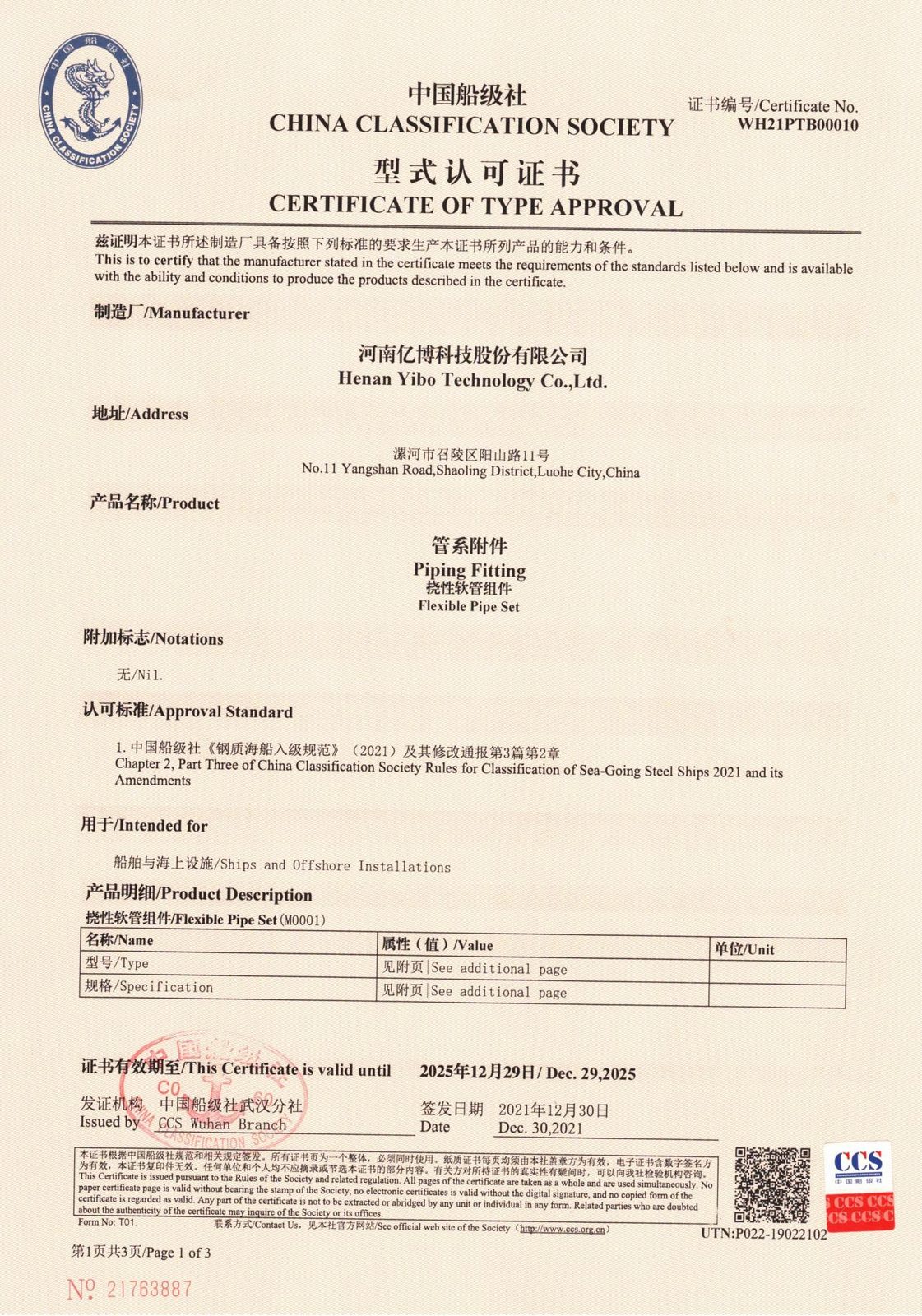
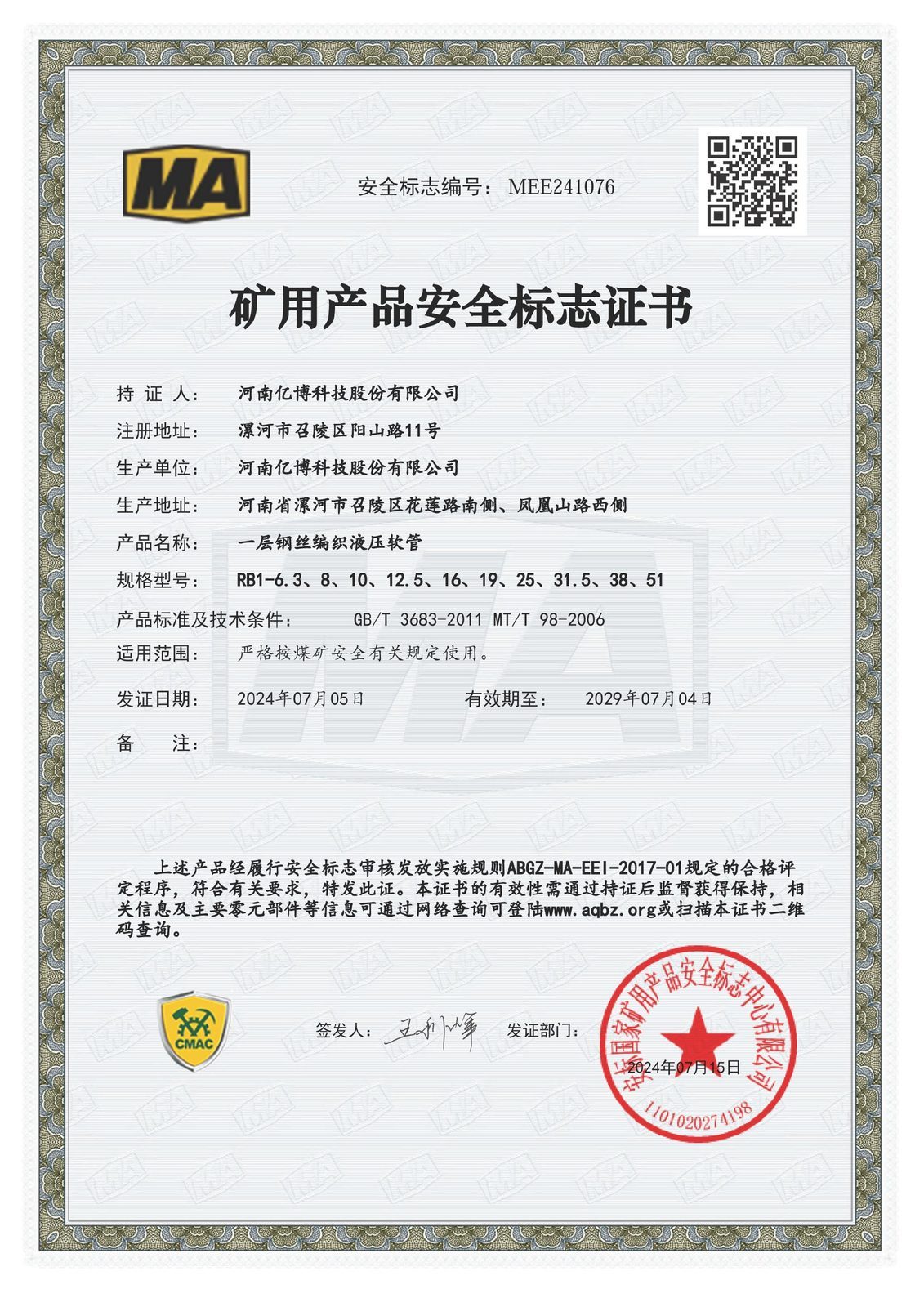


In stock — ready to ship sooner than custom runs. Ask which sizes →
PRODUCT INTRODUCTION
PU Lined Wear Hose — Two Bores, One Wall Thickness
This is a two-code hose: a polyurethane inner liner for particle erosion, bonded into a body and published at 19 mm and 25 mm bore — 3/4 inch and 1 inch — rated 20 bar working against 60 bar minimum burst, supplied in 61 m lengths.
The outside diameters give the part away. A 38 mm body on the 19 mm bore and a 44 mm body on the 25 mm bore are both 9.5 mm of wall, so the two codes differ in bore and in nothing else. That is unusual on a wear hose, where wall usually grows with diameter, and it means the wall is a fixed design decision rather than a variable.
The liner is polyurethane, published for super high wear resistance and resistance to particle erosion, with a service window of -30 °C to +80 °C. The published duty is suction and transport of sand, gravel, mineral powder, coal powder, cement slurry and granular materials — a solids hose, not a chemical one.
The two bores are 3/4 inch and 1 inch, which is the size band a small solids pump and a short transfer line are actually built in: big enough to pass gravel, small enough to be moved by hand and clamped without a flange. Anything wider is usually a different hose on a different page, not a third code here.
Data Display
| ITEM CODE | I.D (mm) | I.D (inch) | O.D mm | W.P (bar) | psi | W.P (psi) | B.P (bar) | psi | B.P (psi) | WEIGHT kg/m | MAX LENGTH m |
|---|---|---|---|---|---|---|---|---|---|---|---|
| PWD019-174 | 19 | 3/4" | 38 | 20 | 290 | 300 | 60 | 870 | 900 | - | 61 |
| PWD025-174 | 25 | 1" | 44 | 20 | 290 | 300 | 60 | 870 | 900 | - | 61 |
Values are reproduced from the official YIBO product page. psi columns = MPa × 145.038, rounded. Across the 2 codes the top rating is 20 bar working / 60 bar minimum burst; the order data sheet governs the batch.
Application & Selection
Application: suitable for suction and transport of sand, gravel, mineral powder, coal powder, cement slurry and granular materials. INNER LINER PU WEAR-RESISTANT HOSE covers 19–25 mm across 2 published codes.
INNER LINER PU WEAR-RESISTANT HOSE tops out at 20 bar working over its 2 codes. We crimp and test every build in-house, 2 codes in all. MOQ on INNER LINER PU WEAR-RESISTANT HOSE is 100 m on standard items.
WHY THIS HOSE
Six Reasons the Wall Does Not Grow
Two bores, one wall. These six points are what that decision means for an order and for service life.
One Wall, Two Bores
The 38 mm outside diameter on the 19 mm bore and the 44 mm on the 25 mm bore leave the same wall on both codes, so the bore is the only variable a buyer has to choose.
PU Does the Wearing
The liner is polyurethane, published for super high wear resistance and resistance to particle erosion, which is the failure mode of a hose moving sand, gravel and mineral powder.
20 bar, 60 bar Burst
Both codes are rated 20 bar working against 60 bar minimum burst — a 3.0× margin, quoted on the code rather than as a range average.
61 m Coil
Both codes ship on a 61 m length, so a run is cut from one coil and a spare is the same purchase as the first.
Six Published Media
Sand, gravel, mineral powder, coal powder, cement slurry and granular material are the listed duty, and each of them attacks a liner by impact rather than by chemical action.
Suction and Transport
The liner is published for suction as well as transport, so the same 19 mm code can be used on the intake side of a small solids pump rather than only on the delivery side.
CONSTRUCTION
PU Liner, Body, Cover
Inner Liner
Polyurethane, published for super high wear resistance and resistance to particle erosion, in 19 mm and 25 mm bore.
Wall
A bonded body giving 9.5 mm of wall on both codes — 38 mm outside on the 19 mm bore and 44 mm outside on the 25 mm bore.
Cover
The outer surface of the extruded body, which carries no published weight figure in the table and is quoted by bore and length instead.
APPLICATIONS
Where Solids Get Moved
Sand and Gravel
The 25 mm code at 20 bar, on a dredge or a quarry transfer line.
Mineral Powder
The 19 mm code at 3/4 inch, on a short pneumatic-assisted feed.
Coal Powder
The 25 mm code on a 61 m coil, cut to the run between a mill and a burner feed.
Cement Slurry
The 19 mm code, where the liner meets an abrasive mix rather than a clean fluid.
Granular Material
The 25 mm code at 1 inch, on a bagging or blending line.
Small Pump Intake
The 19 mm code on the suction side, where the same wall resists collapse and impact.
HIGH-END INDUSTRY DIRECTIONS
What a Solids Line Is Judged On
The questions are about liner life and bore, because there is only one wall to argue about.
① Cost per Tonne Moved wear resistant hose
Trend: Liners are costed against throughput.
Dohose: PU liner, 19 and 25 mm, 61 m coil.
② Abrasion Over Chemistry polyurethane hose
Trend: Impact wear beats chemical attack on most lines.
Dohose: Liner published for particle erosion.
③ Suction Duty suction hose
Trend: The same hose is asked to pull and to push.
Dohose: Published for suction and transport at 20 bar.
④ Short Runs small bore hose
Trend: Skid-mounted units need a short flexible link.
Dohose: 19 mm at 38 mm outside, 25 mm at 44 mm.
⑤ Cold Weather cold resistant hose
Trend: Outdoor yards run below freezing.
Dohose: Service window -30 °C to +80 °C.
⑥ One Spare replacement hose
Trend: A spare coil is kept rather than a spare metre.
Dohose: 61 m per code covers the run and the replacement.
WHY DOHOSE
Seven Reasons Buyers Stay with Us
Published Per Code
The Inner Liner PU Wear-resistant Hose is published code by code — 2 rows, 19–25 mm, each with its own pressure and mass.
One Factory, Whole Range
From the smallest to the largest bore in 19–25 mm, the Inner Liner PU Wear-resistant Hose is made in one plant — no second source.
Cut to the Metre
Take the length the job needs — Inner Liner PU Wear-resistant Hose is cut from the coil, with published per code published so handling can be planned.
Tested Before Boxing
Every assembly built from Inner Liner PU Wear-resistant Hose passes a hydrostatic test before it leaves the plant.
Packed for the Container
Pallet layouts for Inner Liner PU Wear-resistant Hose are planned against the container, so freight per metre stays predictable.
Private Label
Printing, labels and packing for Inner Liner PU Wear-resistant Hose can carry a distributor brand.
Same-Hour Reply
Bore, quantity and ends are enough to price Inner Liner PU Wear-resistant Hose; the reply goes out within 1 hour.
FAQ
PU Lined Wear Hose — Ten Questions
PU lined hose vs a plain rubber lined hose — what changes?
The liner material and the erosion it survives. This one is polyurethane, published for super high wear resistance, on two bores of 19 mm and 25 mm at 20 bar with 60 bar burst behind it.
Can it replace a UHMWPE lined hose?
On wear duty, usually yes — polyurethane is the tougher liner against particle impact, and this one is published at 20 bar on both the 19 mm and 25 mm bores. Where the medium is chemically aggressive rather than abrasive, a polyethylene liner is the better part, so the medium should be checked before the two are swapped.
What is the rating on the 19 mm code?
20 bar working with 60 bar minimum burst on a 19 mm bore, a 38 mm outside diameter and a 61 m length — the smaller of the two codes.
What is the rating on the 25 mm code?
The same 20 bar against 60 bar burst, on a 25 mm bore with a 44 mm outside diameter and a 61 m length. Only the bore changes between the two codes.
Will it move sand, gravel and cement slurry?
Those are the published media, along with mineral powder, coal powder and granular material. The liner is built for particle erosion, and both 19 mm and 25 mm codes carry the same 20 bar rating for it.
Can it be used on the suction side?
Yes — the published duty is suction and transport. On the 19 mm code the 38 mm outside diameter gives the wall that resists both the collapse load and the impact of the solids arriving at the intake.
Why do both codes have the same wall?
Because the wall is a design decision, not a function of bore. A 38 mm outside on the 19 mm bore and a 44 mm outside on the 25 mm bore give the same wall on both, so the buyer chooses a bore and gets the same wear allowance either way, and the 61 m coil is the same on both codes as well.
Why does a PU liner come away from the body?
Usually because the hose was run above 20 bar or outside its service window, which softens the bond before it wears the liner. The 60 bar burst is a margin, not a working figure, and the liner is the first thing to lift when the margin is used up.
What is the minimum order?
One length from the 61 m coil, in either the 19 mm or the 25 mm code. Cut lengths and crimped assemblies are quoted per piece, both codes ship on the same coil length, and a spare metre is worth keeping because the liner wears from the inside where it cannot be seen.
How is the hose priced?
Per metre by bore: the 19 mm code at 38 mm outside and the 25 mm code at 44 mm outside, both on 61 m coils. Send bore, total length, medium and destination for a firm figure, with the assembly tested before it ships and the liner grade confirmed against the solids in the line.
Related Products
AIR / Water Delivery HOSE
Inner Tube: NR + SBR (Natural Rubber + Styrene Butadiene Rubber) / Reinforcement: High-strengt…
Aircraft Refueling HOSE
Structure: special fuel-resistant rubber inner liner, resistant to swelling and permeation of…
Animal Feed/grain HOSE
Inner rubber layer: wear-resistant natural rubber (brown). reinforcement layer: high-strength…
Conductive Chemical Suction and Discharge HOSE
The inner wall adopts uhmwpe+epdm material, featuring high temperature resistance, oxidation r…
Get a quote
Please fill out the form below and we will contact you within 1 hour.
We are online 24/7!
We will contact you within 1 hour of receiving your enquiry.
Hotline