
GREEN CARBON-FREE INSULATION
CHEMICAL RESISTANT · 20 bar working / 80 bar burst · 32–102 mm
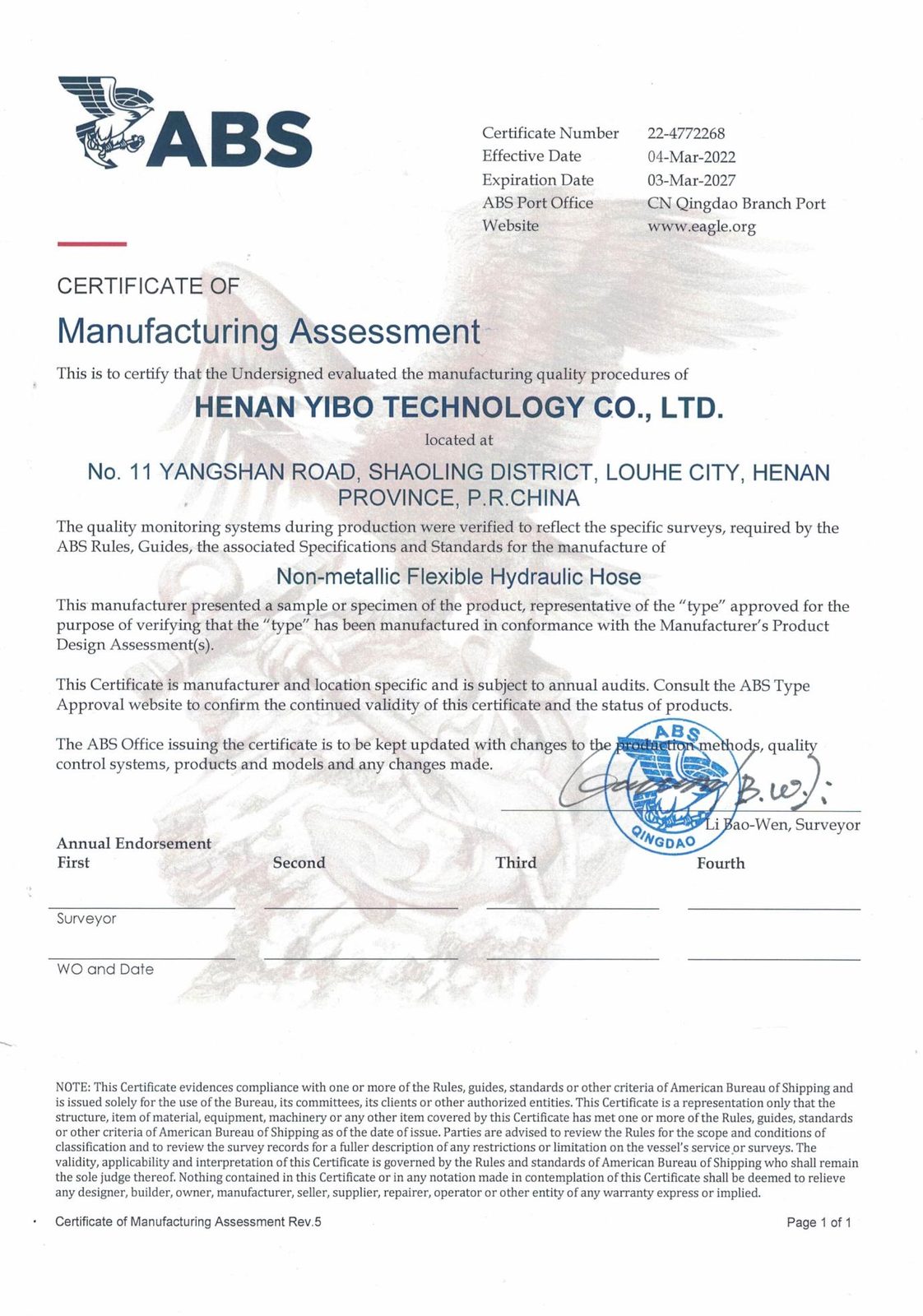
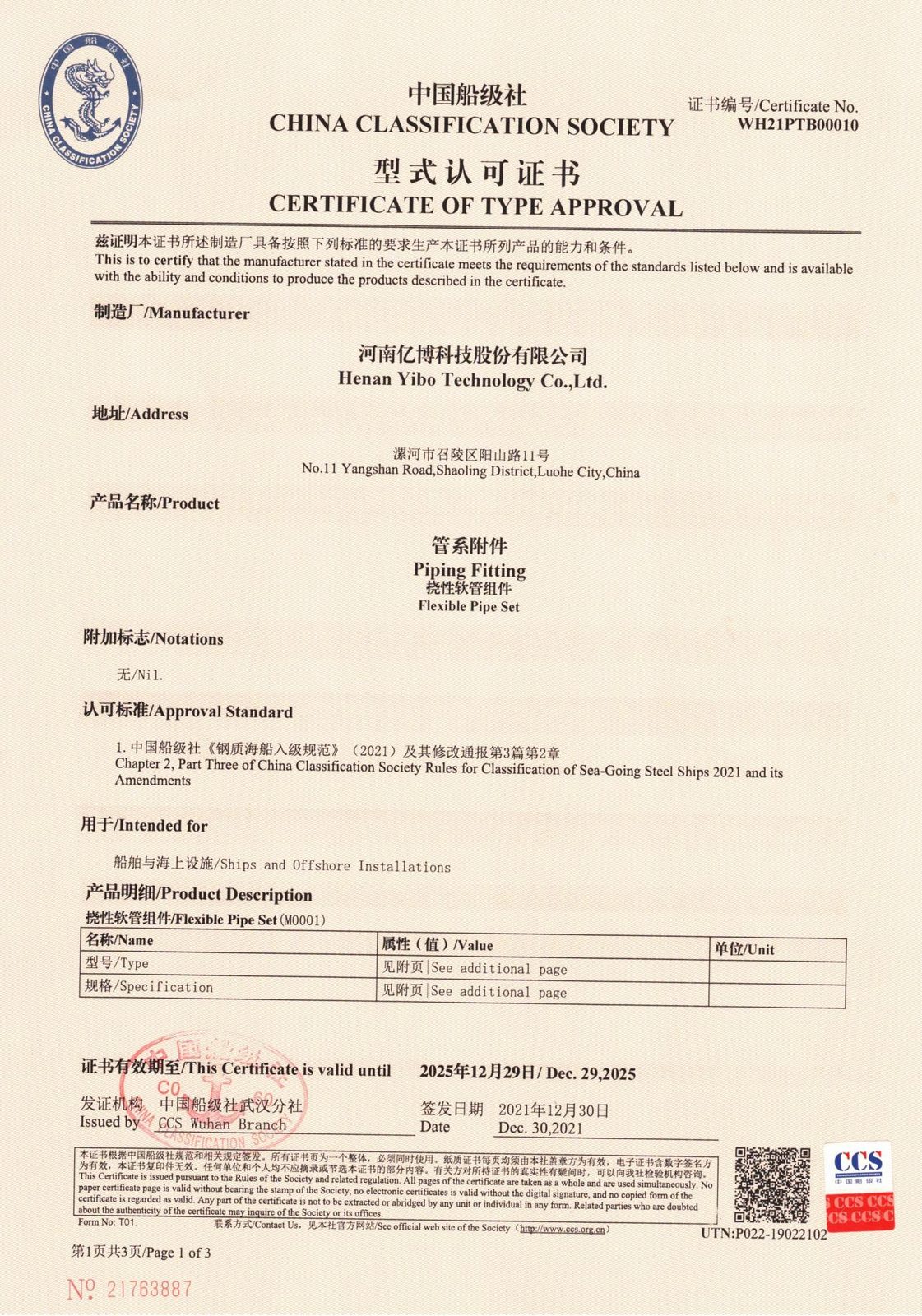
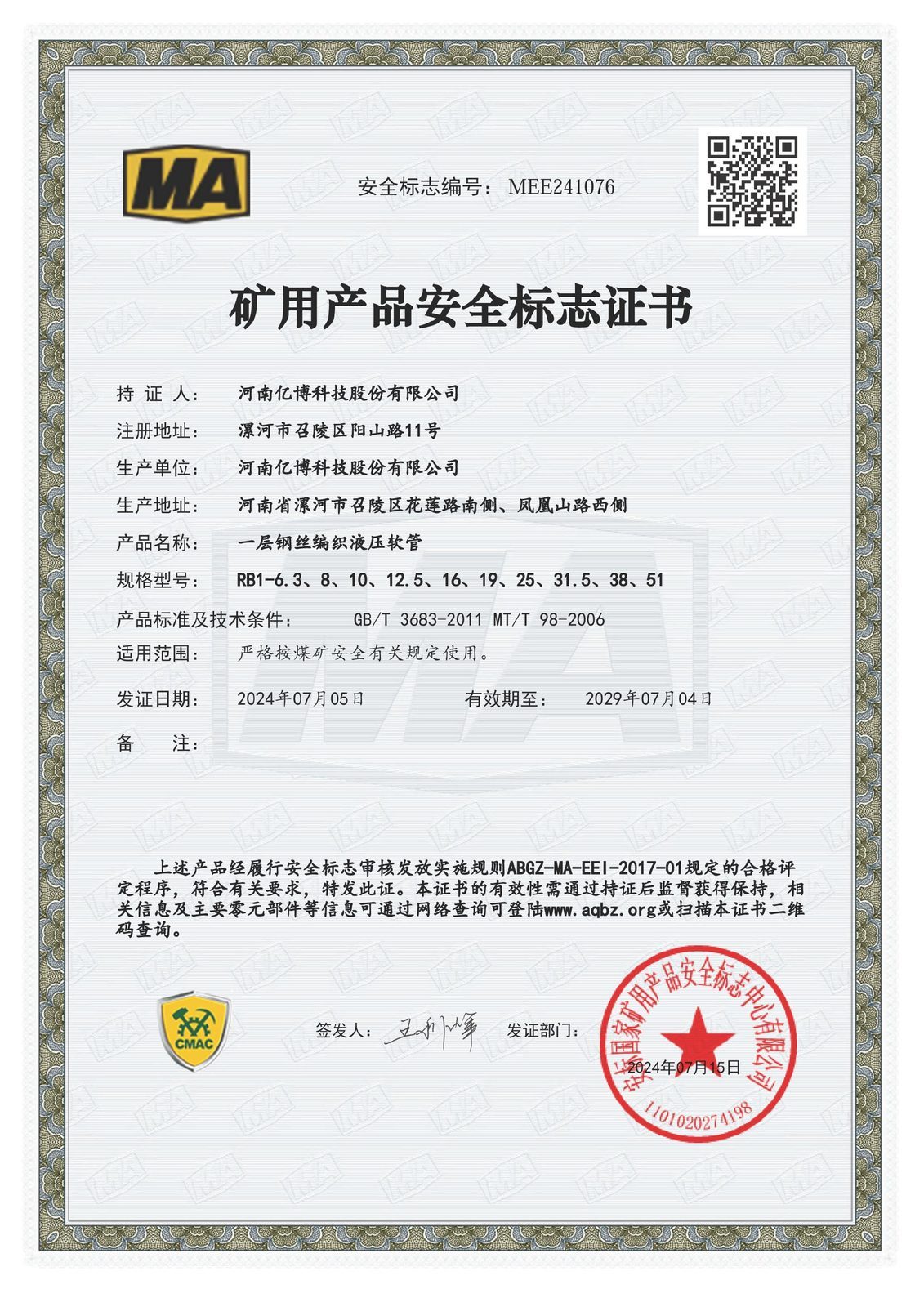
↓Certifications & factory photos
- Hose Construction
- Structure: green carbon-free special rubber inner liner, no carbon precipitation, stable insulation performance. high-strength fiber braided reinforcement layer, tensile resistant and flexible. green carbon-free insulated rubber cover, insulation protection and aging resistant
- Working Temperature:-20℃ ~ +80℃
- Hose Features
- Pressure Rating:20 bar working against 80 bar minimum burst — a 4.0× margin.
- Mass Per Metre:1.68–7.5 kg/m across the published codes; every figure is per code, not an average.
- Application: suitable for fluid transport scenarios requiring insulation protection and no carbon powder precipitation.
- Outer Diameter:Outer diameter 48.4–127 mm across the published bores.
- Supply Length:Standard supply length 61 m.
24 Hours Service Hotline
+86 137 2136 0724


For distributors, OEMs & MRO buyers · 30+ countries · MOQ 100 m · free samples


In stock — ready to ship sooner than custom runs. Ask which sizes →
PRODUCT INTRODUCTION
Carbon-Free Insulating Hose — No Carbon Black, Stable Insulation
Most industrial rubber is black because it contains carbon black, and carbon black is conductive. This hose is built the other way round: a green carbon-free special rubber liner, published as no carbon precipitation and stable insulation performance, in six bores from 32 mm to 102 mm at 20 bar working and 80 bar minimum burst.
The liner is the whole argument. A fluid that has passed through an ordinary black hose can pick up carbon particles, and those particles settle exactly where they must not — on a winding, in a coolant channel, across an insulating surface. Here the liner is formulated without carbon black, so the medium leaves it as clean as it entered.
The rest is a conventional build done properly: a high-strength fibre braid for tensile strength, mass from 1.68 kg/m at the 1-1/4 inch code to 7.50 kg/m at 4 inch, outside diameter from 48.4 mm to 127 mm, a -20 °C to +80 °C window, and 61 m lengths on every code.
The colour is a specification, not decoration. A green cover on a green liner means a fitter can see at a glance whether the hose on a cooling loop is the carbon-free one, which matters on a plant where a black hose would look perfectly correct and quietly undo the insulation the circuit was built for.
Data Display
| ITEM CODE | I.D (mm) | I.D (inch) | O.D mm | W.P (bar) | psi | W.P (psi) | B.P (bar) | psi | B.P (psi) | WEIGHT kg/m | MAX LENGTH m |
|---|---|---|---|---|---|---|---|---|---|---|---|
| ARSGD032-300 | 32 | 1-1/4" | 48.4 | 20 | 290 | 300 | 80 | 1,160 | 1200 | 1.68 | 61 |
| ARSGD038-300 | 38 | 1-1/2" | 54.8 | 20 | 290 | 300 | 80 | 1,160 | 1200 | 2.05 | 61 |
| ARSGD051-300 | 51 | 2" | 70.0 | 20 | 290 | 300 | 80 | 1,160 | 1200 | 2.85 | 61 |
| ARSGD064-300 | 64 | 2-1/2" | 83.6 | 20 | 290 | 300 | 80 | 1,160 | 1200 | 3.72 | 61 |
| ARSGD076-300 | 76 | 3" | 97.0 | 20 | 290 | 300 | 80 | 1,160 | 1200 | 4.65 | 61 |
| ARSGD102-300 | 102 | 4" | 127.0 | 20 | 290 | 300 | 80 | 1,160 | 1200 | 7.50 | 61 |
Values are reproduced from the official YIBO product page. psi columns = MPa × 145.038, rounded. 20 bar working and 80 bar minimum burst is the ceiling of this range; the order data sheet governs the batch.
Application & Selection
Application: suitable for fluid transport scenarios requiring insulation protection and no carbon powder precipitation. GREEN CARBON-FREE INSULATION covers 32–102 mm across 6 published codes.
GREEN CARBON-FREE INSULATION tops out at 20 bar working over its 6 codes. Mass runs 1.68–7.5 kg/m across the 6 codes. We crimp and test every build in-house, 6 codes in all. Allow about 20 days from confirmation for GREEN CARBON-FREE INSULATION; OEM marking and packing on request.
WHY THIS HOSE
Six Reasons a Carbon-Free Liner Is Bought
The pressure rating is ordinary. The liner is the reason this page exists, and the reason a black hose cannot be substituted.
No Carbon Black
The liner is published as green and carbon-free with no carbon precipitation, which is the property that separates it from every black rubber hose at the same bore.
Insulation Stays Stable
Stable insulation performance is the published claim, and it holds because nothing conductive is being shed into the medium as it passes.
20 bar, 80 bar Burst
All six codes are 20 bar working against 80 bar minimum burst, a 4:1 margin, from the 32 mm bore at 48.4 mm outside to the 102 mm bore at 127 mm.
Fibre Braid, No Wire
A high-strength fibre braid carries the pressure without putting metal into the wall, which is the right choice on a line whose job is to keep an insulating path clean.
Six Bores to 4 inch
32, 38, 51, 64, 76 and 102 mm cover a coolant loop and a filling line from one family, so a plant does not mix a carbon-free hose with a black one on the same circuit.
61 m per Coil
Every code is supplied in 61 m, so a loop can be run from a tank to equipment and back without a joint in the part that carries the medium.
CONSTRUCTION
Carbon-Free Liner, Fibre, Cover
Inner Liner
A green carbon-free special rubber, published as no carbon precipitation and stable insulation, in bores from 32 mm to 102 mm.
Reinforcement
A high-strength fibre braid, published for tensile strength, with no wire in the wall.
Cover
The outer cover, taking the outside diameter from 48.4 mm at the 1-1/4 inch code to 127 mm at 4 inch.
APPLICATIONS
Where a Clean Insulating Path Matters
Coolant Loops
The 51 mm code at 2 inch, on a circuit whose medium must not carry particles into a channel.
Transformer Oil Lines
The 32 mm code at 1-1/4 inch, where a conductive particle is a fault rather than a nuisance.
Electrical Equipment Cooling
The 64 mm code at 2-1/2 inch, on a loop that runs close to live parts.
Wind Turbine Skids
The 38 mm code at 1-1/2 inch, in a nacelle where servicing a contaminated circuit is expensive.
Test Benches
The 76 mm code at 3 inch, on a rig that is flushed and checked between runs.
Bulk Fill
The 102 mm code at 7.50 kg/m, where the bore sets the fill time and the liner protects the medium.
HIGH-END INDUSTRY DIRECTIONS
What an Electrical Plant Asks
The questions are about what comes off the wall of the hose, not about what the hose can hold.
① Particle Contamination carbon free hose
Trend: Coolant channels are checked for residue.
Dohose: Liner published as no carbon precipitation.
② Insulation Resistance insulating hose
Trend: Loops are megger-tested after a hose change.
Dohose: Stable insulation performance claimed.
③ No Metal in the Wall fibre braid hose
Trend: Metal reinforcement is avoided near live parts.
Dohose: Fibre braid only, six bores.
④ Closed Loops 61 m hose
Trend: Circuits are run as a sealed loop.
Dohose: 61 m per code, jointed only at the ends.
⑤ Colour Coding green hose
Trend: Plants mark the clean circuit by colour.
Dohose: Green liner and cover.
⑥ Flush and Refill clean hose
Trend: Circuits are flushed rather than topped up.
Dohose: 32 to 102 mm, no carbon to flush out.
WHY DOHOSE
Seven Reasons Buyers Stay with Us
Numbers, Not Averages
Every figure for the Green Carbon-free Insulation comes from the per-code table: 32–102 mm, 20 bar working, 80 bar burst.
One Line, Full Range
All 6 codes of the Green Carbon-free Insulation come off the same line, so a mixed order in 32–102 mm ships together.
Length on Demand
Cut-to-length supply for Green Carbon-free Insulation; each code carries its own mass, 1.68–7.5 kg/m across the published codes; every figure is per code, not an average, so lifting gear can be sized first.
Ends Done Here
Assemblies of Green Carbon-free Insulation are crimped on site and held at test pressure before they are boxed.
Export Packing
Coiled in poly bags, then woven bags on pallets — loading plans are drawn for 6-code orders.
OEM Ready
Brand printing and custom packing are standard options on the Green Carbon-free Insulation.
Fast, Firm Pricing
A firm price for Green Carbon-free Insulation usually returns within 1 hour of your enquiry.
FAQ
Carbon-Free Insulating Hose — Ten Questions
Carbon-free hose vs a standard black industrial hose — what changes?
The liner compound, and nothing else about the ratings. Both classes carry pressure at the same bore, but this one is published as a green carbon-free liner with no carbon precipitation, at 20 bar over six codes from 32 mm to 102 mm.
Can it replace a metal pipe on a cooling loop?
Where the run has to flex and the diameter matches, yes — the 51 mm code at 2 inch takes the place of a rigid spool, and a fibre braid keeps metal out of the wall on a circuit that sits near live parts.
What is the rating on the 4 inch code?
20 bar working with 80 bar minimum burst, on a 102 mm bore, a 127 mm outside diameter and 7.50 kg per metre, in a 61 m length.
What is the smallest bore?
32 mm at 1-1/4 inch, with a 48.4 mm outside diameter and 1.68 kg per metre — the size a transformer oil or instrument cooling line is built in.
Will it carry insulating oil through a transformer circuit?
That is the kind of duty it is published for: fluid transport requiring insulation protection and no carbon powder precipitation, at 20 bar on all six codes, with a -20 °C to +80 °C window.
Can it be used as equipment coolant hose?
Yes — the 64 mm code at 2-1/2 inch and the 38 mm code at 1-1/2 inch cover most skid and nacelle loops, both in the same carbon-free liner so a circuit is not half black and half green.
Why is carbon black a problem in a hose?
Because it is what makes ordinary rubber black and it is conductive. A liner that sheds it puts conductive particles into a coolant or an insulating oil, which is exactly where they must not settle — and on a 51 mm loop a few particles are enough to change what a megger reads.
Why does insulation resistance drop after a hose change?
Usually because a black hose has been fitted on one leg of a loop that was otherwise carbon-free, or because the circuit was not flushed after the change. The 51 mm code is the size most often swapped in, and it has to be the carbon-free one.
What is the minimum order?
One length from the 61 m coil in any of the six bores from 32 mm to 102 mm, or cut pieces with crimped ends. The liner grade is stated on each length so a replacement matches the circuit it goes into.
How is the hose priced?
Per metre by bore: 1.68 kg/m at the 32 mm code against 7.50 kg/m at 102 mm, both on 61 m coils. Send bore, medium, temperature and destination for a firm figure.
Related Products
AIR / Water Delivery HOSE
Inner Tube: NR + SBR (Natural Rubber + Styrene Butadiene Rubber) / Reinforcement: High-strengt…
Aircraft Refueling HOSE
Structure: special fuel-resistant rubber inner liner, resistant to swelling and permeation of…
Animal Feed/grain HOSE
Inner rubber layer: wear-resistant natural rubber (brown). reinforcement layer: high-strength…
Conductive Chemical Suction and Discharge HOSE
The inner wall adopts uhmwpe+epdm material, featuring high temperature resistance, oxidation r…
Get a quote
Please fill out the form below and we will contact you within 1 hour.
We are online 24/7!
We will contact you within 1 hour of receiving your enquiry.
Hotline