
GAS HOSE — Industrial & Food Hose
HIGH WEAR RESISTANT · ANTI-STATIC · 10 bar working / 30 bar burst · 19–203 mm
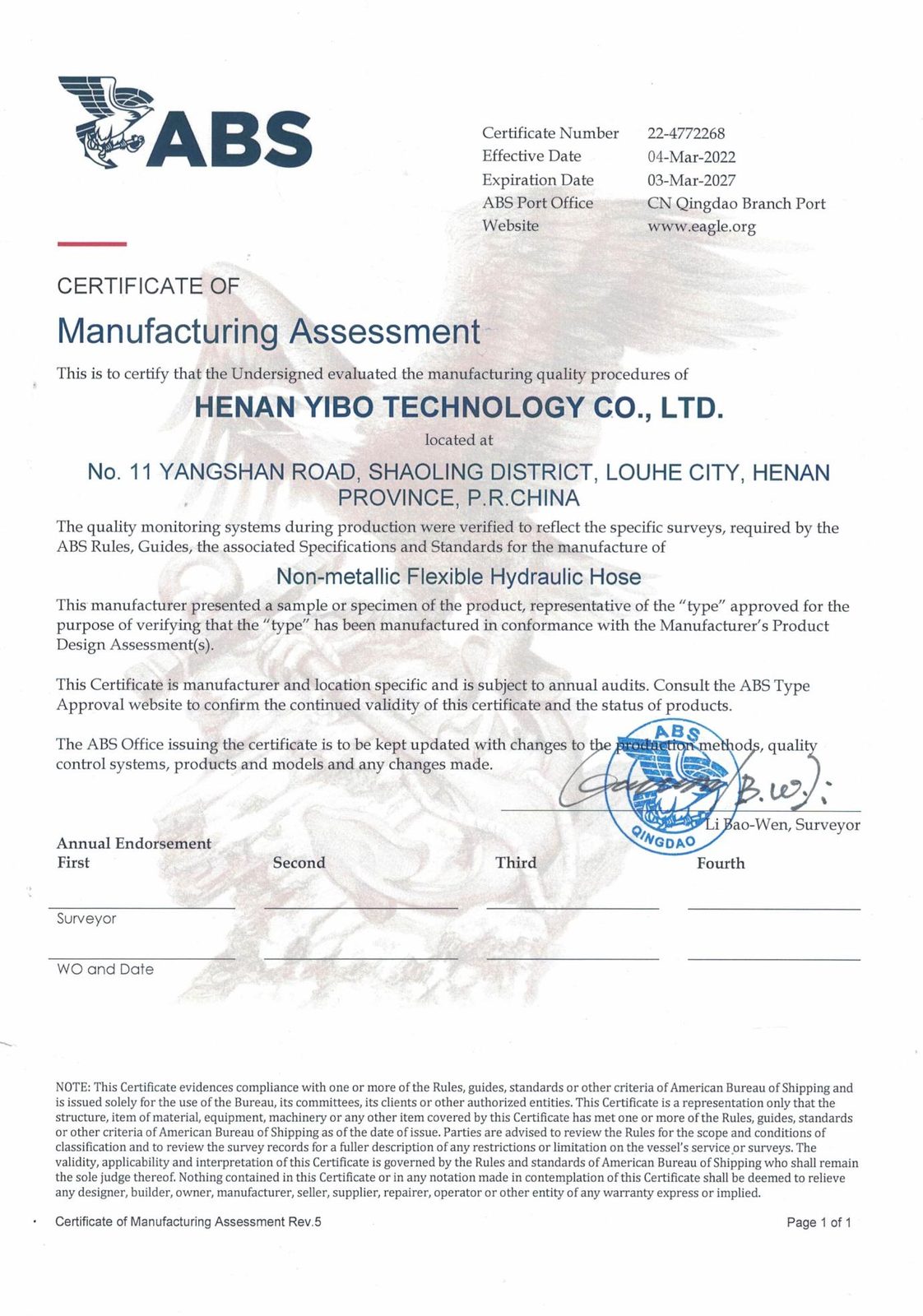
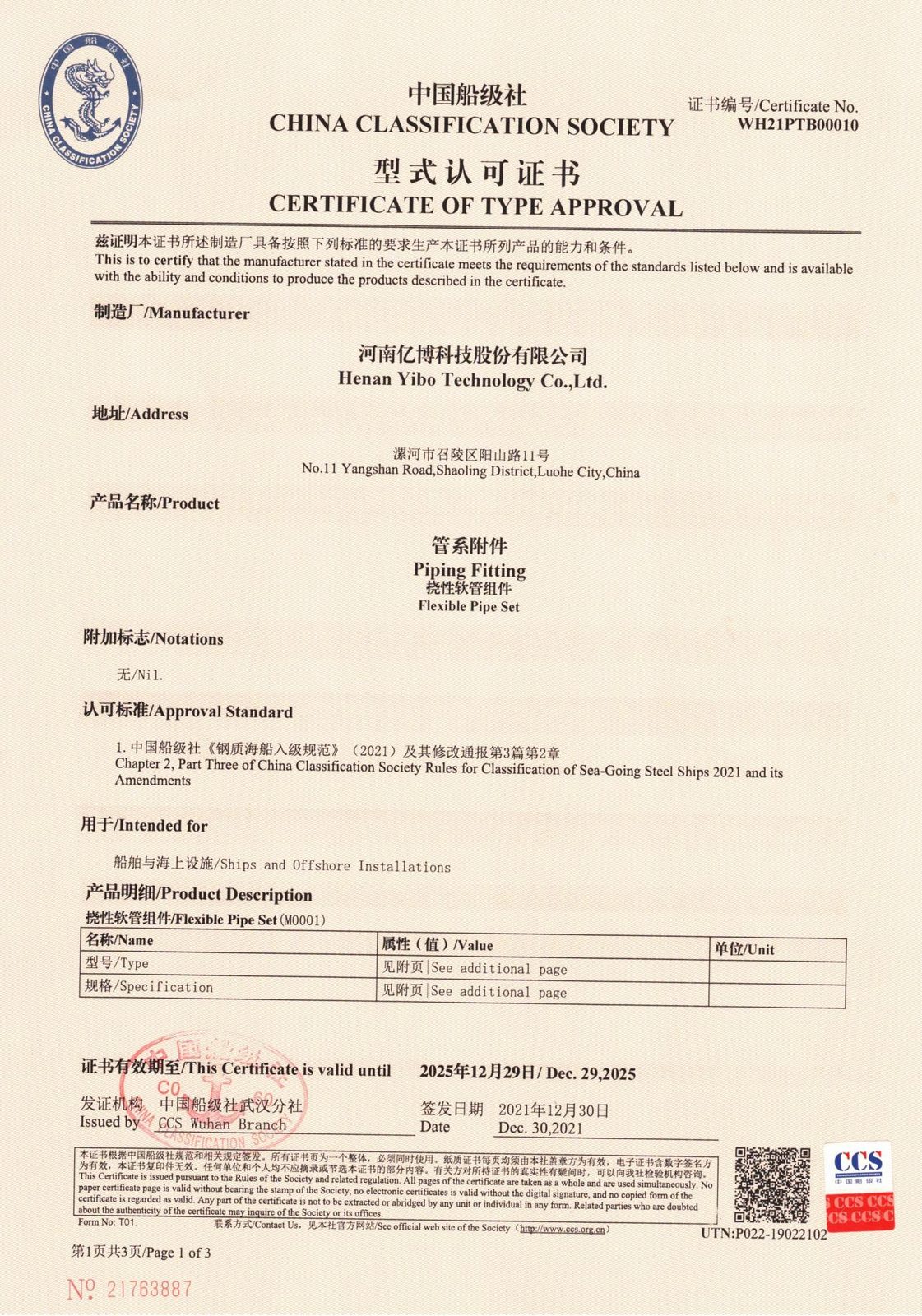
↓Certifications & factory photos
- Hose Construction
- Structure:Inner Tube: NBR (Nitrile Butadiene Rubber) /
- Reinforcement:High-strength polyester cord + spiral steel wire + conductive copper wire /
- Cover:NBR + CR (Nitrile Butadiene Rubber + Chloroprene Rubber)
- Hose Features
- Bend Radius:Down to 100–1100 mm minimum bend radius.
- Pressure Rating:10 bar working against 30 bar minimum burst — a 3.0× margin.
- Size Coverage:10 codes in the table, 19–203 mm bore, from 19 upward.
- Mass Per Metre:0.69–12.71 kg/m across the published codes; every figure is per code, not an average.
- Application:Features excellent anti-static, flame-retardant, and abrasion-resistant properties.
24 Hours Service Hotline
+86 137 2136 0724


For distributors, OEMs & MRO buyers · 30+ countries · MOQ 100 m · free samples



In stock — ready to ship sooner than custom runs. Ask which sizes →
PRODUCT INTRODUCTION
Gas Hose — 10 bar, a Copper Wire in the Wall, 8 inch at 12.71 kg/m
This is an NBR gas hose for LPG, propane and natural gas transfer, published from 19 mm to 203 mm inside diameter in ten codes, each rated 10 bar working against 30 bar minimum burst.
The build is what separates it from a general purpose hose: an NBR tube, a reinforcement of high-strength polyester cord with a spiral steel wire, and — the part that matters on gas — a conductive copper wire carried in the wall, under an NBR + CR cover that is flame-retardant and abrasion-resistant.
Two figures shape an order. Static is handled by that copper wire rather than by a coated cover, so the hose does not need a separate bonding strap; and the coil halves at 6 inch, from 61 m on the eight codes up to 102 mm to 30.5 m on the 152 and 203 mm codes, where mass reaches 8.58 and 12.71 kg per metre.
Data Display
| INNER DIAMETER I.D. (mm) | INNER DIAMETER I.D. (inch) | OUTER DIAMETER O.D. (mm) | WORKING PRESSURE W.P (psi) | WORKING PRESSURE W.P (bar) | psi | BURST PRESSURE B.P. (psi) | BURST PRESSURE B.P. (bar) | psi | MINIMUM BEND RADIUS B.R. (mm) | WEIGHT (kg/m) | LENGTH (ft) | LENGTH (m) |
|---|---|---|---|---|---|---|---|---|---|---|---|---|
| 19 | 3/4" | 30 | 150 | 10 | 145 | 450 | 30 | 435 | 100 | 0.69 | 200 | 61 |
| 25 | 1" | 36 | 150 | 10 | 145 | 450 | 30 | 435 | 150 | 0.86 | 200 | 61 |
| 32 | 1-1/4" | 44 | 150 | 10 | 145 | 450 | 30 | 435 | 190 | 1.23 | 200 | 61 |
| 38 | 1-1/2" | 51 | 150 | 10 | 145 | 450 | 30 | 435 | 220 | 1.54 | 200 | 61 |
| 51 | 2" | 64 | 150 | 10 | 145 | 450 | 30 | 435 | 300 | 1.98 | 200 | 61 |
| 64 | 2-1/2" | 78 | 150 | 10 | 145 | 450 | 30 | 435 | 380 | 2.61 | 200 | 61 |
| 76 | 3" | 90 | 150 | 10 | 145 | 450 | 30 | 435 | 450 | 3.16 | 200 | 61 |
| 102 | 4" | 120 | 150 | 10 | 145 | 450 | 30 | 435 | 550 | 4.59 | 200 | 61 |
| 152 | 6" | 171 | 150 | 10 | 145 | 450 | 30 | 435 | 750 | 8.58 | 100 | 30.5 |
| 203 | 8" | 224 | 150 | 10 | 145 | 450 | 30 | 435 | 1100 | 12.71 | 100 | 30.5 |
| Note: Other technical data can be customized on request. | ||||||||||||
Values are reproduced from the official YIBO product page. GAS HOSE — Industrial & Food Hose: psi columns = MPa × 145.038, rounded. GAS HOSE — Industrial & Food Hose: 10 bar working and 30 bar minimum burst is the ceiling of this range; the order data sheet governs the batch.
Application & Selection
Features excellent anti-static, flame-retardant, and abrasion-resistant properties. GAS HOSE — Industrial & Food Hose covers 19–203 mm across 10 published codes.
GAS HOSE — Industrial & Food Hose tops out at 10 bar working and 30 bar minimum burst over its 10 codes. GAS HOSE — Industrial & Food Hose: Mass runs 0.69–12.71 kg/m across the 10 codes. GAS HOSE — Industrial & Food Hose: Metric / BSP / JIC / ORFS ends are crimped and pressure-tested in-house across the 19–203 mm bore. Allow about 20 days from confirmation for GAS HOSE — Industrial & Food Hose; OEM marking and packing on request.
WHY THIS HOSE
Six Reasons a Gas Line Is Built Differently
Gas at 10 bar behaves like any other fluid until static appears. These six points are what the build answers.
A Wire, Not a Coating
The reinforcement carries a conductive copper wire through the full length, which is what gives the published anti-static property instead of a conductive cover film that wears away on a hose reel.
10 bar on Every Code
From the 19 mm bore at 30 mm outside diameter to the 203 mm bore at 224 mm, every code is 10 bar with 30 bar burst, so the bore is chosen for flow and nothing else.
Coil Halves at 6 Inch
Eight codes to 102 mm ship on a 61 m coil and the 152 and 203 mm codes on 30.5 m, which is the first thing to plan on a large-bore order.
Mass at the Top End
0.69 kg/m at 19 mm, 1.98 kg/m at 51 mm and 12.71 kg/m at 203 mm: the 8 inch code needs two people and a support every few metres, not a clamp.
Flame-Retardant Cover
The NBR + CR cover is published as flame-retardant as well as abrasion-resistant, which is the combination a gas yard asks for rather than one or the other.
Bend Radius to 1100 mm
The arc runs 100 mm at the 19 mm code to 1100 mm at 8 inch, published per code, so a large-bore run is laid out from the table rather than from a guess on site.
CONSTRUCTION
NBR, Cord with Wire, NBR + CR
Inner Tube
NBR, chosen for gas and oil resistance rather than for water, in bores from 19 mm to 203 mm.
Reinforcement
High-strength polyester cord with a spiral steel wire for crush resistance and a conductive copper wire for static, all three in the same layer.
Cover
NBR blended with CR — flame-retardant, abrasion-resistant, and the layer that takes the wear on a yard floor.
APPLICATIONS
Where Gas Moves at 10 bar
LPG Transfer
The 51 mm code at 1.98 kg/m on a 300 mm arc, filling cylinders from a bulk tanker.
Propane Vapour Lines
The 19 mm code at 0.69 kg/m, the smallest bore in the range, on a 100 mm arc.
Natural Gas Feed
The 76 mm code at 3.16 kg/m, sized for flow at 10 bar.
Vapour Recovery
The 102 mm code at 4.59 kg/m on a 550 mm arc, returning vapour to a tanker.
Gas Yard Manifolds
The 152 mm code at 8.58 kg/m on a 30.5 m coil, where the coil length sets the layout.
Bulk Discharge
The 203 mm code at 12.71 kg/m and a 1100 mm arc, the largest in the range.
HIGH-END INDUSTRY DIRECTIONS
What a Gas Buyer Checks First
Static, flame and coil length come before pressure on this hose, and the answers are all in the table.
① Static Compliance anti static hose
Trend: Yards want a documented dissipation path.
Dohose: A conductive copper wire through the full length.
② Flame Retardance flame retardant hose
Trend: Cover compound is specified, not just colour.
Dohose: NBR + CR cover, published as flame-retardant.
③ Large Bore Handling large bore gas hose
Trend: 6 and 8 inch runs are growing on transfer docks.
Dohose: 8.58 and 12.71 kg/m, on 30.5 m coils.
④ One Class, Ten Bores gas hose
Trend: Buyers want one rating across the manifold.
Dohose: Ten codes, 19 to 203 mm, all 10 bar.
⑤ Crush on the Yard steel wire hose
Trend: Hoses get driven over, not just dropped.
Dohose: Spiral steel wire inside the cord layer.
⑥ Test Documentation tested hose
Trend: A test sheet travels with the hose.
Dohose: Each length pressure-tested and marked with its code.
WHY DOHOSE
Seven Reasons Buyers Stay with Us
Tolerances on the Sheet
Bore, wall and bend radius for the Gas Hose are printed per code — 10 codes, 19–203 mm, no guessing between shipments.
Mixed Orders Welcome
Order several codes of the Gas Hose at once; 10 sizes in 19–203 mm are built on the same equipment.
No Dead Stock
Order metres, not coils: Gas Hose is cut to length, and mass runs 0.69–12.71 kg/m across the published codes; every figure is per code, not an average.
Crimped and Tested
Where a finished line is needed, Gas Hose is crimped and pressure-tested in-house before packing.
Freight-Ready
Coils of Gas Hose are bagged and palletised, with a 40HQ plan supplied before booking.
Your Name on It
The Gas Hose can be printed and packed under your brand for resale.
Quote in One Hour
Send bore, media and end type for Gas Hose — a firm price comes back within 1 hour.
FAQ
Gas Hose — Ten Questions
Gas hose vs a general air hose — what is different?
The conductive wire and the cover compound. An air hose is rated on pressure alone, while this one carries a copper wire through the wall for static and a flame-retardant NBR + CR cover, at 10 bar over ten codes from 19 to 203 mm.
Can it replace a fuel delivery hose?
Only where the medium and the rating both fit. This hose is published for gas at 10 bar with 30 bar burst, and an NBR tube; a fuel line at higher pressure or with a different permeation requirement is a different build, and the two should not be swapped on the strength of the bore alone.
What is the rating on the 2 inch code?
10 bar working with 30 bar minimum burst, on a 51 mm bore, a 64 mm outside diameter, a 300 mm bend radius and 1.98 kg per metre, on a 61 m coil.
How big is the 8 inch code, and how is it supplied?
A 203 mm bore with a 224 mm outside diameter, 12.71 kg per metre, a 1100 mm minimum bend radius, and a 30.5 m coil rather than the 61 m used at the small end.
Will it carry LPG in liquid and vapour phase?
Yes at 10 bar, which is the working rating on all ten codes. The NBR tube is built for gas and oil, and the 19 mm code at 0.69 kg/m is the size a cylinder-filling line usually runs.
Can it run off a bulk tanker pump, and on a yard manifold?
Yes — both are inside the published duty of 10 bar with 30 bar burst. The 102 mm code at 4.59 kg/m and a 550 mm arc is a typical vapour-return size off a tanker, and the 152 mm code at 8.58 kg/m takes the larger yard runs.
Why does the hose need a copper wire if the rubber is already anti-static?
Because a compound can only leak charge across its surface, and that path disappears as the cover wears. The conductive copper wire in the reinforcement is a continuous path along the hose, which is why the anti-static property is published as part of the build: a 19 mm code at 0.69 kg/m and a 203 mm code at 12.71 kg/m both carry it.
Why does a gas hose go hard and crack at the coupling?
Heat and gas permeation attack the tube where the insert ends, and a clamp that crushes the copper wire breaks the static path at the same time. Keep the run away from a hot manifold, and check continuity end to end after any reassembly on the 203 mm code at 12.71 kg/m as much as on the 19 mm.
What is the minimum order?
One coil, or cut lengths from a metre. The eight codes to 102 mm ship on 61 m and the 152 and 203 mm on 30.5 m, so a mixed order is packed by coil length and marked per length.
How is the hose priced?
Per metre by bore, with the top end driven by mass: 0.69 kg/m at 19 mm against 12.71 kg/m at 203 mm. Send bore, total length, end fittings and destination for a firm figure.
Related Products
AIR / Water Delivery HOSE
Inner Tube: NR + SBR (Natural Rubber + Styrene Butadiene Rubber) / Reinforcement: High-strengt…
Aircraft Refueling HOSE
Structure: special fuel-resistant rubber inner liner, resistant to swelling and permeation of…
Animal Feed/grain HOSE
Inner rubber layer: wear-resistant natural rubber (brown). reinforcement layer: high-strength…
Conductive Chemical Suction and Discharge HOSE
The inner wall adopts uhmwpe+epdm material, featuring high temperature resistance, oxidation r…
Get a quote
Please fill out the form below and we will contact you within 1 hour.
We are online 24/7!
We will contact you within 1 hour of receiving your enquiry.
Hotline