
FEP CORRUGATED SUCTION‑DISCHARGE HOSE
CHEMICAL RESISTANT · SUCTION / VACUUM RATED · UV / OZONE RESISTANT · 10 bar working / 40 bar burst · 19–102 mm
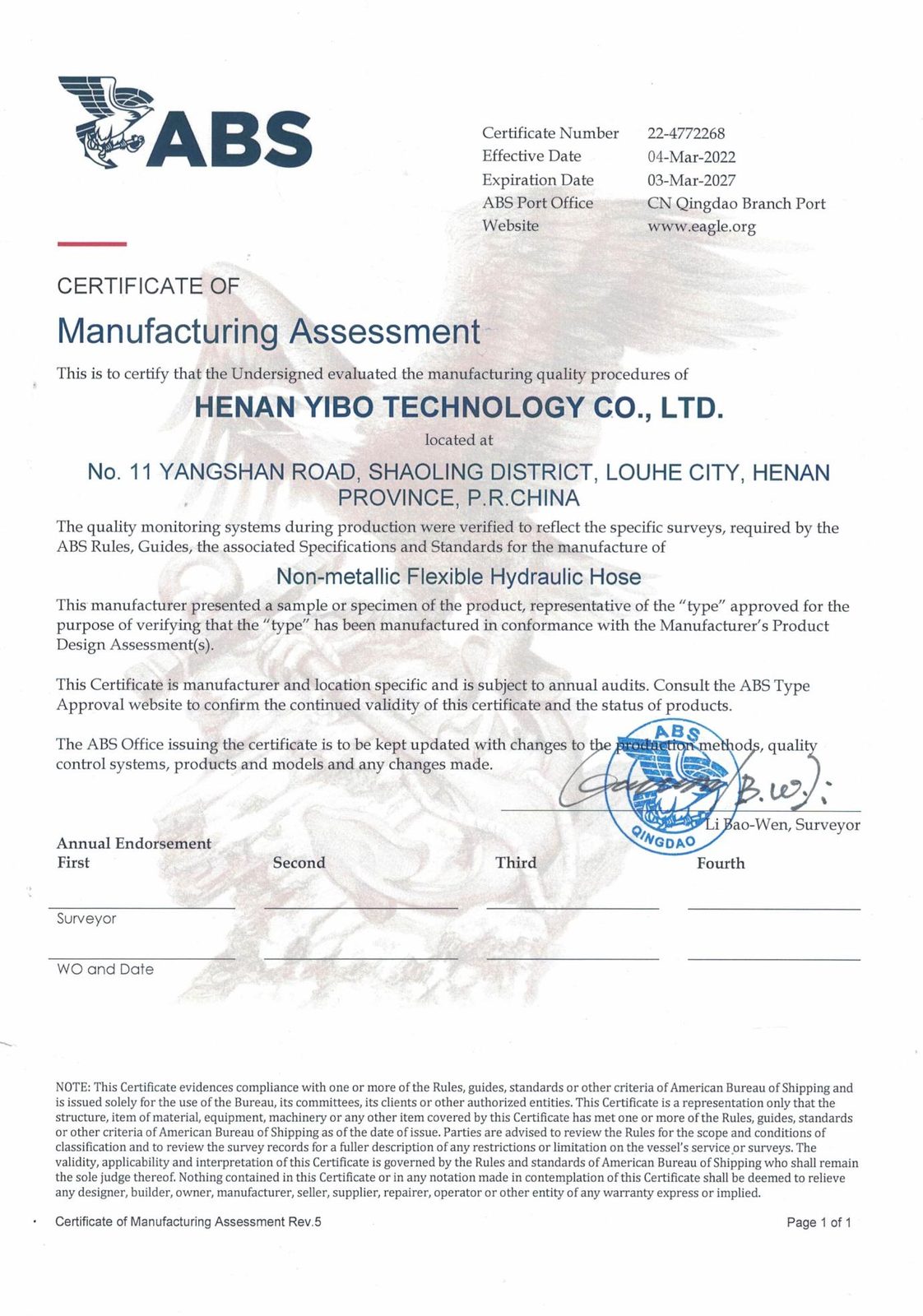
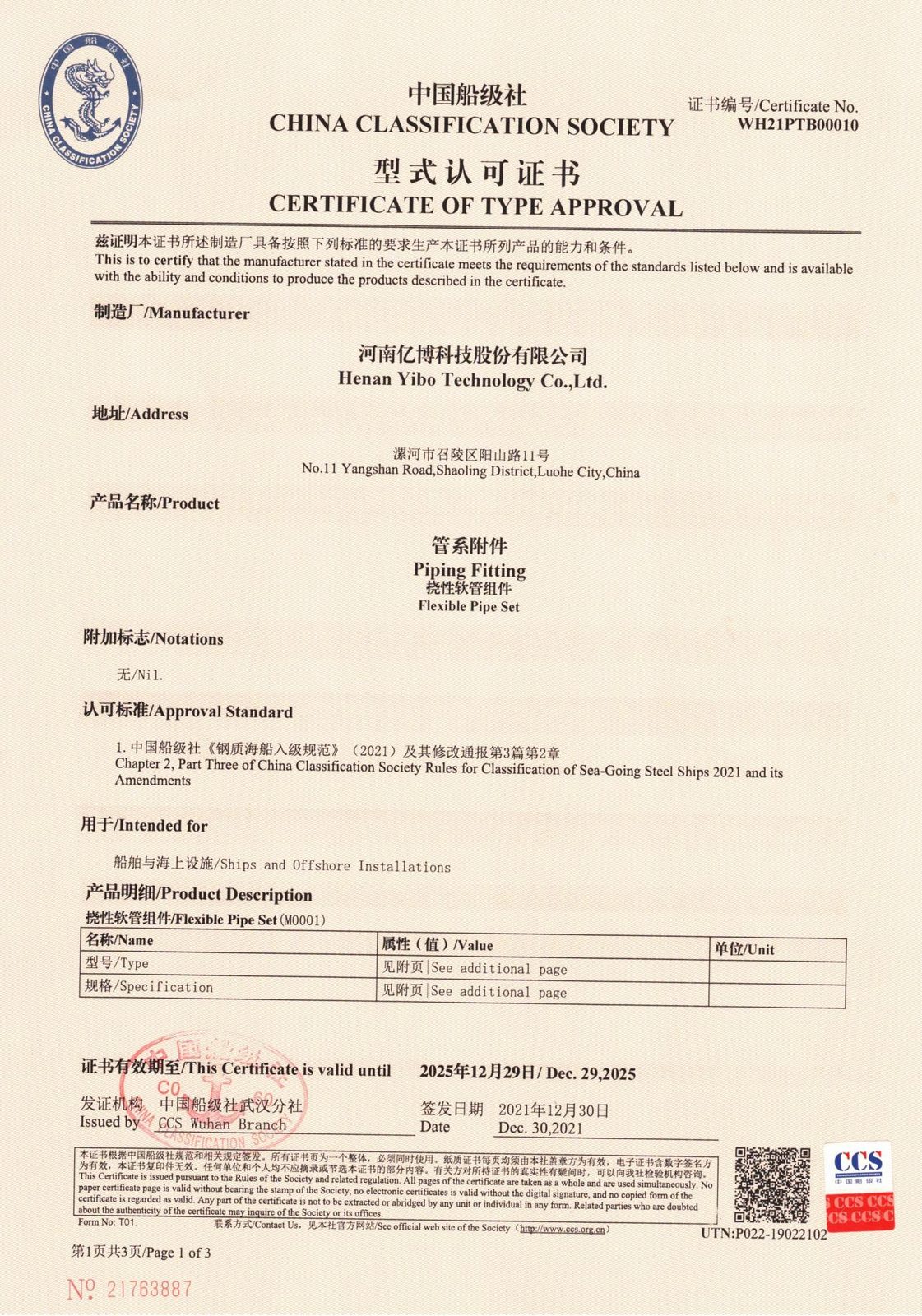
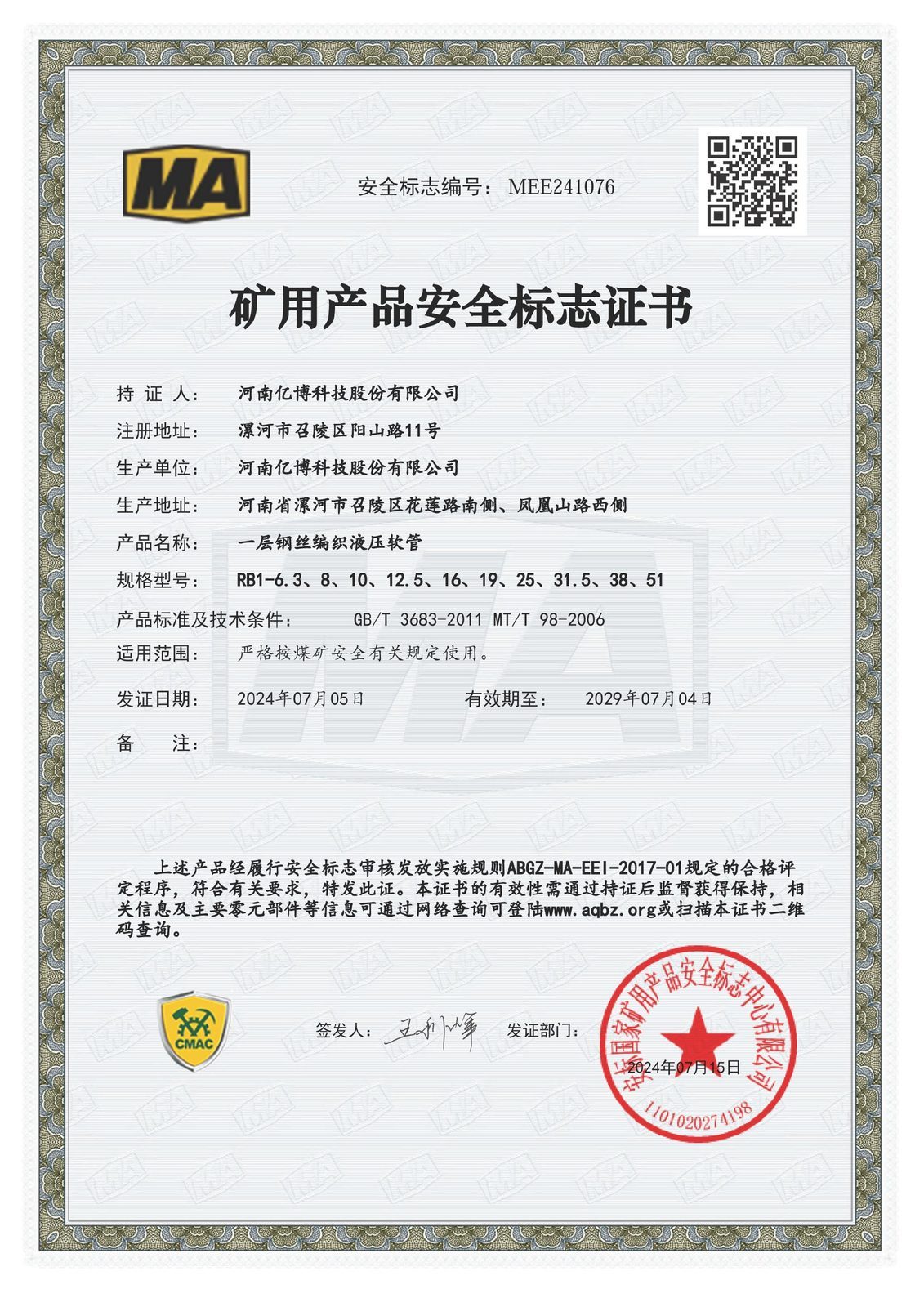
↓Certifications & factory photos
- Hose Construction
- Structure: corrugated fep fluoroplastic inner liner with excellent chemical resistance and great flexibility; composite reinforcement of spiral steel wire and synthetic fiber for vacuum resistance and anti-collapse, suitable for suction‑discharge alternating service; epdm outer cover with wear‑resistant, uv‑resistant and anti‑aging performance
- Working Temperature:‑60℃ ~ +200℃
- Hose Features
- Pressure Rating:10 bar working against 40 bar minimum burst — a 4.0× margin.
- Mass Per Metre:0.83–5.48 kg/m.
- Application:Applications: suitable for vacuum suction and pressure discharge with frequent bending, conveying strong acids, strong alkalis, high‑temperature organic solvents and other corrosive media.
- Outer Diameter:Outer diameter 32–120.4 mm across the published bores.
- Supply Length:Standard supply length 40 m.
24 Hours Service Hotline
+86 137 2136 0724


For distributors, OEMs & MRO buyers · 30+ countries · MOQ 100 m · free samples


In stock — ready to ship sooner than custom runs. Ask which sizes →
PRODUCT INTRODUCTION
Corrugated FEP Hose — Built to Be Bent Twice a Shift
This is the corrugated member of the FEP family: a corrugated fluoroplastic liner with a composite reinforcement of spiral steel wire and synthetic fibre, published in the same eight bores from 19 mm to 102 mm at 10 bar working and 40 bar minimum burst.
The corrugation is the whole point. A flat liner resists bending, and every bend it is forced into puts a permanent strain into the wall. A corrugated one takes the same bend by opening and closing its rings, so the hose can be moved, re-routed and coiled repeatedly without the liner creasing at the outside of the curve.
That makes this the version for the hose that never stays put: a suction wand dragged between drums, a discharge arm that is swung to a different manway, a line coiled onto a reel between batches. The published duty is vacuum suction and pressure discharge with frequent bending, at 0.83 to 5.48 kg per metre and in 40 m lengths.
Data Display
| ITEM CODE | I.D (mm) | I.D (inch) | O.D mm | W.P (bar) | psi | W.P (psi) | B.P (bar) | psi | B.P (psi) | WEIGHT kg/m | MAX LENGTH m |
|---|---|---|---|---|---|---|---|---|---|---|---|
| FEPSD019-150 | 19 | 3/4" | 32 | 10 | 145 | 150 | 40 | 580 | 600 | 0.83 | 40 |
| FEPSD025-150 | 25 | 1" | 38 | 10 | 145 | 150 | 40 | 580 | 600 | 1.02 | 40 |
| FEPSD032-150 | 32 | 1-1/4" | 45.5 | 10 | 145 | 150 | 40 | 580 | 600 | 1.31 | 40 |
| FEPSD038-150 | 38 | 1-1/2" | 52.2 | 10 | 145 | 150 | 40 | 580 | 600 | 1.63 | 40 |
| FEPSD051-150 | 51 | 2" | 65.2 | 10 | 145 | 150 | 40 | 580 | 600 | 2.11 | 40 |
| FEPSD064-150 | 64 | 2-1/2" | 79.2 | 10 | 145 | 150 | 40 | 580 | 600 | 2.75 | 40 |
| FEPSD076-150 | 76 | 3" | 91.2 | 10 | 145 | 150 | 40 | 580 | 600 | 3.22 | 40 |
| FEPSD102-150 | 102 | 4" | 120.4 | 10 | 145 | 150 | 40 | 580 | 600 | 5.48 | 40 |
Values are reproduced from the official YIBO product page. FEP CORRUGATED SUCTION‑DISCHARGE HOSE: psi columns = MPa × 145.038, rounded. FEP CORRUGATED SUCTION‑DISCHARGE HOSE: 8 codes in this table; the order data sheet governs the batch.
Application & Selection
Applications: suitable for vacuum suction and pressure discharge with frequent bending, conveying strong acids, strong alkalis, high‑temperature organic solvents and other corrosive media. FEP CORRUGATED SUCTION‑DISCHARGE HOSE covers 19–102 mm across 8 published codes.
Across the 8 codes of FEP CORRUGATED SUCTION‑DISCHARGE HOSE the top figure is 10 bar working against 40 bar minimum burst — 4:1. FEP CORRUGATED SUCTION‑DISCHARGE HOSE: Weight band: 0.83–5.48 kg/m over the 8 rows. FEP CORRUGATED SUCTION‑DISCHARGE HOSE: Metric / BSP / JIC / ORFS ends are crimped and pressure-tested in-house, outside diameter 32–120.4 mm. FEP CORRUGATED SUCTION‑DISCHARGE HOSE runs roughly 20 days from confirmation over its 8 codes, with OEM marking and packing.
WHY THIS HOSE
Six Reasons a Corrugated Liner Is Chosen
Every hose on this page carries the same pressure as its flat cousin. The difference is how many times it will be bent before it fails.
The Rings Take the Bend
A corrugated wall bends by flexing its rings instead of stretching its surface, so a 51 mm bore can be curved to a working radius and straightened again without a crease forming on the outside.
Repeated, Not Once
The published duty says frequent bending. That is a different requirement from a hose that is installed once and left alone for a decade.
Spiral Wire Inside
The composite reinforcement is spiral steel wire with synthetic fibre, which keeps the corrugations from collapsing when the line is under vacuum and stops the wall from ballooning at 10 bar.
Same Eight Bores
19, 25, 32, 38, 51, 64, 76 and 102 mm, so a plant can standardise on the corrugated version for every line it has to move, from a 3/4 inch wand to a 4 inch arm.
Same Pressure Class
10 bar working and 40 bar minimum burst on every code — the corrugation costs flexibility, not rating, and the numbers on the sheet do not drop for it.
40 m, Coiled
A 40 m length on a corrugated body is what allows a line to be wound onto a reel between jobs rather than laid out and left.
CONSTRUCTION
Rings, Wire, Cover
Corrugated Liner
Corrugated FEP, the profile that gives the flexibility, in bores from 19 mm to 102 mm.
Reinforcement
Composite spiral steel wire with synthetic fibre, laid over the corrugations to hold them under vacuum and against 10 bar.
Cover
The outer cover, from 32 mm outside at the 19 mm code to 120.4 mm at 102 mm, over a body that is meant to be handled.
APPLICATIONS
Where the Hose Is Moved Every Day
Drum to Reactor
The 25 mm code at 1 inch, carried between drums and re-routed at every batch.
Swinging Discharge Arm
The 51 mm code at 2 inch, swung from one manway to another.
Suction Wand
The 38 mm code at 52.2 mm outside, dragged across a floor and bent at the intake.
Reel-Mounted Line
The 32 mm code at 45.5 mm outside, coiled onto a reel between batches.
Maintenance Access
The 64 mm code at 2-1/2 inch, bent out of the way to reach a fitting behind it.
Mobile Transfer
The 102 mm code at 5.48 kg/m, moved by two people to a different connection.
HIGH-END INDUSTRY DIRECTIONS
What a Maintenance Team Asks For
The request is almost always the same: a hose that survives being handled rather than one that survives the pressure.
① Hose That Gets Moved flexible chemical hose
Trend: Lines are shared between vessels.
Dohose: Corrugated liner, published for frequent bending.
② Creasing Failures corrugated hose
Trend: Flat liners crack at the outside of a bend.
Dohose: Rings flex instead of the surface stretching.
③ Reel Storage coiled hose
Trend: Hose is wound up between batches.
Dohose: 40 m lengths that coil without a set.
④ Tight Plant Rooms compact hose
Trend: Retrofits leave no room for a stiff run.
Dohose: 19 to 102 mm, all corrugated.
⑤ One Spare Covers All replacement hose
Trend: Stores hold one length, not four.
Dohose: Eight bores on the same 40 m length.
⑥ Traceable Flex Life tested hose
Trend: Flex is counted, not guessed.
Dohose: Grade and bore marked on every length.
WHY DOHOSE
Seven Reasons Buyers Stay with Us
Numbers, Not Averages
Every figure for the FEP Corrugated Suction‑discharge Hose comes from the per-code table: 19–102 mm, 10 bar working, 40 bar burst.
One Line, Full Range
All 8 codes of the FEP Corrugated Suction‑discharge Hose come off the same line, so a mixed order in 19–102 mm ships together.
Length on Demand
Cut-to-length supply for FEP Corrugated Suction‑discharge Hose; each code carries its own mass, 0.83–5.48 kg/m, so lifting gear can be sized first.
Ends Done Here
Assemblies of FEP Corrugated Suction‑discharge Hose are crimped on site and held at test pressure before they are boxed.
Export Packing
Coiled in poly bags, then woven bags on pallets — loading plans are drawn for 8-code orders.
OEM Ready
Brand printing and custom packing are standard options on the FEP Corrugated Suction‑discharge Hose.
Fast, Firm Pricing
A firm price for FEP Corrugated Suction‑discharge Hose usually returns within 1 hour of your enquiry.
FAQ
Corrugated FEP Hose — Ten Questions
Corrugated vs the flat FEP hose on the same table — what changes?
The profile of the liner and therefore the bending life. Both are rated 10 bar with 40 bar burst over 19 mm to 102 mm, but the corrugated wall bends by flexing its rings, so it can be moved and re-routed where a flat liner would crease.
Can a flat FEP hose be used instead of this one on a line that gets moved?
It can be fitted, and it will fail earlier. A flat liner takes every bend as a strain in the wall, so a 51 mm hose that is coiled and straightened twice a shift needs the corrugated body rather than the flat one.
What is the rating on the 2 inch code?
10 bar working with 40 bar minimum burst, on a 51 mm bore with a 65.2 mm outside diameter and 2.11 kg per metre, in a 40 m length, on a corrugated body.
What is the smallest and largest bore?
19 mm at 3/4 inch with a 32 mm outside diameter and 0.83 kg per metre, up to 102 mm at 4 inch with 120.4 mm outside and 5.48 kg per metre.
Will it handle a corrosive medium as well as the flat version?
Yes — the liner is FEP in both cases, and this page is published for vacuum suction and pressure discharge of the same aggressive products, from the 19 mm code to 102 mm. The corrugation changes the flexibility, not the chemistry.
Can it be coiled onto a reel between batches?
That is what a 40 m corrugated length is for. Winding a flat-liner hose repeatedly is what produces the crease that later splits; the rings on this liner are designed to be opened and closed.
Why does the corrugation not reduce the pressure rating?
Because the spiral steel wire and synthetic fibre reinforcement sit outside the liner and carry the load. The published figures are 10 bar working and 40 bar burst on all eight codes, the same as the flat version.
Why does a corrugated hose fail at the fitting?
Because the corrugation is compressed into the ferrule and the rings cannot move there, so the flex point shifts to the edge of the crimp. On a 2.11 kg/m 2 inch line the fix is a support a hand-width behind the fitting, so the rings keep working instead of the joint taking the bending.
What is the minimum order?
One length from the 40 m coil in any of the eight bores, or cut pieces with crimped ends. Because the line is moved between connections, most orders are one length plus a spare in the same bore.
How is the hose priced?
Per metre by bore, from 0.83 kg/m at the 19 mm code to 5.48 kg/m at 102 mm. Send bore, medium, how often the line is moved, and destination for a firm figure.
Related Products
AIR / Water Delivery HOSE
Inner Tube: NR + SBR (Natural Rubber + Styrene Butadiene Rubber) / Reinforcement: High-strengt…
Aircraft Refueling HOSE
Structure: special fuel-resistant rubber inner liner, resistant to swelling and permeation of…
Animal Feed/grain HOSE
Inner rubber layer: wear-resistant natural rubber (brown). reinforcement layer: high-strength…
Conductive Chemical Suction and Discharge HOSE
The inner wall adopts uhmwpe+epdm material, featuring high temperature resistance, oxidation r…
Get a quote
Please fill out the form below and we will contact you within 1 hour.
We are online 24/7!
We will contact you within 1 hour of receiving your enquiry.
Hotline