
LOW TEMPERATURE RESISTANT HOSE
FACTORY DIRECT · ISO 9001 · OEM AVAILABLE · 415 bar working / 1660 bar burst · 23 sizes
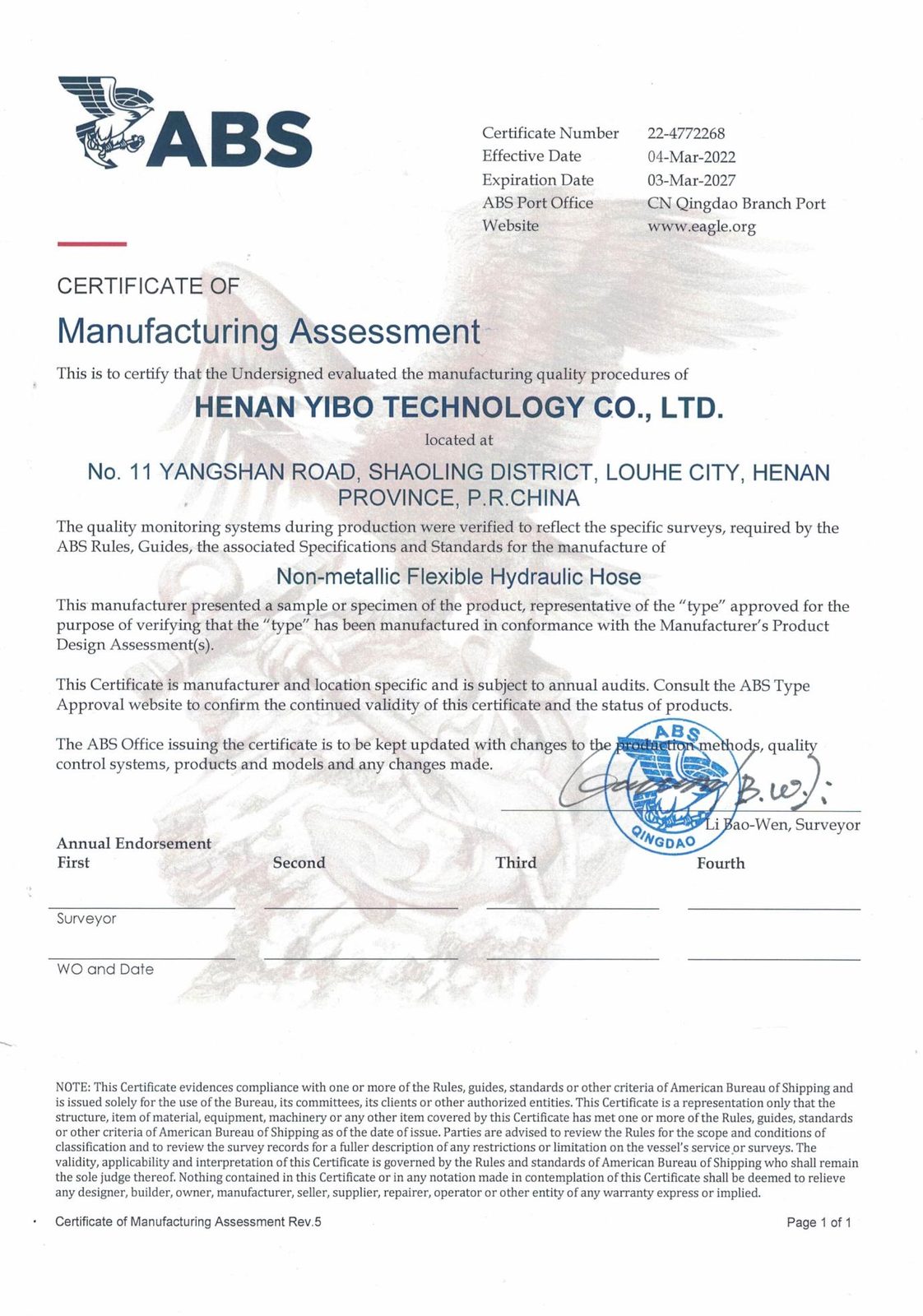
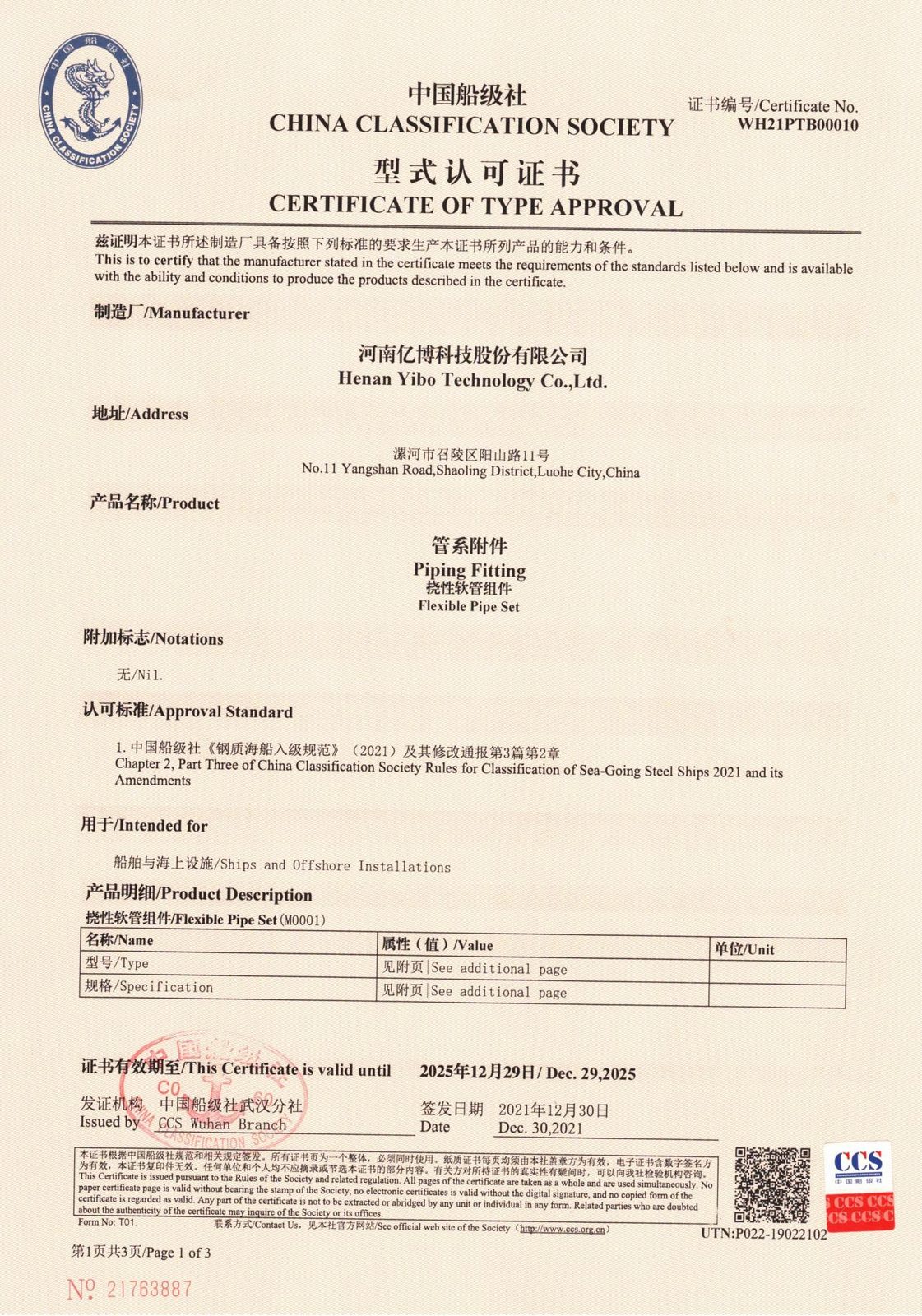
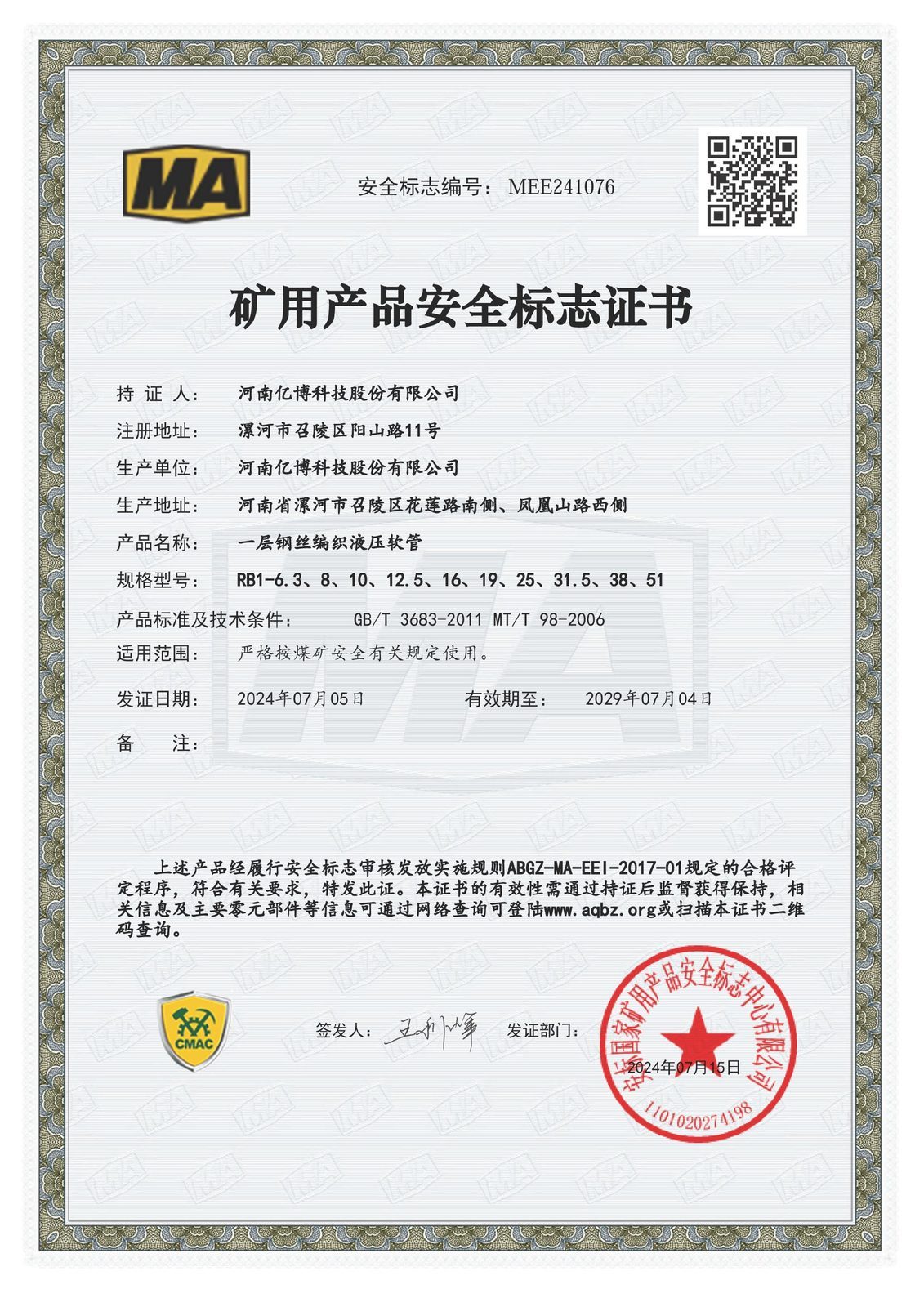
↓Certifications & factory photos
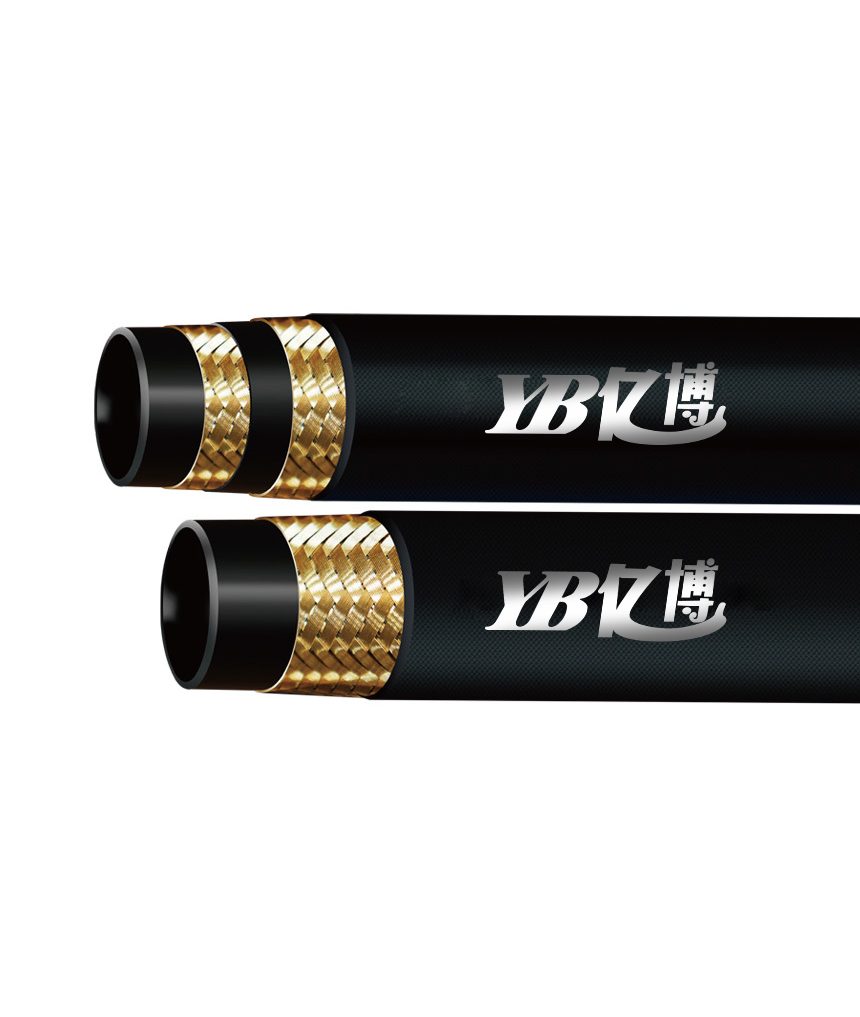
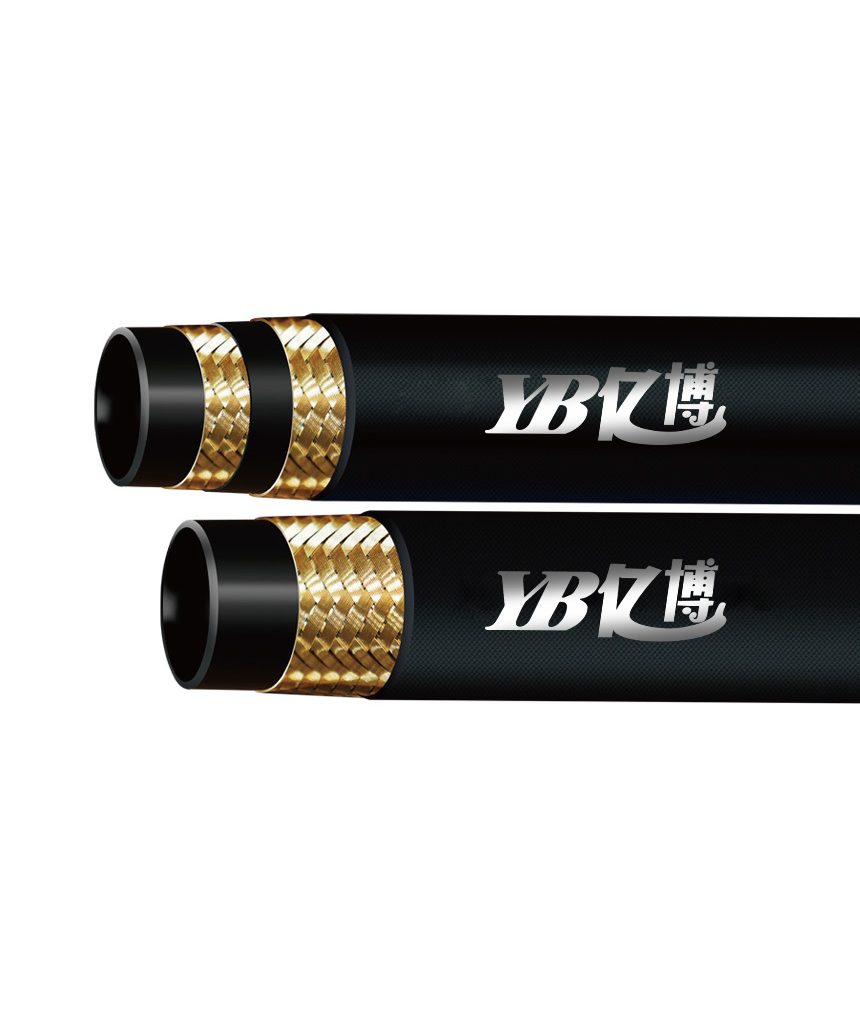
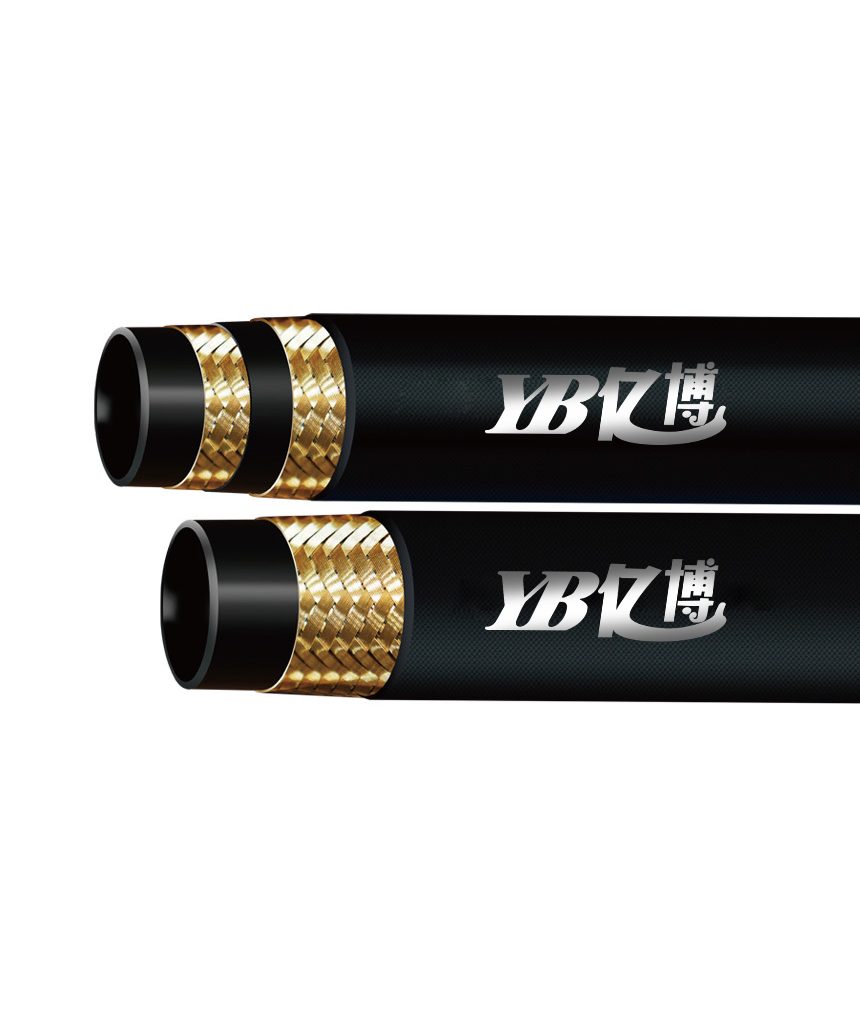
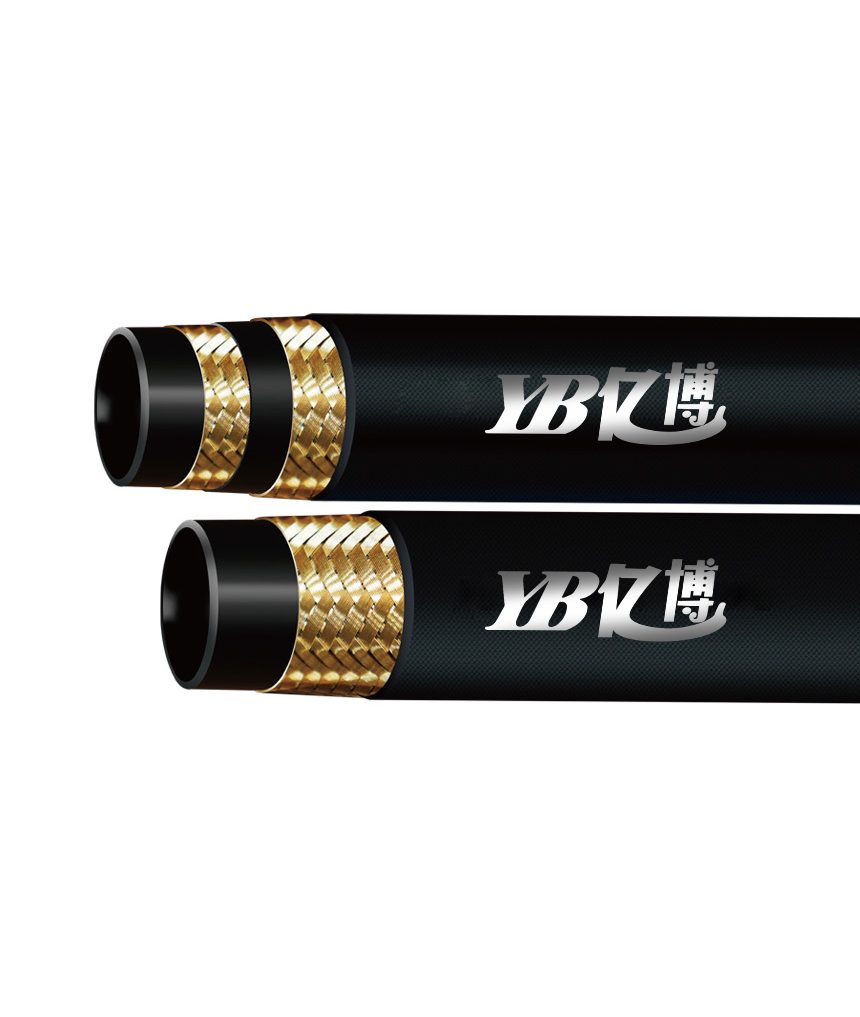
- Hose Construction
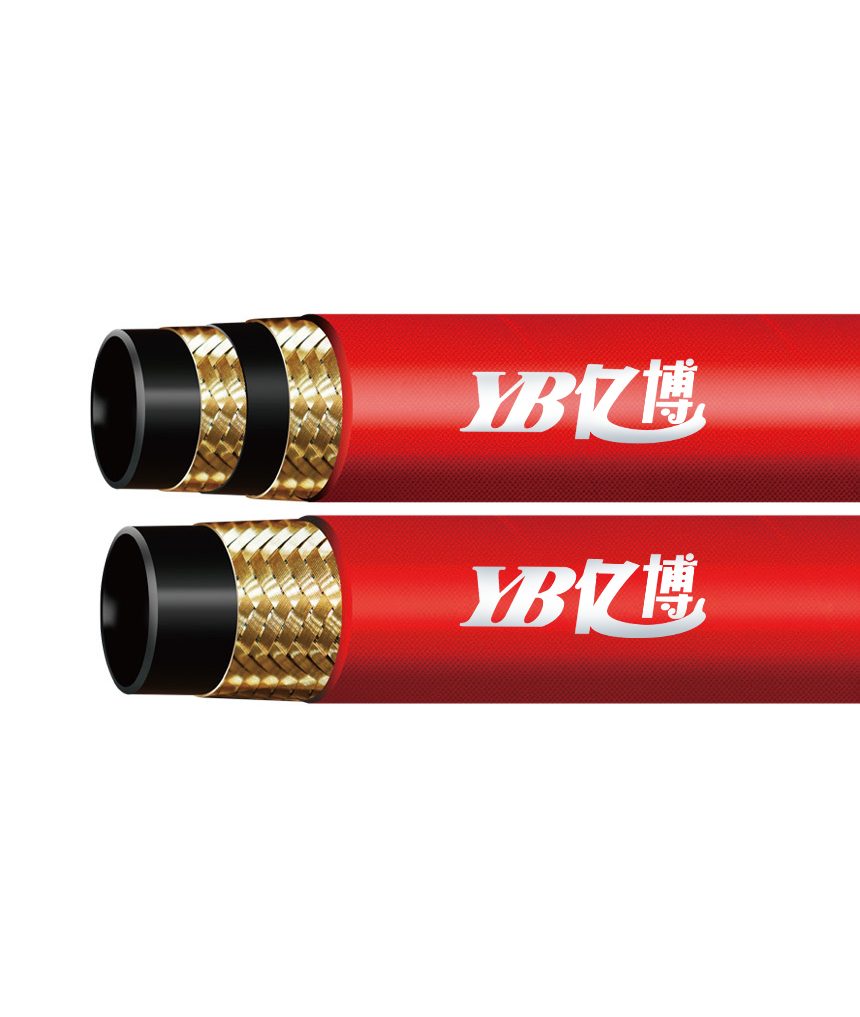
- Structure:Both the inner and outer rubber layers of the hose are composed of synthetic rubber with excellent low-temperature resistance
- Working Temperature:-55 ℃ minimum
- Hose Features
- Bend Radius:Minimum bend radius runs 90–760 mm over the range.
- Pressure Rating:415 bar working against 1,660 bar minimum burst — a 4.0× margin.
- Size Coverage:23 codes in the table, 5–63 mm bore, from D1SN-03-05 upward.
- Mass Per Metre:0.19–3.47 kg/m across the published codes; every figure is per code, not an average.
- Application:Suitable for mechanical equipment in low-temperature environments
24 Hours Service Hotline
+86 137 2136 0724
For distributors, OEMs & MRO buyers · 30+ countries · MOQ 100 m · free samples


In stock — ready to ship sooner than custom runs. Ask which sizes →
PRODUCT INTRODUCTION
Low Temperature Hose — Two Braid Constructions, Down to -55 ℃
The YIBO low-temperature range uses the same steel wire braid as our standard hydraulic hose, with both the inner and the outer rubber compounded for cold service. It is the range for machines that sit outside through a winter, not for a heated plant.
The table carries two constructions: the single-braid D1SN in 11 codes from 5 mm to 51 mm, rated 25.0 MPa at the smallest code down to 4.0 MPa at 2 inch, and the two-braid D2SN in 12 codes from 5 mm to 63 mm, rated 41.5 MPa down to 7.0 MPa. Every row keeps a 4.0x burst margin.
The pressure columns match our standard 1SN and 2SN ratings exactly. What changes is the compound: the published low-temperature limit here is -55 ℃, where a standard hose is rated from -40 ℃.
Data Display
| PRODUCT NAME | NOMINAL BORE (mm) | SPECIFICATION (inch) | INSIDE DIAMETER (ID)mm (min) | INSIDE DIAMETER (ID)mm (max) | OUTER DIAMETER OF REINFORCEMENT LAYER (W.D)mm (min) | OUTER DIAMETER OF REINFORCEMENT LAYER (W.D)mm (max) | OUTSIDE DIAMETER (OD)mm (max) | MAXIMUM WORKING PRESSURE W.P (Mpa) | psi | MINIMUM BURST PRESSURE B.P (Mpa) | psi | MINIMUM BEND RADIUS Min.B.R (mm) | REFERENCE WEIGHT W.T (Kg/m) |
|---|---|---|---|---|---|---|---|---|---|---|---|---|---|
| D1SN-03-05 | 5 | 3/16“ | 4.6 | 5.4 | 9.0 | 10.0 | 12.5 | 25.0 | 3,626 | 100.0 | 14,504 | 90.0 | 0.19 |
| D1SN-04-06 | 6.3 | 1/4” | 6.2 | 7.0 | 10.6 | 11.7 | 14.1 | 22.5 | 3,263 | 90.0 | 13,053 | 100.0 | 0.22 |
| D1SN-05-08 | 8 | 5/16“ | 7.7 | 8.5 | 12.1 | 13.3 | 15.7 | 21.5 | 3,118 | 86.0 | 12,328 | 115.0 | 0.27 |
| D1SN-06-10 | 10 | 3/8” | 9.5 | 10.1 | 14.5 | 15.7 | 18.1 | 18.0 | 2,611 | 72.0 | 10,443 | 128.0 | 0.34 |
| D1SN-08-12.5 | 12.5 | 1/2“ | 12.3 | 13.5 | 17.5 | 19.1 | 21.4 | 16.0 | 2,321 | 64.0 | 9,282 | 180.0 | 0.45 |
| D1SN-10-16 | 16 | 5/8” | 15.5 | 16.7 | 20.6 | 22.2 | 24.5 | 13.0 | 1,885 | 52.0 | 7,542 | 205.0 | 0.51 |
| D1SN-12-19 | 19 | 3/4“ | 18.6 | 19.8 | 24.6 | 26.2 | 28.5 | 10.5 | 1,523 | 42.0 | 6,092 | 240.0 | 0.58 |
| D1SN-16-25 | 25 | 1” | 25.0 | 26.4 | 32.5 | 34.1 | 36.6 | 8.8 | 1,276 | 35.0 | 5,076 | 300.0 | 0.98 |
| D1SN-20-31.5 | 31.5 | 1-1/4“ | 31.4 | 33 | 39.3 | 41.7 | 44.8 | 6.3 | 914 | 25.0 | 3,626 | 420.0 | 1.17 |
| D1SN-24-38 | 38 | 1-1/2” | 37.7 | 39.3 | 45.6 | 48.0 | 52.1 | 5.0 | 725 | 20.0 | 2,901 | 500.0 | 1.35 |
| D1SN-32-51 | 51 | 2“ | 50.4 | 52.0 | 58.7 | 61.7 | 65.5 | 4.0 | 580 | 16.0 | 2,321 | 630.0 | 2.0 |
| D2SN-03-05 | 5 | 3/16“ | 4.6 | 5.4 | 10.6 | 11.7 | 16 | 41.5 | 6,019 | 165.0 | 24,076 | 90.0 | 0.31 |
| D2SN-04-06 | 6.3 | 1/4” | 6.2 | 7.0 | 12.1 | 13.3 | 17.7 | 40.0 | 5,802 | 160.0 | 23,206 | 100.0 | 0.35 |
| D2SN-05-08 | 8 | 5/16“ | 7.7 | 8.5 | 13.7 | 14.9 | 19.4 | 35.0 | 5,076 | 140.0 | 20,305 | 115.0 | 0.4 |
| D2SN-06-10 | 10 | 3/8” | 9.3 | 10.1 | 16.1 | 17.3 | 21.7 | 33.0 | 4,786 | 132.0 | 19,145 | 130.0 | 0.49 |
| D2SN-08-12.5 | 12.5 | 1/2“ | 12.3 | 13.5 | 19.0 | 20.6 | 25 | 27.5 | 3,989 | 110.0 | 15,954 | 180.0 | 0.6 |
| D2SN-10-16 | 16 | 5/8” | 15.5 | 16.7 | 22.2 | 23.8 | 28.2 | 25.0 | 3,626 | 100.0 | 14,504 | 200.0 | 0.75 |
| D2SN-12-19 | D19 | 3/4“ | 18.6 | 19.8 | 26.2 | 27.8 | 32.2 | 21.5 | 3,118 | 86.0 | 12,473 | 240.0 | 0.95 |
| D2SN-16-25 | 25 | 1” | 25.0 | 26.4 | 34.1 | 35.7 | 39.3 | 16.5 | 2,393 | 66.0 | 9,573 | 300.0 | 1.3 |
| D2SN-20-31.5 | 31.5 | 1-1/4“ | 31.4 | 33.0 | 43.2 | 45.6 | 50.4 | 12.5 | 1,813 | 50.0 | 7,252 | 420.0 | 1.9 |
| D2SN-24-38 | 38 | 1-1/2” | 37.7 | 39.3 | 49.6 | 52.0 | 56.8 | 9.0 | 1,305 | 36.0 | 5,221 | 500.0 | 2.6 |
| D2SN-32-51 | 51 | 2“ | 50.4 | 52.0 | 62.3 | 64.7 | 69.4 | 8.0 | 1,160 | 32.0 | 4,641 | 630.0 | 3.42 |
| D2SN-40-63 | 63 | 2-1/2" | 63.1 | 65.1 | 74.6 | 77.8 | 81.8 | 7.0 | 1,015 | 28.0 | 4,061 | 760.0 | 3.47 |
Values are reproduced from the official YIBO product page. psi columns = MPa × 145.038, rounded. 23 codes from 5 mm to 63 mm bore — the top rating is not the whole story; the order data sheet governs the batch.
Application & Selection
LOW TEMPERATURE RESISTANT HOSE — D1SN — Spiral Hydraulic Hose. LOW TEMPERATURE RESISTANT HOSE is published in 23 codes spanning 5–63 mm bore.
LOW TEMPERATURE RESISTANT HOSE tops out at 415 bar working and 1,660 bar minimum burst over its 23 codes. Mass is published at 0.19–3.47 kg/m per metre. We crimp and test every build in-house — 23 codes, 5–63 mm. Allow about 20 days from confirmation for LOW TEMPERATURE RESISTANT HOSE; OEM marking and packing on request.
WHY THIS HOSE
Six Reasons a Cold-Climate Machine Needs Its Own Hose
Cold does not lower the burst pressure. It hardens the tube, stiffens the cover, and makes the bend radius a hard limit instead of a guide.
-55 ℃ Low-Temperature Limit
Both rubber layers are compounded for cold, so the published limit is -55 ℃ against -40 ℃ on the standard ranges. That 15 degrees is the whole reason this page exists.
Two Constructions, One Compound
D1SN is single-braid from 5 mm to 51 mm and D2SN is two-braid from 5 mm to 63 mm. The cold compound is applied to both, so a cold machine can use the same pressure classes as a warm one.
Same Pressure Table as Standard
D1SN runs 25.0 MPa at 5 mm down to 4.0 MPa at 51 mm, and D2SN runs 41.5 MPa down to 7.0 MPa — identical to our 1SN and 2SN columns. The cold build does not cost pressure.
23 Codes Across the Two Builds
5 mm to 63 mm covers a pilot line and a return header from one range, with the same low-temperature compound at both ends.
Bend Radius Published Per Row
90 mm at the 5 mm code through to 760 mm at 63 mm. In cold service this figure matters more, not less, because a stiff hose kinks before it leaks.
Crimped and Proof-Tested
Assemblies are crimped with the ferrule for the body and tested before dispatch, then marked with batch and test date.
CONSTRUCTION
Cold Compound Inside and Out
Inner Tube
Synthetic rubber compounded for low temperature — the one change from our standard range. Bored from 4.6 to 5.4 mm at the 5 mm code through to 63.1 to 65.1 mm at the largest D2SN code.
Reinforcement
One layer of steel wire braid on D1SN, two on D2SN, giving 25.0 MPa and 41.5 MPa respectively at the 5 mm bore.
Cover
A synthetic rubber cover compounded for the same cold window, outside diameter 12.5 mm at the D1SN 5 mm code through to 81.8 mm at the D2SN 63 mm code.
APPLICATIONS
Where a Cold-Climate Hose Is Specified
Cold Stores & Freezer Plants
Forklift and door-line hydraulics inside a freezer, where a standard tube hardens on the first shift.
Outdoor Winter Operation
Machines that stay outside through the season, from snow removal to yard handling.
Northern & High-Altitude Sites
Mining, quarry and construction work where the ambient sits below -40 ℃ for weeks.
LNG & Refrigeration Plant
Cold-process areas where lines run at low ambient rather than at low product temperature.
Cold Room Maintenance
Service lines for cold-room doors, conveyors and racking, at 1/4 inch and 3/8 inch.
Export to Cold Markets
Machines built for northern Europe, Canada or Central Asia, where the specification is written into the order.
HIGH-END INDUSTRY DIRECTIONS
What Cold-Climate Buyers Ask For
This is a specification question more than a price question: the same machine can be sold into two climates.
① One Machine, Two Markets low temperature hose
Trend: Equipment builders sell the same model into warm and cold regions.
Dohose: The cold range matches the standard pressure columns, so only the compound changes.
② Cold Kinks Before It Leaks low temperature hose
Trend: A stiff hose fails at the bend, not at the burst.
Dohose: Bend radius is published from 90 mm at 5 mm bore to 760 mm at 63 mm.
③ Cold-Start Pressure Spikes impulse rated hose
Trend: Oil is thick at start-up and relief valves see a spike before the oil warms.
Dohose: Every row keeps a 4.0x burst margin, from 100 MPa at 5 mm to 16 MPa at 51 mm.
④ Two Classes in One Store standard hose
Trend: Cold-climate fleets still need a low-pressure and a high-pressure line.
Dohose: D1SN covers 5 to 51 mm at 1SN ratings and D2SN 5 to 63 mm at 2SN ratings.
⑤ Outdoor Storage outdoor hose
Trend: Spare coils spend the winter in an unheated container.
Dohose: The cover is compounded for the same cold window as the tube, not just the bore.
⑥ Traceability traceable hose
Trend: Cold-climate failures get investigated with the machine builder.
Dohose: Batch and test date are marked on the body and recorded against the order.
WHY DOHOSE
Seven Reasons Buyers Stay with Us
Published Per Code
The Low Temperature Resistant Hose is published code by code — 23 rows, 4.6–63.1 mm, each with its own pressure and mass.
One Factory, Whole Range
From the smallest to the largest bore in 4.6–63.1 mm, the Low Temperature Resistant Hose is made in one plant — no second source.
Cut to the Metre
Take the length the job needs — Low Temperature Resistant Hose is cut from the coil, with 0.19–3.47 kg/m across the published codes; every figure is per code, not an average published so handling can be planned.
Tested Before Boxing
Every assembly built from Low Temperature Resistant Hose passes a hydrostatic test before it leaves the plant.
Packed for the Container
Pallet layouts for Low Temperature Resistant Hose are planned against the container, so freight per metre stays predictable.
Private Label
Printing, labels and packing for Low Temperature Resistant Hose can carry a distributor brand.
Same-Hour Reply
Bore, quantity and ends are enough to price Low Temperature Resistant Hose; the reply goes out within 1 hour.
FAQ
Low Temperature Hose — Ten Questions
D1SN vs D2SN — which construction?
Pressure decides. At 3/4 inch the single-braid D1SN is rated 10.5 MPa (105 bar) and the two-braid D2SN is rated 21.5 MPa (215 bar) on the same 19 mm bore, with a 240 mm bend radius on both. Below 100 bar the single braid is enough; above it, the second layer is what carries the rating.
Low-temperature hose vs a standard 1SN — what changes?
On the pressure column, yes: D1SN runs 25.0 MPa at 5 mm, 18.0 MPa at 10 mm and 4.0 MPa at 51 mm, exactly the 1SN figures. The difference is the tube and cover compound, which is what takes the working limit from -40 ℃ down to -55 ℃.
What is the working pressure at 3/8 inch?
The D2SN 10 mm code is rated 33.0 MPa (330 bar, 4,786 psi) with 132.0 MPa (1,320 bar) minimum burst. Minimum bend radius is 130 mm and mass is 0.60 kg/m. The D1SN code on the same bore is rated 18.0 MPa.
What is the rating at 3/4 inch in the single-braid build?
The D1SN 19 mm code is rated 10.5 MPa (105 bar, 1,523 psi) with 42.0 MPa (420 bar) minimum burst. Bend radius is 240 mm and mass is 0.66 kg/m, so 100 m is a 66 kg coil.
Why does a standard hose fail in cold service?
Because the tube hardens and the cover stiffens, so the hose stops flexing where the machine expects it to. On a 10 mm line rated 18.0 MPa in the single-braid build, the failure appears as a cracked cover at a bend or a weep at the ferrule, not as a burst. A cold-compounded hose keeps its flexibility at the same pressure class.
Why does the hose kink when it is cold?
Because a stiff hose at its minimum bend radius has no give left. At 5 mm the minimum is 90 mm, at 3/4 inch it is 240 mm, and at 2 inch 630 mm — in cold weather lay the line out at more than the minimum, because the material will not absorb the difference the way it does at 20 ℃.
Can the two builds be mixed on one machine?
Yes, and they often are: a cold-climate machine might use D2SN on the rams and D1SN on the return and pilot lines, because both share the same compound and the same -55 ℃ limit. Mixing them does not create a compatibility problem, only a pressure-rating one per line.
How many codes are in the range?
23 rows in total: 11 D1SN codes from 5 mm to 51 mm and 12 D2SN codes from 5 mm to 63 mm. The two groups share the table, so match the code prefix to the construction before ordering.
Which Chinese manufacturer supplies low-temperature hydraulic hose in bulk?
YIBO, in Luohe, Henan, builds both constructions on one line — 11 D1SN codes from 5 mm to 51 mm and 12 D2SN codes from 5 mm to 63 mm — with the cold compound applied to the tube and cover of each. Coils and crimped assemblies ship from the same plant, loading through Qingdao or Shanghai.
What does the low-temperature hose cost per metre?
Price follows the construction and the bore: 0.19 kg/m at the D1SN 5 mm code, 0.60 kg/m at the D2SN 10 mm code, 3.47 kg/m at the D2SN 63 mm code. Send construction, bore, length and destination for a firm figure the same working day.
Related Products
Compact Steel WIRE Braid Hydraulic HOSE
The hose consists of an inner tube, one or two layers of steel wire braided reinforcement, and…
Constant Pressure Steel WIRE Braided Hydraul…
The hose consists of an inner tube, one or two layers of steel wire braided reinforcement, and…
Constant Pressure Steel WIRE Braided Hydraul…
The hose consists of an inner tube, one or two layers of steel wire braided reinforcement, and…
HIGH Pressure Steam HOSE
The inner and outer tube layers of the hose are both made of synthetic rubber with excellent h…
Get a quote
Please fill out the form below and we will contact you within 1 hour.
We are online 24/7!
We will contact you within 1 hour of receiving your enquiry.
Hotline