
AIR CONDITIONING BUS HOSE
OIL & FUEL · UV / OZONE RESISTANT · 35 bar working / 210 bar burst
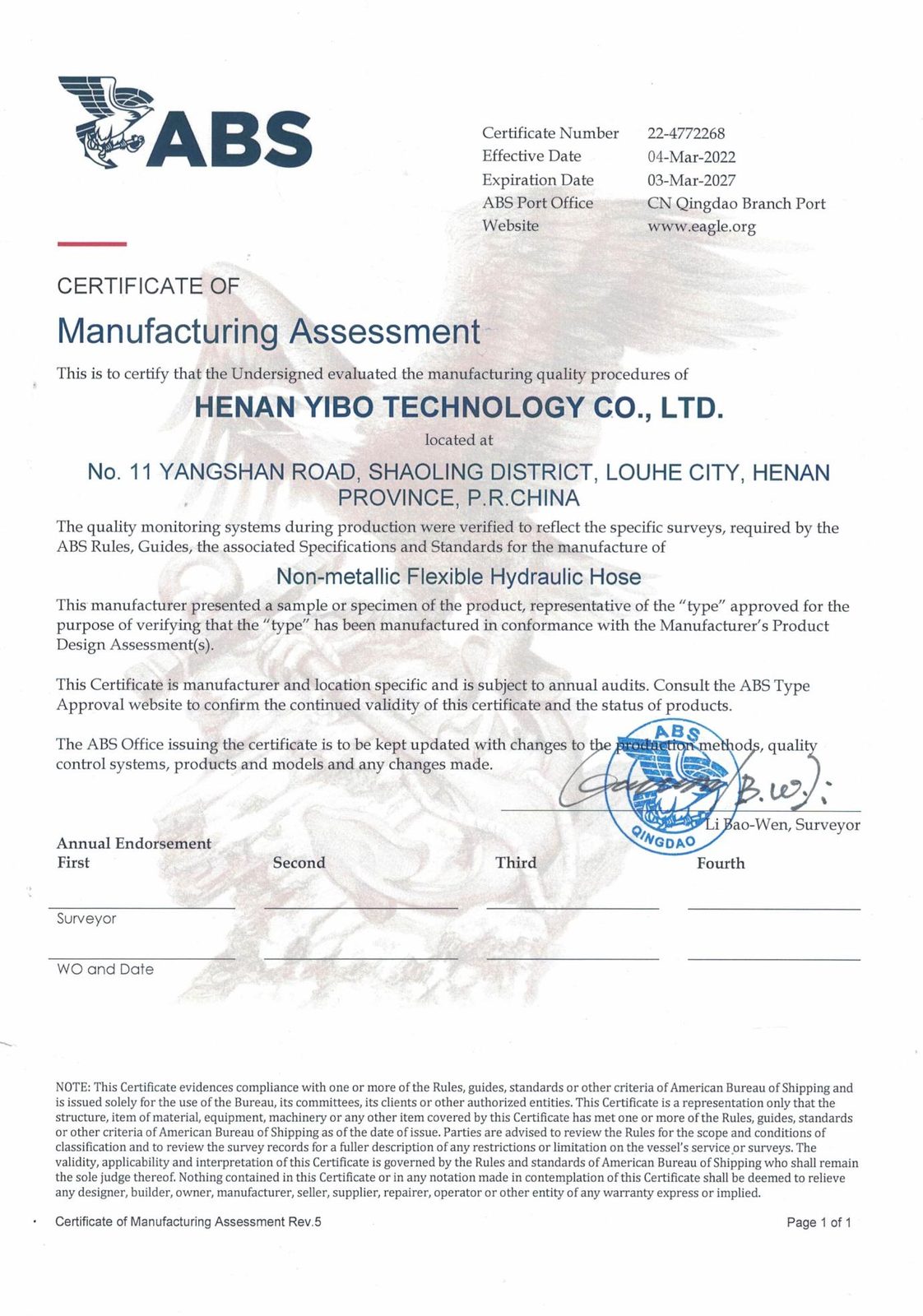
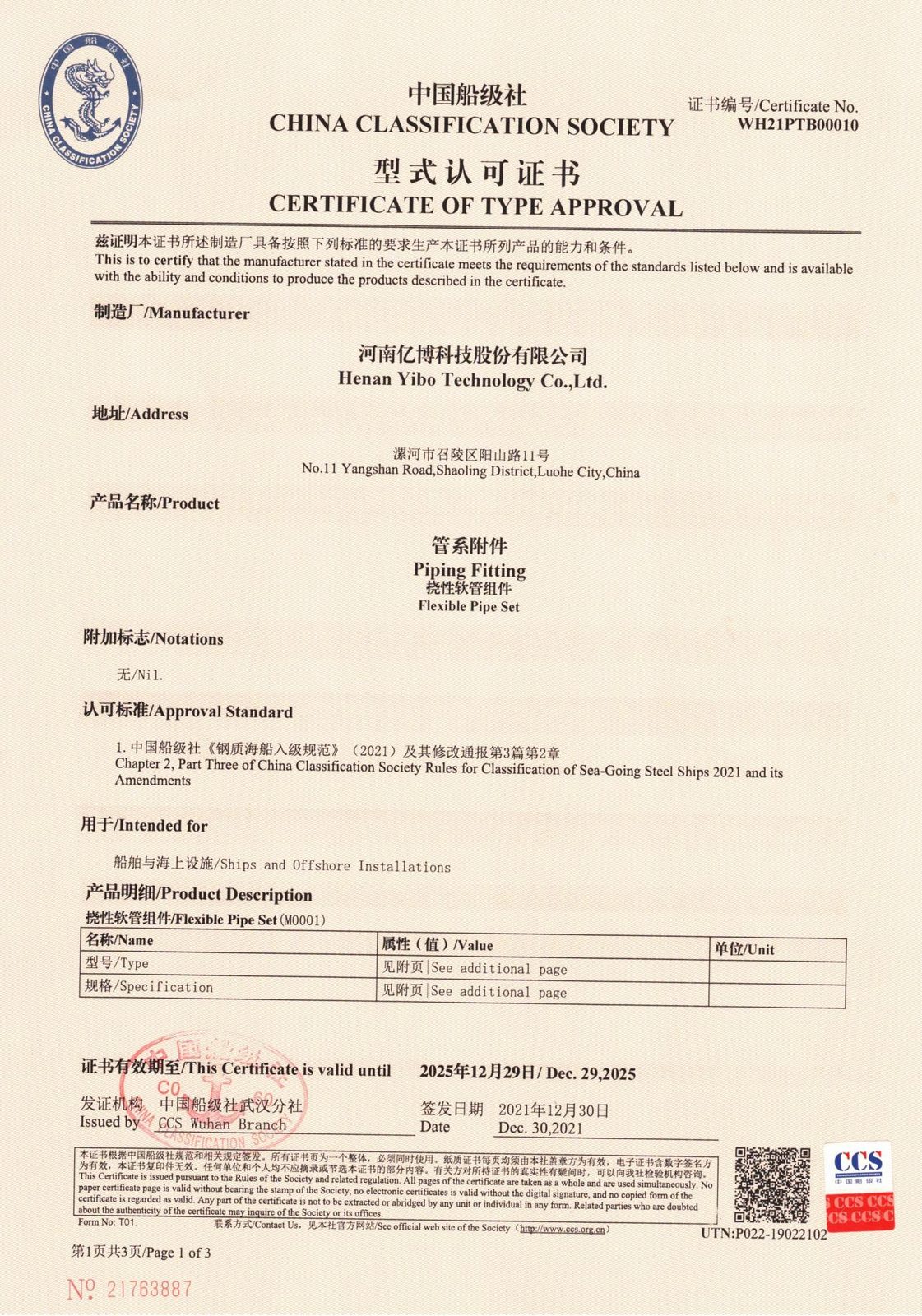
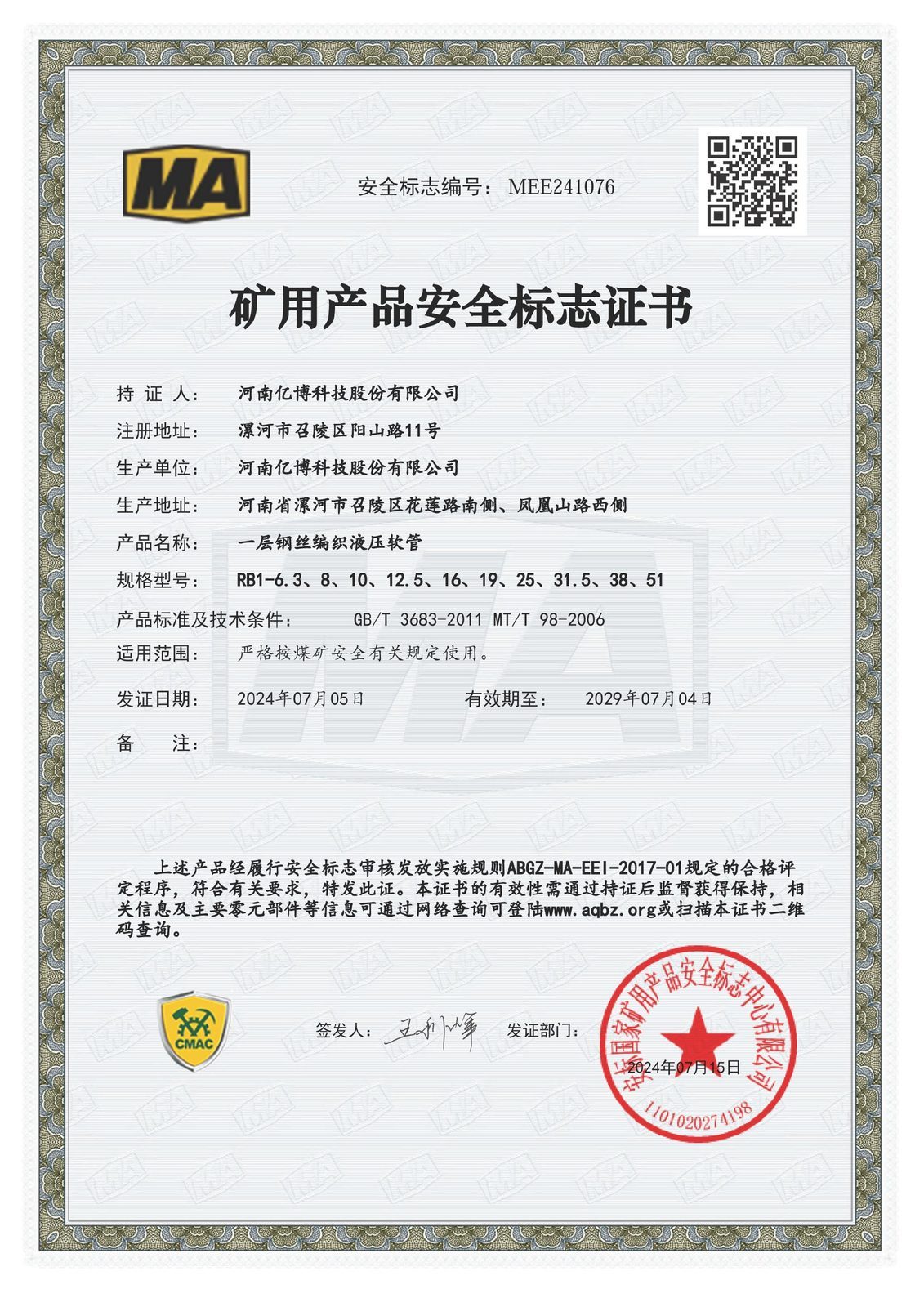
↓Certifications & factory photos
- Published Range
- Nominal bore:8–28.5 mm
- Max working pressure:35 bar
- Min burst pressure:200–210 bar
- Mass per metre:339–840 g/m.
- Size range:7 codes in the table, from HT559-8 upward
- Hose Features
- Bend Radius:Minimum bend radius 83–240 mm.
- Inner Tube:CSM (Chlorosulfonated Polyethylene) special rubber for refrigerants, providing resistance against refrigerant and oil corrosion
- Reinforcement:Polyester fiber braid or steel wire braid, enhancing pressure-bearing capacity and bending resistance
- Cover:Yellow weather-resistant EPDM rubber, offering excellent resistance to UV rays, oil, and ozone aging
- Application:AIR CONDITIONING BUS HOSE — HT559 — Air Conditioning / Bus Hose — full specification table, PDF datasheet and factory-direct supply.
24 Hours Service Hotline
+86 137 2136 0724


For distributors, OEMs & MRO buyers · 30+ countries · MOQ 100 m · free samples


In stock — ready to ship sooner than custom runs. Ask which sizes →
PRODUCT INTRODUCTION
Bus Air Conditioning Hose — 35 bar Working, 210 bar Burst
HT559 is a coach and bus air conditioning hose with a CSM tube for refrigerant and oil resistance, one layer of polyester or steel wire braid and a yellow weather-resistant EPDM cover, published in seven sizes from 8 mm to 28.5 mm inside diameter.
Two details in the table are unusual for this class. The four metric bores — 16.1, 18.5, 22 and 28.5 mm — are published with a ±0.5 mm tolerance rather than a min and a max, because a bus line is pre-bent to a fixture and the insert has to match. And burst pressure is 20 to 21 MPa against 3.5 MPa working, a 5.7:1 margin, which is far more than a refrigerant circuit needs.
Every size is rated 3.5 MPa (35 bar) with one braid layer, bend radius running 83 mm to 240 mm and mass published in grams per metre, 339 to 840 g/m — light enough that a roof unit is not carrying its own plumbing.
Data Display
AIR CONDITIONING BUS HOSE — HT559 — Air Conditioning / Bus Hose — full specification table, PDF datasheet and factory-direct supply.
| SPECIFICATION | INNER DIAMETER (ID) (mm) | INNER DIAMETER (ID) (inch) | OUTER DIAMETER (OD) (mm) | OUTER DIAMETER (OD) (inch) | REINFORCEMENT LAYER (Layers) (-) | WORKING PRESSURE (W.P) (Mpa) | psi | BURST PRESSURE (Min.B.P) (Mpa) | psi | BENDING RADIUS (Min.bend) (mm) | WEIGHT (Weight) (g/m) |
|---|---|---|---|---|---|---|---|---|---|---|---|
| HT559-8 | 8 | 5/16" | 17.2 | 0.68 | 1 | 3.5 | 508 | 20 | 2,901 | 83 | 339 |
| HT-599-10 | 10 | 13/32" | 19.3 | 0.76 | 1 | 3.5 | 508 | 20 | 2,901 | 95 | 390 |
| HT-599-13 | 13 | 1/2" | 23.4 | 0.92 | 1 | 3.5 | 508 | 20 | 2,901 | 115 | 536 |
| HT559-16 | 16.1±0.5 | - | 24.1±0.5 | - | 1 | 3.5 | 508 | 21 | 3,046 | 185 | 480 |
| HT559-19 | 18.5±0.5 | - | 27.5±0.5 | - | 1 | 3.5 | 508 | 21 | 3,046 | 195 | 600 |
| HT559-22 | 22±0.5 | - | 31.5±0.5 | - | 1 | 3.5 | 508 | 21 | 3,046 | 200 | 660 |
| HT-599-28 | 28.5±0.5 | - | 39±0.5 | - | 1 | 3.5 | 508 | 21 | 3,046 | 240 | 840 |
Values are reproduced from the official YIBO product page. psi columns = MPa × 145.038, rounded. 7 codes from 8 mm to 13 mm bore — the top rating is not the whole story; the order data sheet governs the batch.
Application & Selection
AIR CONDITIONING BUS HOSE — HT559 — Air Conditioning / Bus Hose — full specification table, PDF datasheet and factory-direct supply. AIR CONDITIONING BUS HOSE covers 8–28.5 mm across 7 published codes.
AIR CONDITIONING BUS HOSE tops out at 35 bar working over its 7 codes. Mass is published at 339–840 kg/m per metre. AIR CONDITIONING BUS HOSE assemblies ship crimped and pressure-tested, with metric / BSP / JIC / ORFS ends. Allow about 20 days from confirmation for AIR CONDITIONING BUS HOSE; OEM marking and packing on request.
WHY THIS HOSE
Six Reasons a Bus AC Line Is Specified This Way
A refrigerant circuit runs at a fraction of this rating. These six points are why the hose is still built to it.
5.7:1 on the Small Codes
The 8, 10 and 13 mm codes carry 20 MPa burst on 3.5 MPa working, and the four metric bores 21 MPa, which is the margin a line needs when a condenser fan stops on a hot day.
Tolerance Printed
The 16.1, 18.5, 22 and 28.5 mm bores are published as ±0.5 mm rather than a range, so a pre-bent line and its crimped insert are dimensioned from the same number.
Seven Sizes, 8 to 28.5 mm
Three inch-based codes at 8, 10 and 13 mm and four metric bores cover a whole coach system — suction, discharge and liquid — from one hose family.
Mass in Grams
339 g/m at the 8 mm code to 840 g/m at 28.5 mm: a roof-mounted unit is sensitive to the weight of the lines it has to carry.
One Braid Layer Only
A single braid layer reaches the 3.5 MPa rating on every code, which is what keeps the outside diameter at 17.2 mm on the 8 mm bore and 39 mm on the 28.5.
Yellow EPDM Cover
The cover is EPDM, published for UV, oil and ozone resistance, which is the combination a hose sees on a roof in summer rather than under a bonnet.
CONSTRUCTION
CSM, One Braid, EPDM
Inner Tube
CSM (chlorosulfonated polyethylene) selected for refrigerant and oil resistance, from 8 mm to 28.5 mm bore, with the metric bores held to ±0.5 mm.
Reinforcement
One layer of polyester or steel wire braid, which carries the 3.5 MPa rating with 20 to 21 MPa burst behind it.
Cover
Yellow weather-resistant EPDM, published for UV, oil and ozone ageing, from 17.2 mm outside at the 8 mm code to 39 mm at 28.5 mm.
APPLICATIONS
Where a Coach AC Line Runs
Roof Unit Suction
The 28.5 mm code at 840 g/m on a 240 mm arc, the largest bore in the range.
Discharge Lines
The 13 mm code at 536 g/m and a 115 mm radius, on a 3.5 MPa circuit.
Liquid Lines
The 10 mm code at 390 g/m, small enough to follow a roof frame.
Driver Area Units
The 16.1 mm code at 480 g/m on a 185 mm arc, held to ±0.5 mm for a pre-bent run.
Coach Retrofits
The 22 mm code at 660 g/m, where a metric bore is chosen to match an existing insert.
Tight Roof Routes
The 8 mm code at 339 g/m and an 83 mm bend radius, the tightest arc in the table.
HIGH-END INDUSTRY DIRECTIONS
What a Bus Builder Checks
Tolerance, refrigerant compatibility and weight are the three questions on a coach AC line.
① Pre-bent Assemblies air conditioning hose
Trend: Lines are bent to a jig before fitting.
Dohose: ±0.5 mm published on the four metric bores.
② New Refrigerants refrigerant hose
Trend: Systems move to lower-GWP gases.
Dohose: CSM tube rated for refrigerant and oil at 3.5 MPa.
③ Roof Weight Budget lightweight hose
Trend: Roof units are weighed against the axle.
Dohose: 339 to 840 g/m across seven sizes.
④ Metric Bores metric hose
Trend: European coaches use metric inserts.
Dohose: 16.1, 18.5, 22 and 28.5 mm bores in the same table.
⑤ UV Life weather resistant hose
Trend: Lines stay on the roof for a decade.
Dohose: Yellow EPDM cover against UV and ozone.
⑥ One Family per Coach hose assembly
Trend: Builders standardise on one hose range.
Dohose: Seven codes from 8 to 28.5 mm, all at 35 bar.
WHY DOHOSE
Seven Reasons Buyers Stay with Us
Numbers, Not Averages
Every figure for the Air Conditioning Bus Hose comes from the per-code table: 8–28.5 mm, 35 bar working, 200–210 bar burst.
One Line, Full Range
All 7 codes of the Air Conditioning Bus Hose come off the same line, so a mixed order in 8–28.5 mm ships together.
Length on Demand
Cut-to-length supply for Air Conditioning Bus Hose; each code carries its own mass, 0.339–0.84 kg/m, so lifting gear can be sized first.
Ends Done Here
Assemblies of Air Conditioning Bus Hose are crimped on site and held at test pressure before they are boxed.
Export Packing
Coiled in poly bags, then woven bags on pallets — loading plans are drawn for 7-code orders.
OEM Ready
Brand printing and custom packing are standard options on the Air Conditioning Bus Hose.
Fast, Firm Pricing
A firm price for Air Conditioning Bus Hose usually returns within 1 hour of your enquiry.
FAQ
Bus Air Conditioning Hose — Ten Questions
Bus AC hose vs a general refrigerant hose — what is different?
The tolerance and the burst margin. This range publishes ±0.5 mm on its metric bores and 20 to 21 MPa burst on 3.5 MPa working, on seven codes from 8 to 28.5 mm, which is what a pre-bent coach line is dimensioned against.
Can HT559 replace an OEM moulded assembly?
Yes where the bore and the outside diameter match and the line can be crimped rather than moulded. The 16.1 mm code at 24.1 mm outside diameter is the one most often used to replace a shaped OEM hose, held to ±0.5 mm so the insert fits. It replaces the refrigerant circuit only: a heater loop carrying glycol is a coolant hose, not this one.
What is the rating on the 13 mm code?
3.5 MPa (35 bar) working with 20 MPa (2,901 psi) minimum burst, on a 13 mm bore, a 23.4 mm outside diameter, a 115 mm bend radius and 536 g per metre, in one braid layer.
What is the largest size, and how heavy is it?
A 28.5 mm bore with a 39 mm outside diameter, 840 g per metre, a 240 mm minimum bend radius and 21 MPa burst — the largest of the seven codes.
Which refrigerants is the tube built for?
The CSM tube is published for refrigerant and oil resistance at 3.5 MPa, which covers the R134a class and the newer low-GWP gases a coach system is filled with, along with the PAG oil that travels with them.
Where does a bus AC line usually fail first?
At a crimped end, where the insert meets a bore that was measured as nominal. The four metric codes publish ±0.5 mm for exactly this reason: 16.1 mm at 24.1 mm outside and 18.5 mm at 27.5 mm outside are dimensions to crimp against, not estimates. After crimping, the assembly is pulled to vacuum and held before charging, which is the first real test of the insert.
Why is the burst margin 5.7:1 on a 35 bar hose?
Because the table publishes 20 MPa burst against 3.5 MPa working on the three inch-based codes and 21 MPa on the four metric bores. A refrigerant circuit runs well below 35 bar, so the margin covers a blocked condenser or a stopped fan rather than normal operation.
Why does a roof-mounted line go hard near the compressor?
Heat soak after shutdown cooks the oil film at the discharge end, and the tube hardens from the inside. The 13 mm code at 536 g/m is the usual discharge size, and a re-route away from the engine bay does more than a thicker wall.
What is the minimum order?
One coil or cut lengths from a metre, across any of the seven codes from 8 mm to 28.5 mm bore. Assemblies are supplied crimped with the ends specified, and each length is marked with its code.
How is the hose priced?
Per metre by bore, with the metric codes priced against their outside diameter rather than their inch equivalent: 339 g/m at the 8 mm code against 840 g/m at 28.5 mm. Send bore, length, end type and destination for a firm figure.
Related Products
Compact Pilot HOSE
INNER TUBE: OIL-RESISTANT SYNTHETIC RUBBER. REINFORCEMENT: ONE LAYER OF STEEL WIRE BRAIDING. O…
Compact Single WIRE Braid Hydraulic HOSE
The hose consists of an inner tube, a single wire braid reinforcement, and an outer cover.
Compact Two-wire Braided Hydraulic HOSE
The hose consists of an inner tube, a double wire braid reinforcement, and an outer cover.
Fiber Braided HOSE
The hose consists of an inner tube, a double fiber braid reinforcement, and an outer cover.
Get a quote
Please fill out the form below and we will contact you within 1 hour.
We are online 24/7!
We will contact you within 1 hour of receiving your enquiry.
Hotline