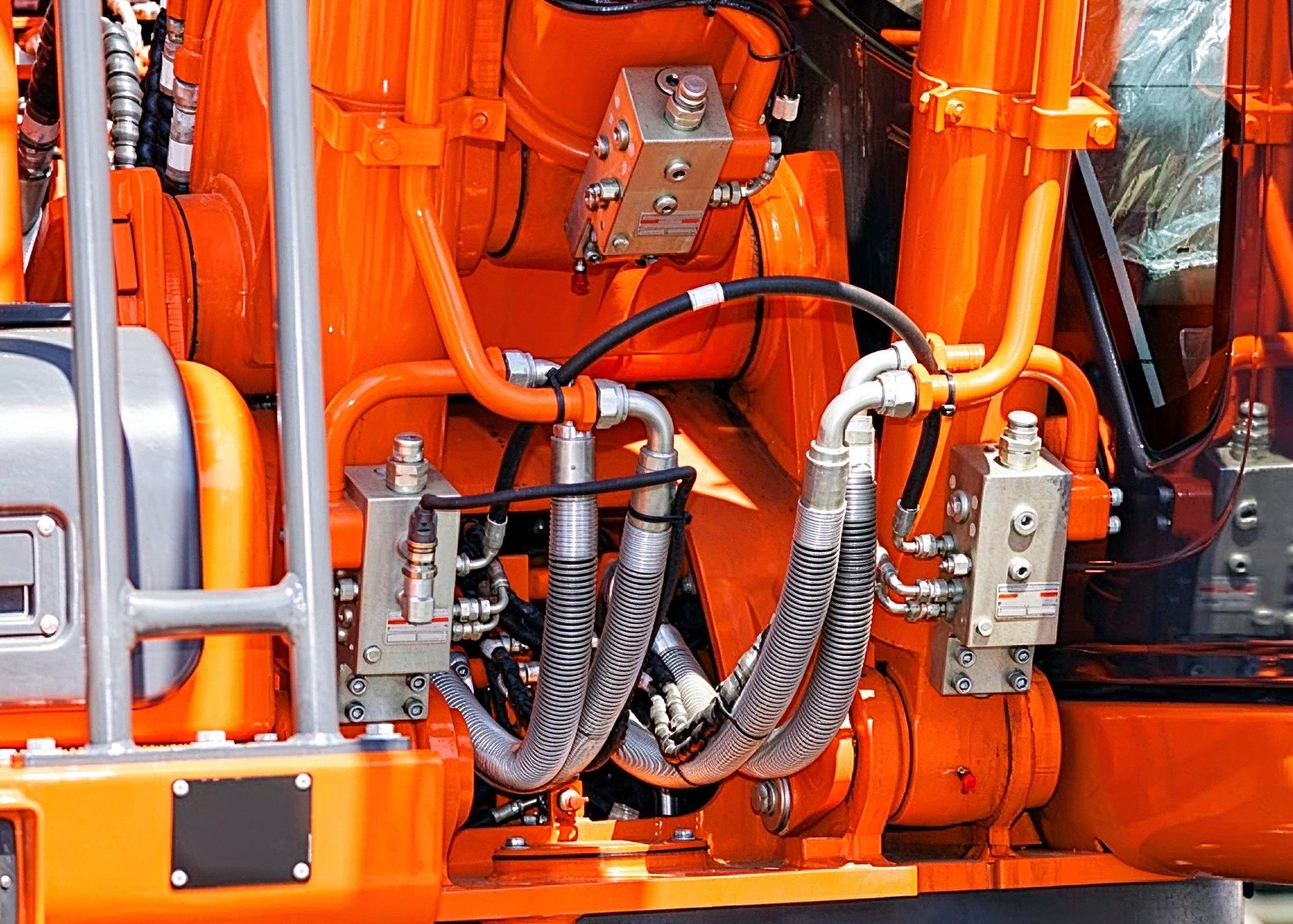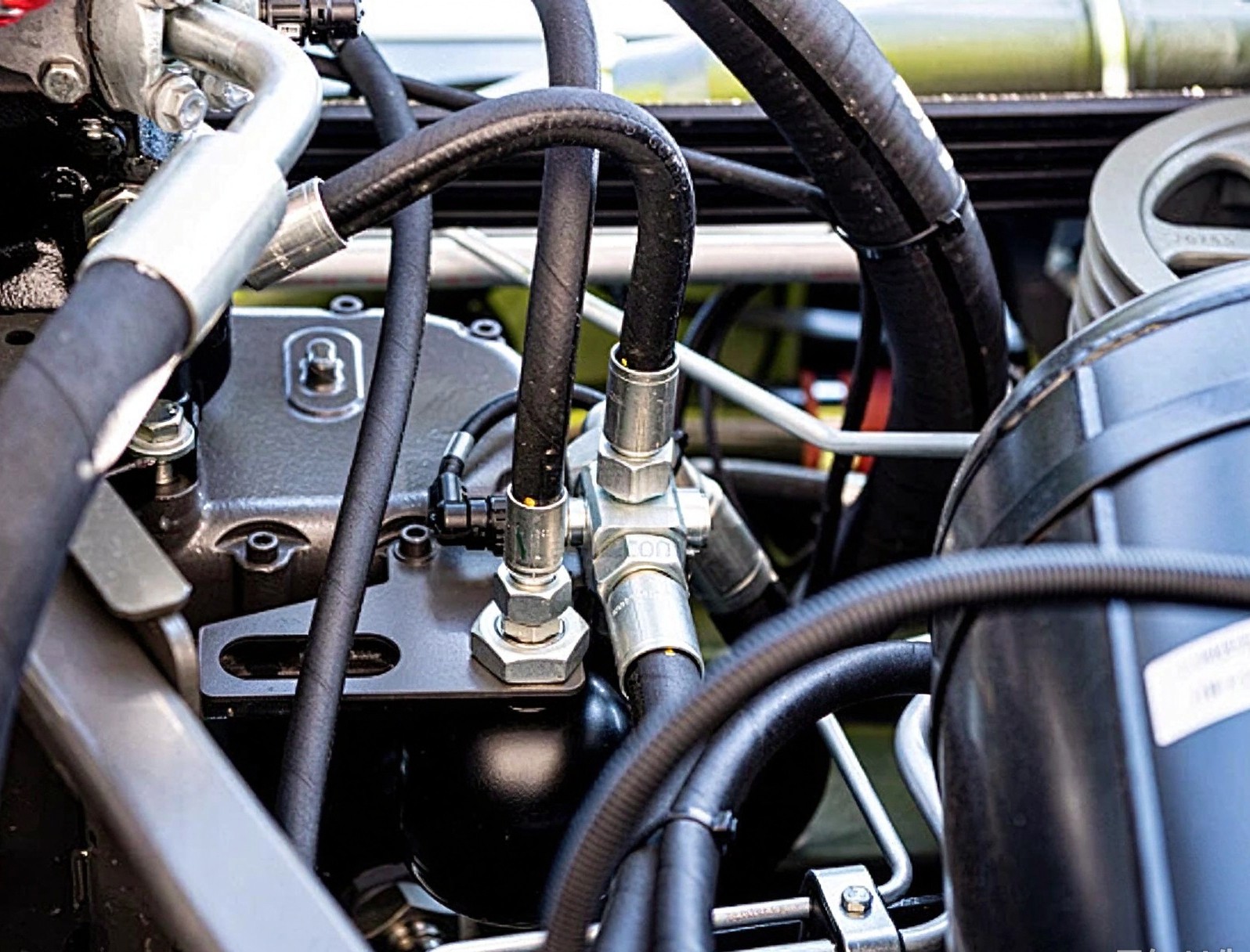
A hose assembly passes every inspection from material cutting, tube cutting, crimping to pressure testing before delivery. Yet three months after being installed on equipment, it still leaks. Inspections of the crimping, the hose itself and the conveyed medium all check out. The problem is finally traced to the thread where the fitting is screwed onto the equipment.
On-site statistics show that a considerable portion of leakages do not originate inside the assembly, but at the connection between the assembly and the equipment — the interface link. And troubles with interfaces almost always start with "they look roughly the same".
Three Sealing Methods
High-pressure hydraulic fittings do not rely on the thread itself for sealing; the thread only provides clamping force, and sealing is achieved through dedicated structures. There are three methods:
Cone face sealing: Sealed by the precise contact between metal cone surfaces, or between a spherical surface and a cone surface.
O-ring face sealing: Seals the end face gap by the compressive deformation of the rubber ring.
Flange type: Compresses the O-ring between flange plates with four bolts.
The three methods correspond to different pressure ranges and nominal diameters, each with its own specifications.
A typical cone seal is the JIC 74° male cone: an American standard system where a 74° male cone surface mates with a female cone surface, achieving metal-to-metal sealing via the contact annulus. It features a simple structure and excellent resistance to pressure pulsation and vibration, making it most common in construction machinery and North American equipment.
The 24° cone is another system: metric and DIN standards use a 24° cone paired with an O-ring or spherical surface, widely applied in European equipment. The two systems differ by 50 degrees in cone angle, yet both appear as "bevel to bevel" visually, looking almost identical from a distance.
When 74° Meets 24°: It Screws On, But It Won’t Hold
The trouble lies in this "almost identical" appearance. When a JIC 74° fitting is screwed into a 24° cone port, it can be rotated several turns smoothly with a normal feel, and may not leak during the first few pressure cycles in testing — because the two cone surfaces can still form partial contact near the small end.
However, the contact position is incorrect, and the contact stress is far below the design value. Once the system heats up and vibration occurs, the sealing annulus wears wider, and leakage begins. This type of leakage is gradual: damp staining in the first week, oil droplets after one month, and dripping oil after three months. It is the hardest to troubleshoot, because "it doesn’t leak right after installation".
A caliper cannot distinguish the two systems; only a cone angle gauge or reference sample can confirm the difference. There is a simple on-site method: JIC is an American standard with imperial thread sizes (e.g., 3/8-24, 1/2-20), while the 24° cone system uses metric threads (e.g., M14×1.5, M18×1.5). First identify whether the thread specification is imperial or metric, then check the cone angle — two steps to tell them apart.
Most mismatched assembly incidents occur near transition specifications where both threads happen to be imperial or both metric. Misidentification occurs in both the procurement and assembly processes, ultimately resulting in a mismatched interface pair.
Rules for Tapered Threads: Sealed by Deformation, Not by Gaskets
BSPT (British Standard Pipe Tapered) and NPT (National Pipe Tapered) are another category: the threads themselves have a taper, and sealing is achieved by the tightening of internal and external threads and the deformation of the thread profile.
These interfaces have two inherent rules. First, wrapping PTFE tape or applying thread sealant is a required part of the process, not an optional step — dry-assembled tapered pipe threads leave spiral gaps between the crests and roots of the threads, which will inevitably leak. Second, the screwing depth must be controlled. Over-tightening can crack the female thread, and threaded holes in cast iron valve blocks are particularly vulnerable to such damage.
BSPP (British Standard Pipe Parallel) works the opposite way: the thread does not provide sealing, only fastening. Sealing relies on the flat end face with a washer or O-ring. If a BSPP fitting is dry-screwed in as if it were a tapered thread, the sealing surface will not make contact while the thread is tightened excessively. The result is inevitable — leakage. And when removed, the threads will already be damaged, rendering the fitting scrap.
Tightening Torque: The Final Barrier
Even with the correct interface type, proper tightening remains critical. For cone face fittings, tightening relies on feel plus turn count: tighten by hand until seated, then add the specified number of turns, or tighten to the value given by a torque wrench.
Insufficient tightening fails to form a proper contact annulus, and the connection will loosen under vibration. Over-tightening crushes and deforms the cone surface or shears a corner of the O-ring; it may not leak immediately, but it will surely leak after a few pressure pulsation cycles.
O-ring face seal (ORFS) fittings are most sensitive to the flatness of the mating surface and damage to the ring groove. Wiping the end face clean and checking the condition of the O-ring before assembly takes ten seconds but saves half a day of rework later.
In high-pressure, large-diameter applications, even fully tightened threads cannot provide sufficient clamping force — flanges should be used when appropriate. SAE flange fittings are the standard choice for applications above 25 MPa and DN25. Four bolts compress the O-ring, providing far better resistance to vibration and pull-out than threads of the same specification. Insisting on using threads where flanges are required will only delay leakage by a few weeks, no matter how tightly they are screwed.
Common Interface Types: Sealing Principles and Assembly Key Points
| Interface Type | Sealing Principle | Typical Applications | Assembly Key Points |
|---|---|---|---|
| JIC 74° Male Cone | Metal cone surface contact | Construction machinery, North American standard equipment | Confirm the cone angle system; tighten according to the specified turn count or torque |
| Metric 24° Cone | Cone surface + O-ring or spherical surface | Domestic and European equipment | Strictly distinguish from JIC; check that the O-ring is properly seated |
| BSPP Parallel Thread | End face washer or O-ring | European piping, valve block interfaces | Threads only fasten, do not seal; the end face must be fully seated |
| BSPT / NPT Tapered Thread | Thread pair deformation sealing | Low-pressure auxiliary pipelines, transition fittings | Must use PTFE tape or sealant; control the screwing depth |
| SAE Flange | Flange compresses O-ring | High-pressure large-diameter, high-vibration working conditions | Tighten four bolts evenly in diagonal sequence; inspect the ring groove |
The Final Checkpoint
The quality chain of a hose assembly runs from rubber compound, steel wire reinforcement, through to crimping, with the final link falling on the threaded interface. This link has the lowest cost, yet its error rate is not low — because it lies at the junction of two systems: the hose and fittings are the responsibility of the hose manufacturer, while the ports and equipment belong to the OEM, with adapter fittings caught in between. No matter which link misidentifies the system, the oil leakage is always blamed on the hose assembly.
Solving this does not rely on new technologies, but on established rules: clearly specify thread specifications and cone angles at the drawing stage, conduct spot checks with a cone angle gauge upon incoming materials, and tighten according to torque during assembly. Once these three steps are completed, the hard work of the previous five processes is truly preserved.