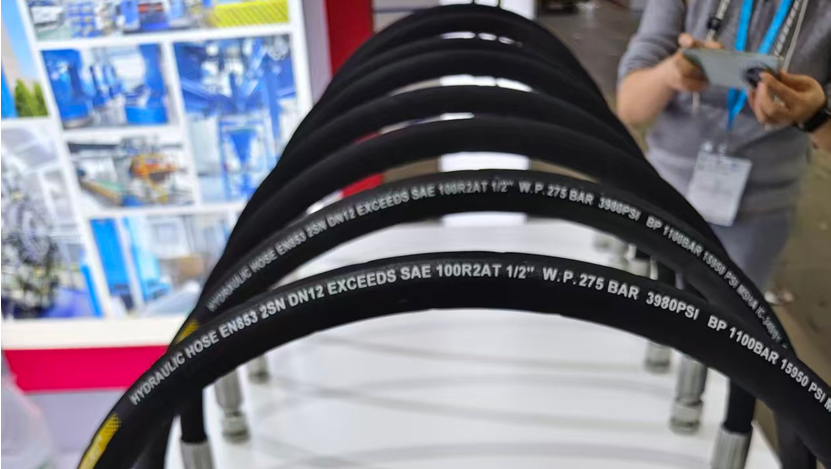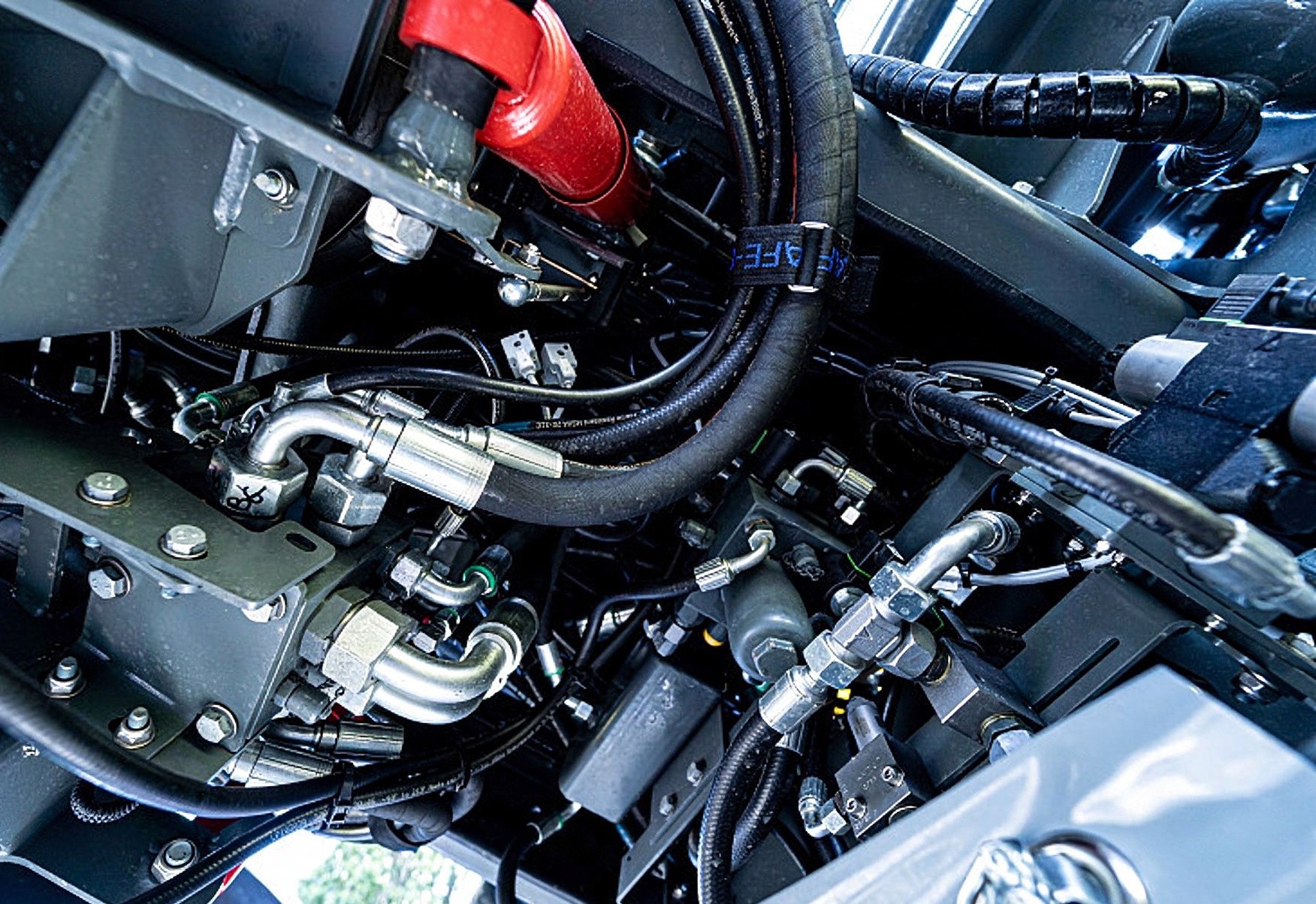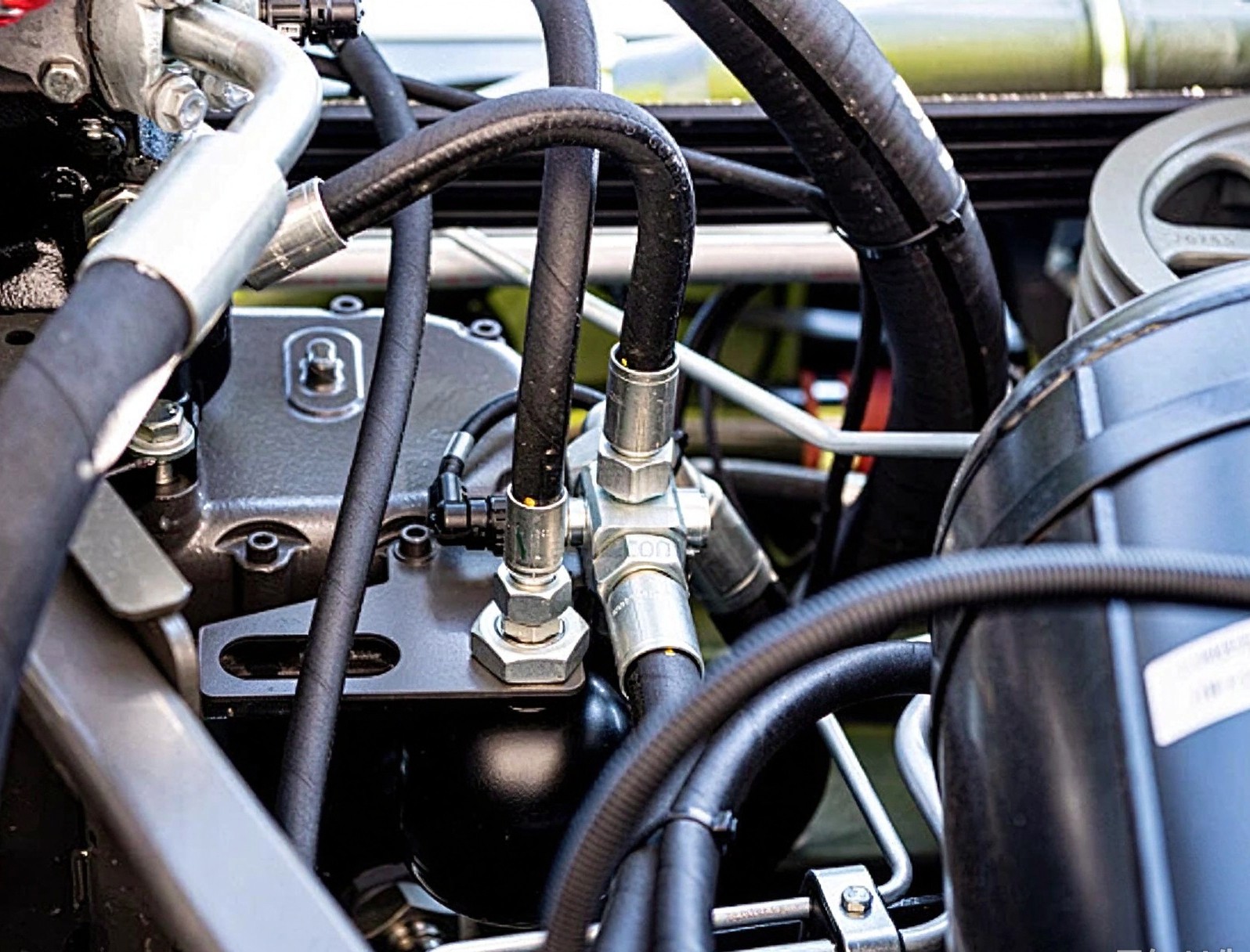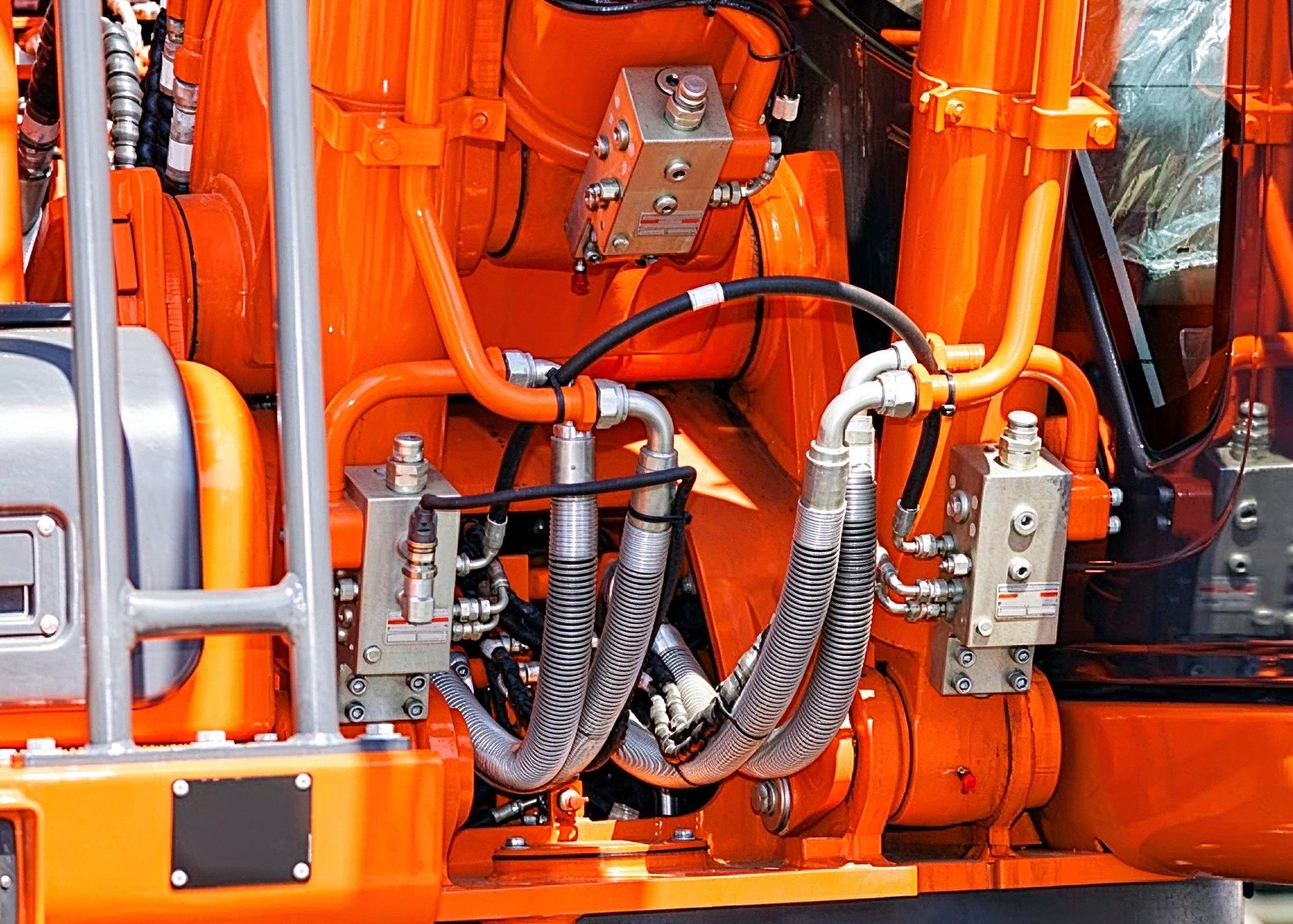
In hydraulic systems, hose failure often occurs without warning. A single pressure surge can cause a seemingly intact hose to burst suddenly. Downtime losses, oil contamination and safety hazards come at a cost far greater than the hose itself. How many tests must a reliable high-pressure hydraulic hose pass before leaving the factory?
Test 1: 1,000,000 Pulse Cycle Test
When excavators and concrete pump trucks are running, the internal pressure of the hose surges tens of thousands of times every day. On the test bench, the hose completes 1,000,000 pulse cycles at a pressure higher than its working pressure with no leakage, rupture or fitting disconnection. Years of pressure shocks are simulated in the lab to guarantee long service life.
Test 2: 4-to-1 Burst Pressure Verification
Per standard requirements, the burst pressure shall be at least 4 times the working pressure. For the 42MPa working pressure grade, this provides substantial pressure margin beyond normal operating conditions to accommodate system pressure peaks and valve switching shocks.
Test 3: Cold Bend Test at -40℃
Hoses are most vulnerable during cold start-ups in frigid regions. The hose is bent around a specified mandrel at -40℃, with no cracking or brittleness of the inner and outer rubber layers. Combined with continuous working capability up to +120℃, it covers a wide temperature range from freezing construction sites to high-temperature workshops.
Test 4: Abrasion and Ozone Aging Resistance
The outer rubber cover passes abrasion and ozone aging tests. It resists cracking under long-term outdoor exposure and prevents steel wire exposure from scraping and dragging. Durable outer cover performance is critical for harsh applications such as mines, tunnels and ship decks.
Test 5: Minimum Bend Radius Test
With the same pressure rating, the optimized reinforcement structure delivers a smaller bend radius and more compact outer diameter. Fewer elbows and hard pipe transitions in cramped engine compartments mean fewer potential leak points.
Test 6: Pressure Testing of Every Finished Assembly
After crimping with fittings, every hose assembly is individually pressure tested with full batch traceability. A qualified hose alone is not enough. Only when the hose-fitting combination passes inspection can it be deemed fully qualified.