


Core Summary: With the electrification of commercial vehicles, upsizing of construction machinery and more extreme operating environments for special equipment, fluid hose systems, once regarded as "mature components", have re-emerged as a focus of technological investment. Henan Yibo Technology Co., Ltd. has launched its specialty hose series covering brake hoses, brake fluid hoses, cooling water hoses, fuel hoses and air conditioning hoses. Featuring flexibility at -50℃ and fatigue resistance, this product line is, to some extent, an epitome of this industry shift.
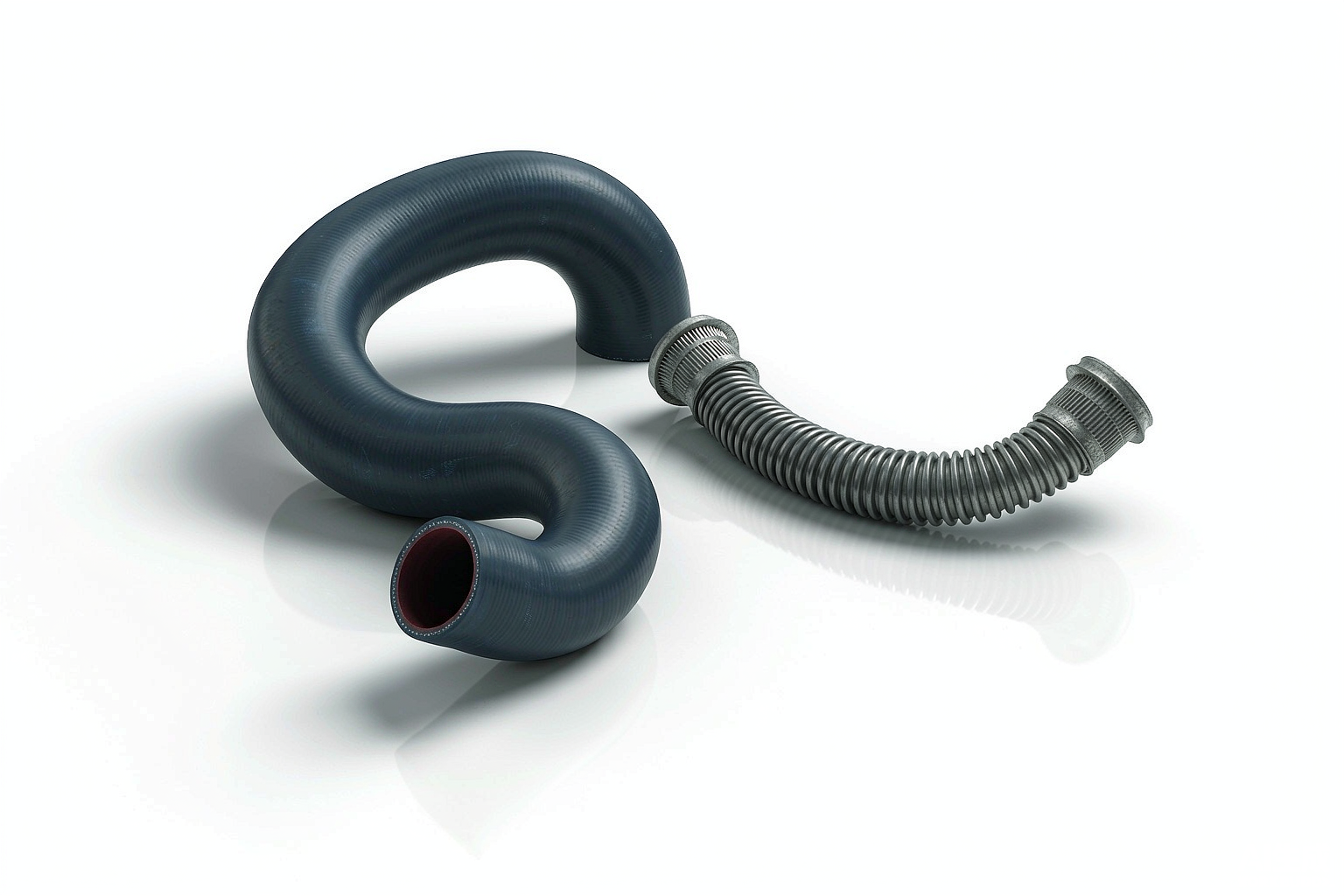
Figure / Cooling water hoses and air conditioning hoses: Medium transportation in thermal management circuits imposes higher requirements for permeation resistance and resistance to alternating hot and cold temperatures (product illustration)
I. The Overlooked "Small Component" Bearing Increasingly Critical Responsibilities
Fluid hoses account for a small proportion of the total vehicle cost, yet they connect core systems including braking, heat dissipation, fuel delivery and air conditioning refrigeration. Failure of any single hose will trigger system-level consequences rather than merely component-level issues: leakage of brake hoses poses an immediate safety hazard, while failure of cooling hoses may lead to overheating and shutdown of the power system.
In the past, the industry mainly focused on hose cost and supply stability. However, three notable changes in downstream demand in recent years have brought hoses back to the center of technical discussions: First, new energy commercial vehicles have reconstructed thermal management circuits. After electrification, "engine cooling" has evolved into "thermal management of the three-electric system". Hoses must handle ethylene glycol coolant for battery cooling plates, motor circuits and air conditioning refrigeration circuits simultaneously. More types of media, compact layout space and complex hose routing are required. Meanwhile, new energy vehicles are more sensitive to low permeation and low precipitation.
Second, operating regions are expanding into extreme environments. Frigid operation scenarios in high-latitude and high-altitude areas are no longer niche demands. The embrittlement risk of traditional rubber materials under extreme cold directly translates to leakage rates during cold start.
Third, equipment strength and operating hours are rising. Construction machinery and special equipment work under high-frequency vibration for long periods, and the fatigue life of hoses becomes one of the factors affecting equipment uptime.
II. Two Main Directions of Industry Technical Routes
Faced with the above changes, the R&D investment of mainstream hose suppliers is roughly concentrated in two directions: The first is low-temperature performance. The goal is to maintain hose flexibility at temperatures around -50℃ to avoid cracking during cold start and large bending. This requires systematic matching from base rubber selection, plasticizing system, vulcanization system to reinforcement layer structure, instead of simply "adding softeners".
The second is fatigue resistance. The core is to extend the service life of hoses under pressure pulse cycles by optimizing reinforcement layer structure and improving interface bonding technology, while supporting no pull-out or leakage at crimped fittings.
Yibo Technology’s approach for its latest specialty hose series combines these two directions: optimizing material formulations to improve both low-temperature flexibility and fatigue resistance, verified by fatigue pulse tests and low-temperature bending tests. The target is to achieve "stable and safe medium delivery with no cracking or rupture of hoses" under extreme environments.
This "dual-indicator priority" idea better fits real working conditions than pursuing a single performance metric alone, because failures in practical application are almost always caused by the superposition of multiple factors.
III. Competitive Landscape: Shifting from Price Competition to Competition in Performance and Verification Systems
For a long time, the mid-to-low-end hose market has faced fierce homogenized competition, with price as the primary competitive lever. As downstream customers raise requirements for reliability, the dimensions of competition are changing:
Material capability: Customizable formulations for specific media and temperature ranges;
Verification capability: Complete bench test capabilities including fatigue pulse, low-temperature bending, pressure resistance and burst tests;
System capability: Multi-category coverage on a unified technical platform to support system-level selection for OEMs.
Relying on its provincial R&D platform and more than 70 patents, Yibo Technology has built capabilities in these three dimensions, and supplies products for three major sectors: commercial vehicles, construction machinery and special equipment.
IV. Outlook: Integration and Intelligence of Hose Systems
Looking ahead, two noteworthy trends are emerging for hose systems. The first is integration: assembling multiple hoses, fittings and sensors into modular assemblies to reduce assembly steps and potential leakage points. The second is condition awareness: introducing pressure, temperature and aging monitoring on hoses or fittings to shift maintenance from "periodic replacement" to "condition-based replacement".
For domestic hose manufacturers represented by Yibo Technology, advanced new material capabilities are the ticket to the next round of competition. Upgrading from component suppliers to system solution providers is where the real competitive gap will be formed.