Why liquid cooling suddenly became essential
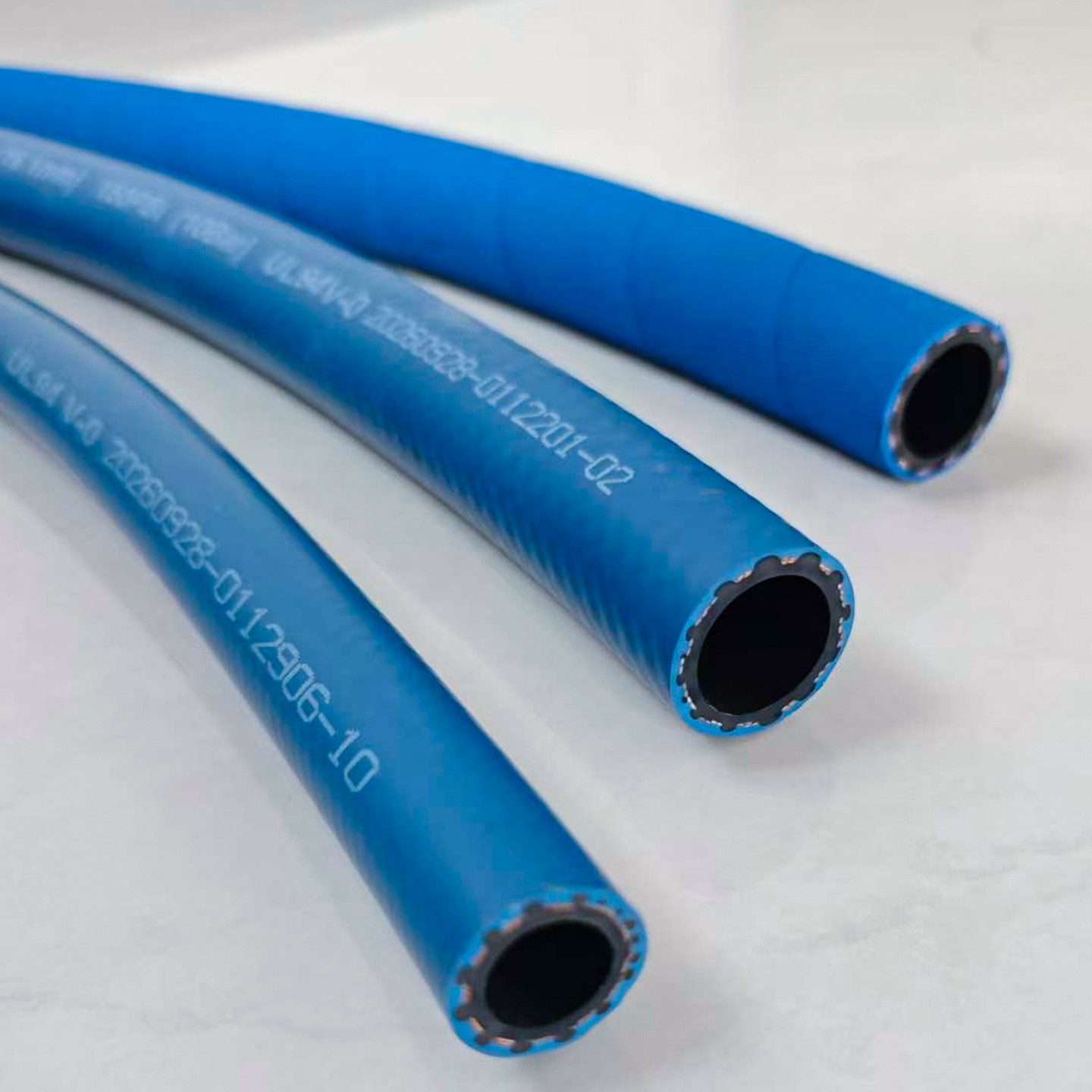
Rack power has climbed from a few kilowatts to tens or even over a hundred — high-density GPU clusters can no longer be held down by fans. So direct-to-chip (cold-plate) liquid cooling is spreading fast, with immersion advancing in specific scenes. Liquid cooling is, at heart, circulating coolant to carry heat away: from the CDU, through manifolds, into every cold plate, and back. On this loop, flexible connections are indispensable — racks are tight, equipment must modularly dock, and CDU-to-cold-plate links need flexibility. That is exactly where hose comes in.
Liquid-cooling hose in the server room is tested on a different set of skills
Don't be fooled by the word "hose" — data-center liquid-cooling lines are not held to the same standard as industrial high-pressure hydraulic hose; they are pickier:
Coolant compatibility. Liquid cooling mostly uses deionized water or glycol/propylene-glycol aqueous solutions; the inner tube must resist water-based media, not hydrolyze, not bleed — and must not "shed anything" into the coolant.
High cleanliness, low bleed. Cold plates contain micron-scale microchannels where a single particle can clog; as a link in the loop, the hose's cleanliness and low bleed bear directly on whole-system reliability (echoing Article 19's industrial "high cleanliness" logic).
Flexibility + quick connect. Rack lines are dense and server modules dock and undock, so hoses must route flexibly and work with blind-mate quick disconnects for modular connection and maintenance.
Leak-proof is the baseline. Server rooms fear leaks most — a drop of coolant on electrical gear is an incident. Leak prevention and monitoring matter more here than pressure rating.
Electrical-environment safety. Server rooms are high-voltage, high fire-safety environments, so the line's flame retardancy and insulation (Article 33's electrical logic) must also be considered.
An opportunity, and a threshold
Liquid cooling brings the hose industry a real increment: data-center build-out is accelerating, liquid-cooling penetration is rising, and demand for flexible lines, quick connects and manifold fittings grows with it. But it also raises the bar — this is not a scene where a shrunken industrial hydraulic hose "just works," but one demanding fresh work on cleanliness, compatibility, leak-proofing, quick connect and electrical safety. Whoever masters this new set of requirements extends industrial hose capability into the new track of compute infrastructure.